Between the Strokes
by Z. Marlow
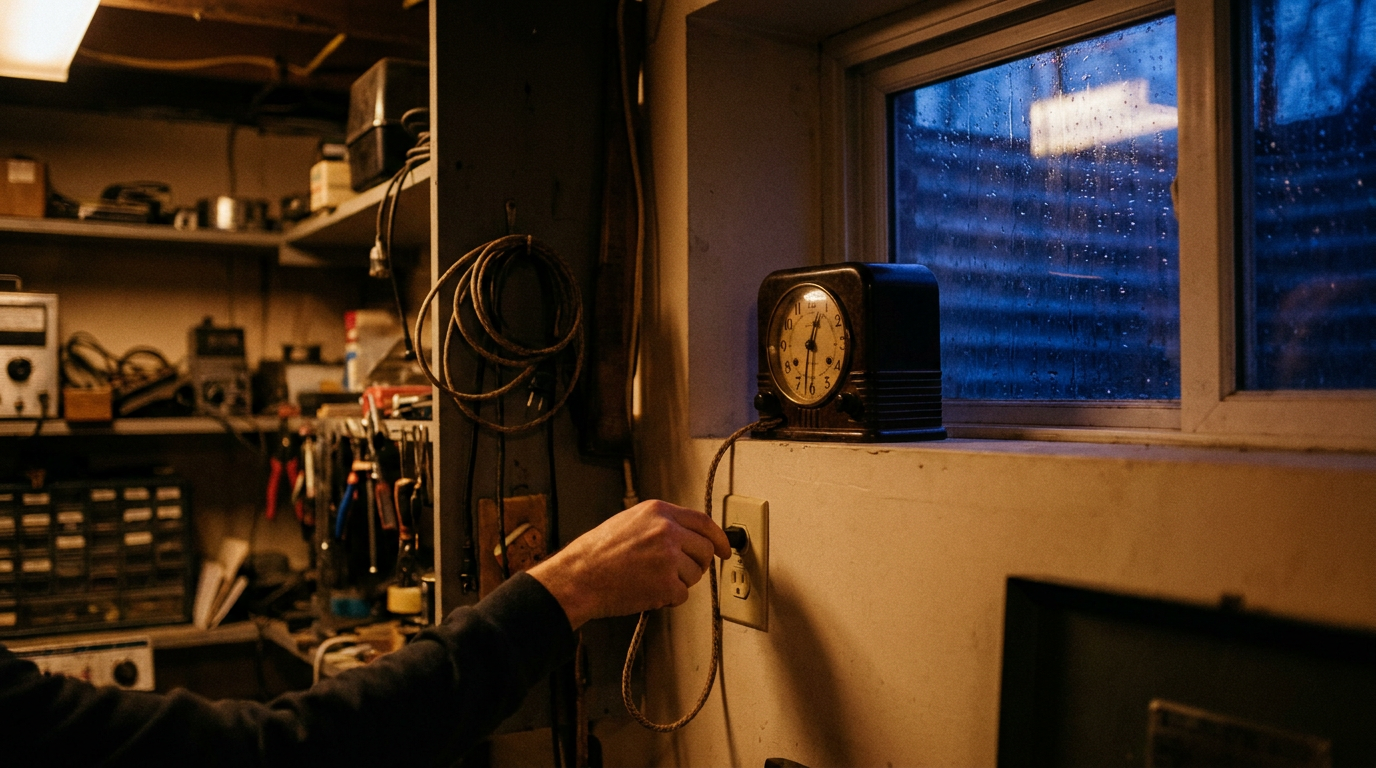
3 min readYou unplug the speaking clock on a Tuesday, while rain freckles the basement windows.
The machine occupies a cabinet the color of porridge. Inside are brass cams, a loop of brown tape, and enough dust to make every decade smell the same. For years it has answered anyone who telephones for the time, though almost nobody does now. People prefer devices that know where they are and how badly they slept.
The speaking clock knows one thing, and says it beautifully.
Elsie taught you to service it before she retired. She called it Miss Minute, and always knocked before opening the cabinet.
“Old machinery likes notice,” she said. “Otherwise it thinks you are a burglar.”
Elsie had several rules of this kind. Never whistle near a telephone exchange. Never cut a green wire on a Friday. If an empty line rings, let it finish.
You asked how many rings.
“All of them.”
The department keeps Miss Minute because her number remains printed in old diaries, on workshop walls, and beside telephones in houses where the wallpaper has browned around the calendar. Every few days, someone calls. Bakers, mostly. Insomniacs. Children trying numbers they have been told not to waste.
You were one of those children.
When your mother worked evenings, you sat beneath the telephone table with the receiver tucked against your ear. The carpet left little red diamonds on your knees. You dialed the speaking clock because the woman inside never asked why you were awake.
Once, during a winter of frozen pipes, the announcement faltered.
At the third stroke, it will be...
There was a scrape, a breath, then a different voice said, very softly, “Put your socks on, love.”
You did.
Your mother blamed a crossed line. Elsie, when you told her years later, said crossed lines were what engineers called things that had crossed over from somewhere inconvenient.
Now Miss Minute is being replaced by a clean digital service with no moving parts and no manners. You disconnect the mains, coil the cable, and wait for the tape to coast to a stop.
The cabinet becomes quiet.
Then the service telephone rings.
It is a black desk set kept for testing. Its cord ends on the bench. You are holding the loose plug in your hand.
The second ring is modest, almost apologetic.
You remember Elsie’s rule. You let it finish.
It does not.
On the seventh ring, you pick up.
At first you hear only the small sounds of a house after dark: a refrigerator humming, rain worrying a window, water ticking inside a radiator. Then a child breathes into the receiver.
“Is this the time?”
The voice is thin with wakefulness. Behind it, very faintly, a television audience laughs.
You know that laugh. You know the smell of the receiver, though it is thirty years away and in another part of town. You know the red diamonds rising on the child’s bare knees.
Your hand settles on the dead machine.
In the calm voice you use for frightened customers, you begin.
“At the third stroke, it will be eleven forty-two precisely.”
The mechanism answers beneath your palm. Although there is no power, the tape turns. The brass cams lift one by one.
Three strokes sound down the line.
The child says nothing.
You hear yourself, long ago, trying not to cry in an empty house.
So you lean closer to the mouthpiece.
“Put your socks on, love.”
There is a rustle as the receiver is set down. The line clears.
For a while you remain beside the cabinet, listening to rainwater move through the street drains. Miss Minute’s tape has stopped again, but one of the brass cams is still raised, as if holding a place.
You do not dismantle her.
The paperwork says the bolts were seized. Nobody checks.
That night, your telephone wakes you shortly before midnight. It rings once, then stops. When you lift the receiver, there is only the ordinary dial tone.
Underneath it, almost too far away to hear, someone is knocking on a wooden cabinet.