Bread for the Chimneys
by Z. Marlow
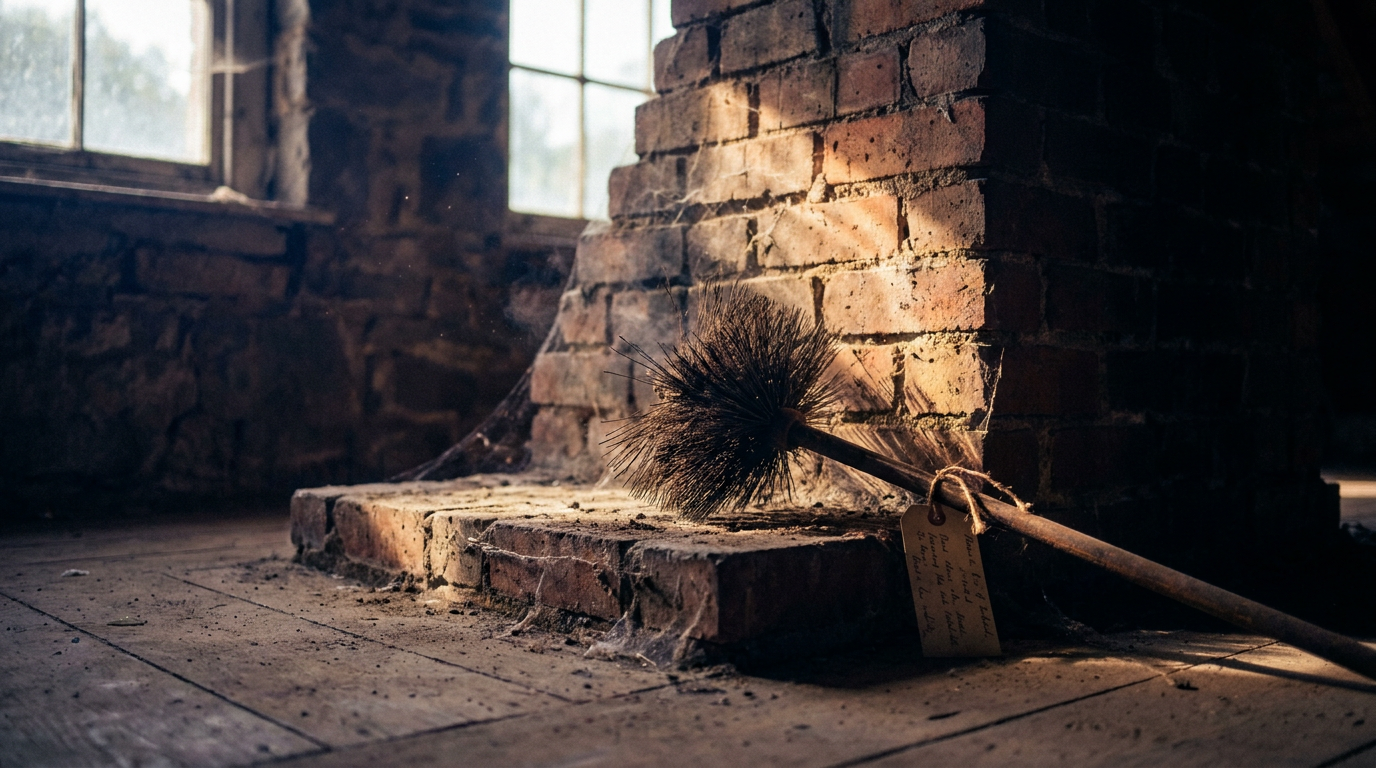
3 min readThe brush comes back warm from Mrs. Pell’s west flue, although that hearth has been bricked for thirty winters.
She blames mice. Mrs. Pell blames mice for most things, including the disappearance of her second husband’s spectacles from his face during the funeral. I tell her mice are rarely warm enough to heat brickwork. She says I have not met Caul mice.
The warmth is faint, like a chair recently vacated. I press my cheek to the soot and smell damp clay, scorched bread, and something sweet beneath both. Milk, perhaps.
Every house in Caul has a cold chimney. This is not remarkable. Families improve their kitchens, builders alter roofs, and nobody wants to pay a mason to remove a stack that has already survived three generations. What is peculiar, though I do not use the word among customers, is that the cold chimneys have a downward draught.
Smoke goes into them.
Our custom is to burn a crust in each unused hearth every Thursday evening. Visitors find this charming. Several have written it down in little books, alongside the recipe for nettle pudding and the mistaken belief that our geese are friendly.
Nobody agrees why we do it. Mrs. Pell says it keeps lightning away. The butcher says his grandmother claimed the crust was for miners buried before the town was founded. We have no mine. Children are told it prevents chimney birds from nesting.
There are no chimney birds either.
I have always said the practice keeps the flues dry. This is reasonable, and reason is a clean apron one may wear over many stains.
After finishing at Mrs. Pell’s, I lower a weighted cord into the west flue. It descends past the hearth, past the floor, past the cellar. The ball of lead takes the cord steadily, with none of the knocks one expects from bends in old masonry.
At last the cord slackens.
When I draw it up, the lead is clean. Not merely free of soot, but polished. A small crescent has been pressed into one side, as if someone tested it between their teeth.
Mrs. Pell peers over my shoulder.
“Thursday tomorrow,” she says.
Then she gives me two crusts.
My brother Silas disliked customs. He called them debts signed by dead men. When he inherited our mother’s cottage, he stopped feeding the cold chimney and used the crusts for soup.
Nothing happened for nearly a year, which made him unbearable.
Then, one wet Thursday, his youngest woke to find the bedroom colder than the yard. The child went downstairs and saw smoke slipping from the banked kitchen fire. It crossed the room in a thin grey cord and vanished into the unused hearth.
Not up the chimney.
Down.
By morning Silas was gone. His boots remained beside the bed, toes turned neatly toward the wall. The mattress held his shape and was still warm beneath the blanket.
We searched the river, the woods, and the lime pits. I searched the chimney alone.
Far below the cottage, my brush encountered cloth. Then hair. Then the unmistakable resistance of a hand closing around the bristles.
I did not pull.
This is the part people misunderstand. They suppose the thing under Caul eats us. Eating is quick, and hunger has an end. What lies below seems only to notice an empty hearth, then follow the missing smoke upward until it finds what should have made it.
A house must breathe somehow.
So we burn the crusts. Bread smoke is close enough to human sleep, especially with a little butter. We keep the old flues satisfied, and our children wake where we left them. There is nothing foolish in that.
Tonight you will sleep in Mrs. Pell’s spare room. The west chimney passes behind the bed, but she has remembered Thursday. You may hear a soft chewing in the wall.
Do not be rude enough to listen closely.