Fig Hears Home
by Z. Marlow
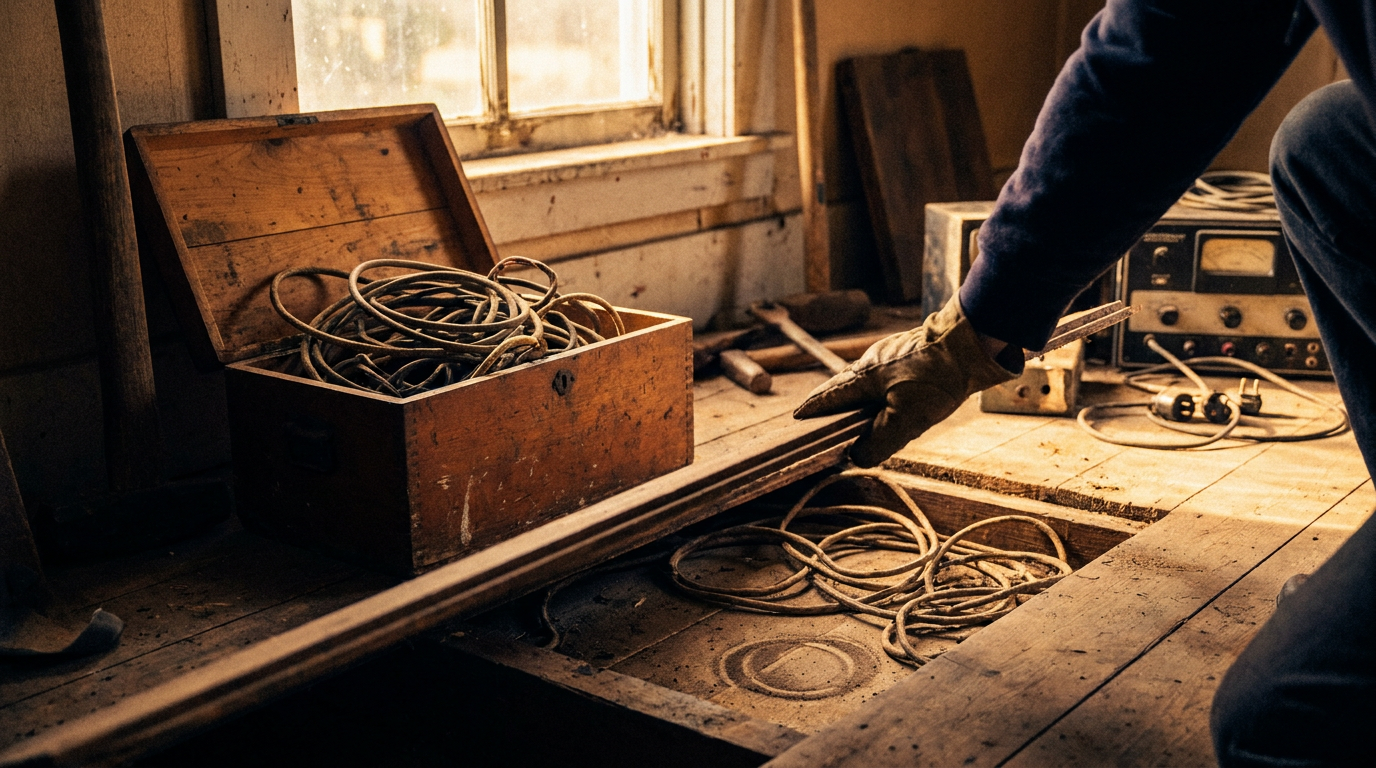
3 min readCalder lifted the floorboards while I packed the cords into a tea chest. Each plug left a clean oval in the dust. By noon, the exchange had lost its voice.
He found the extra wire beneath my chair. It ran from the blank jack, circled the room under the boards, then returned to the same jack.
“Goes nowhere,” he said.
The cloth wrapping was warm. Calder fetched his pliers, but I asked him to wait. I connected my headset to the blank jack one last time.
At first there was only the soft sea-sound of an open line. Then claws pattered across linoleum. A collar tag struck a water bowl. Somewhere close, a young woman laughed.
Fig had been dead since the previous afternoon.
Calder stood with the pliers open in his hand. He could not hear what I heard. When I said her name, the pattering stopped, as if she had paused beside the wall.
The previous evening, I buried Fig under the pear tree in my sister’s garden. The soil smelled of rain and iron. We wrapped her in the green blanket she had slept on beside the switchboard for most of her life.
My sister asked whether Fig had been frightened.
“No,” I said.
This was true. At the end, Fig lay with her muzzle across my wrist. Her breathing grew shallow, but her eyes remained clear. I stroked the white patch between them and told her what I had always meant to tell her.
“No need to listen now. I have found you.”
Her ears lifted at the words.
Then she slept.
That morning, I carried her into the exchange before the others arrived. She had grown too weak for the stairs, and her ribs moved under my hands like the hoops of a little basket.
I set her bed beneath the blank jack.
All day, the ordinary calls came and went. Mrs. Pell wanted the butcher. The school reported a broken boiler. Someone at the flour mill kept lifting the receiver and saying nothing.
Fig ignored them all.
Just before closing, the blank jack clicked.
No lamp lit. No bell rang. Fig raised her head.
I put on the headset. Through the hush came a woman’s voice, frayed with age and grief.
“No need to listen now,” it said. “I have found you.”
Fig looked at me.
I knew the voice. I did not yet know the words.
For years, we believed she could tell when a call was coming. She would leave her basket and sit beneath the proper jack, sometimes long before its lamp appeared.
The callers were never strangers. She chose the line to my sister’s house, or the grocer who saved marrow bones, or old Mr. Vale, who whistled to her through the mouthpiece.
But most often she went to the blank jack.
On those occasions, she listened with her head tilted. Sometimes her tail moved. Sometimes she crept to me and pressed her nose into my palm.
Once, late in winter, I connected the blank line and heard paper being folded, though my hands were still resting on the desk.
A moment later, the night sheet slipped from its clip. I folded it before putting it away.
From the headset came the same small crackle, just ahead of my fingers.
Fig first entered the exchange inside a coalman’s cap. She was wet, shivering, and no larger than his two hands together. He had found her under a cart and could not keep her.
I set down a saucer of milk. She stepped into it, sneezed, and wandered past every bright cord and ringing lamp.
At the far end of the board, she stopped beneath the blank jack.
There was no number written there. No line had ever been connected to it. Still, Fig placed one ear against the skirting board.
Then her tail tapped once, answering someone who already missed her.