Keeping Common Time
by Z. Marlow
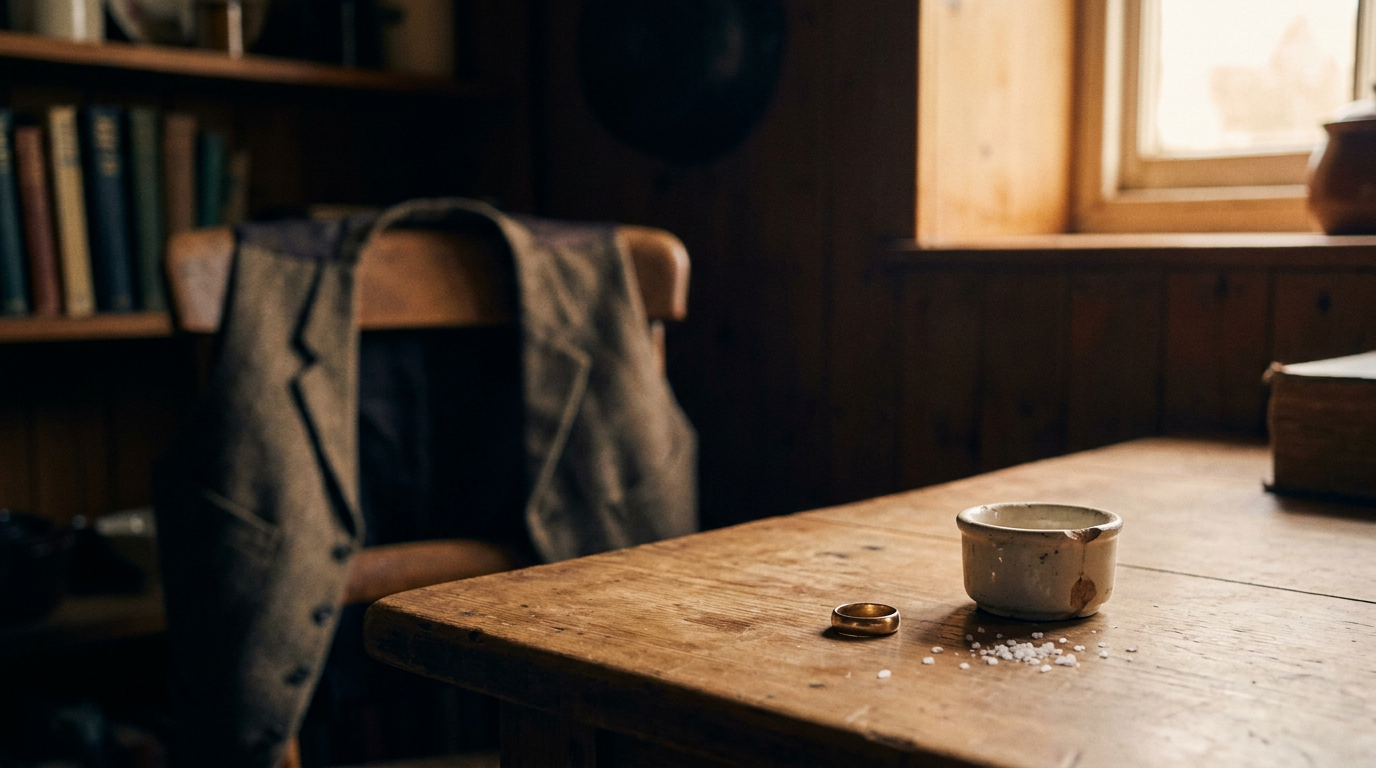
3 min readSilas brought my wedding ring home in his waistcoat pocket and set it beside the salt.
He did not mention it until after supper. I had made onion broth, thickened with yesterday's bread, and he ate two bowls while the rain ticked against the chimney cap. His cuffs smelled of brass polish.
This was before his cough, though I remember the cough first.
Silas wound the public clocks of Bellweather. There were clocks above the market, the wool hall, the ferry arch, and the little brick baths where steam clouded the windows all winter. He kept their keys on a hoop at his belt. Each key had its own note when it struck another.
No one thought his work peculiar. Children asked whether the clocks slept while he cleaned them. Shopkeepers complained when one ran fast. Once, he removed a starling's nest from behind the market face and brought home three blue eggs, cold as beads. We buried them beneath the thyme.
That evening he turned the ring upon the table with one finger.
“Found it in the north clock.”
“Someone must have lost it.”
“It was inside the case.”
The north clock stood over the ferry arch, too high for any hand but his. Its works were enclosed in oak and iron. Silas said the ring had been caught between the escapement and the frame, trembling each time the teeth released.
I looked more closely. The gold was thin on the palm side. There was a nick beside the setting where I had struck mine against the kettle in our first winter.
Then I remembered where my own ring was.
I opened my hand.
Silas placed the other beside it.
The two rings bore the same nick, the same cloudy stone, the same cramped letters within. Even the gold worn away from the second followed the shape of my finger, though my finger had not yet grown so narrow.
Neither of us spoke for some time. The broth cooled. Rainwater found its way down the chimney and hissed once in the ashes.
Silas wrapped the found ring in a square of flannel and put it in the blue sugar jar. We did not use sugar often. For years it remained there beneath the hard white lumps, and for years I wore the other.
After Silas died, the clocks were given to Mr Pell, who disliked heights and sent his daughter up instead. She was a careful girl, but the north clock troubled her. It lost a minute whenever the river flooded.
I had begun taking in collars by then. My hands were drier, the knuckles larger. The ring had grown loose.
One wet afternoon, Mr Pell's daughter came to my door with Silas's key hoop. She asked if I remembered how he reached the ferry clock's inner catch.
I remembered.
The climb was close and smelled of pigeon dust. Above the arch, the traffic sounded like beans poured slowly into a bowl. I opened the oak case and saw the place Silas had described, a narrow ledge beside the escapement, polished by the shaking of the clock.
My ring slipped easily over my knuckle.
By then its palm side was thin. The nick beside the stone had deepened. I laid it on the ledge and closed the case before the next tooth released.
At home, I took the blue jar from the cupboard. The sugar had yellowed around the flannel. Inside lay the ring Silas had found, waiting with all my years already worn into it.
I put it on.
Tomorrow, Mr Pell's daughter will open the north clock to oil the works. She may find the ledge empty. She may not.
Tonight the clock is keeping perfect time, and from our kitchen window I can see its pale face above the river, carrying my younger ring toward the evening when Silas brings it home.