Nearly Home
by Z. Marlow
3 min readI emptied the kitchen drawers onto a towel and began sorting what could be kept.
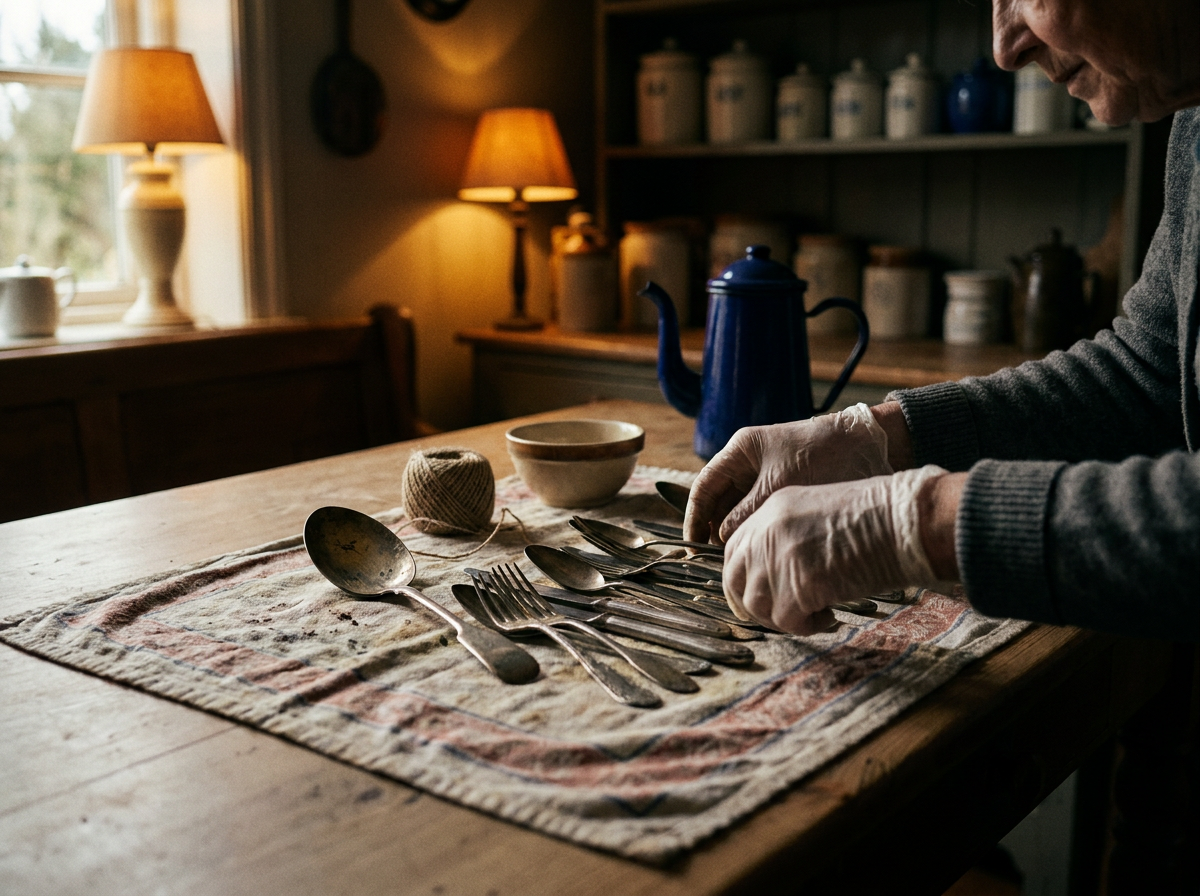
My mother had saved the usual things: string wound around old envelopes, candle stubs, six corks, a small brass key that opened nothing we knew of. Flour had worked into the grain of the drawer. When I wiped it with a damp cloth, the room smelled briefly of bread.
Outside the flat, the landing light clicked off.
It was an old push-button arrangement. You pressed the switch beside the street door, and the lamps came on floor by floor, giving you time to climb before darkness returned. My mother could tell who was coming by the interval between the click and the knock. My father climbed quickly, even after his knees went bad. My sister paused at the first landing to look through the window. I took the stairs in pairs until I was old enough to find that embarrassing.
“That light means somebody is nearly home,” Mother used to say.
She had been in the hospice since March. By May, the doctors had stopped speaking of improvement and begun asking whether there was anyone I wished them to call. I visited every afternoon with clean nightclothes and pears she no longer ate.
The flat had to be cleared before the end of the month. I worked slowly. I washed each cup before wrapping it, though most were going to the charity shop. I folded the tea towels. I found my father’s gravy spoon behind the boiler and stood holding it until the metal warmed in my hand.
At dusk I opened the front door to let some air through. The landing smelled of dust and boiled cabbage. Across from me, the lamp’s glass shade had gone brown at the rim.
Mother disliked that lamp being left unlit. Even after my father died, she would press the downstairs button when she returned from shopping, although daylight came through the stairwell windows.
“No sense arriving to a dark place,” she said.
The new tenant had asked for brighter bulbs. I fetched the step stool and unscrewed the old one, a cloudy pear of glass that gave a soft yellow light. I meant to keep it for Mother’s bedside lamp, if she came back.
The moment the bulb left its socket, the empty shade filled with light.
It was not bright. It had the colour of butter spread thinly on toast. I stood on the stool with the bulb in my hand and watched my shadow settle across the open doorway.
My telephone rang in the kitchen.
The nurse spoke gently. Mother had woken a little before seven. She had looked toward the window, though the curtains were closed, and asked whether the landing had been swept.
Then she said:
“You needn’t wait up. I know the way.”
The nurse told me the time. Behind me, the kitchen clock showed the same minute.
I thanked her, because there was nothing else to say. Afterward I sat at the table among the wrapped cups. The flat made its ordinary evening sounds. Water passed through the pipes. Someone below dragged a chair across linoleum. A cupboard door closed.
The landing remained lit.
I put the old bulb in Mother’s sewing basket, between the wooden darning egg and a paper of black pins. Then I swept the stairs from the top floor to the street, gathering grey feathers of dust into my palm.
When I returned, the light lay across the threshold.
I left the door open the width of a hand.