Room for One More
by Z. Marlow
3 min read-
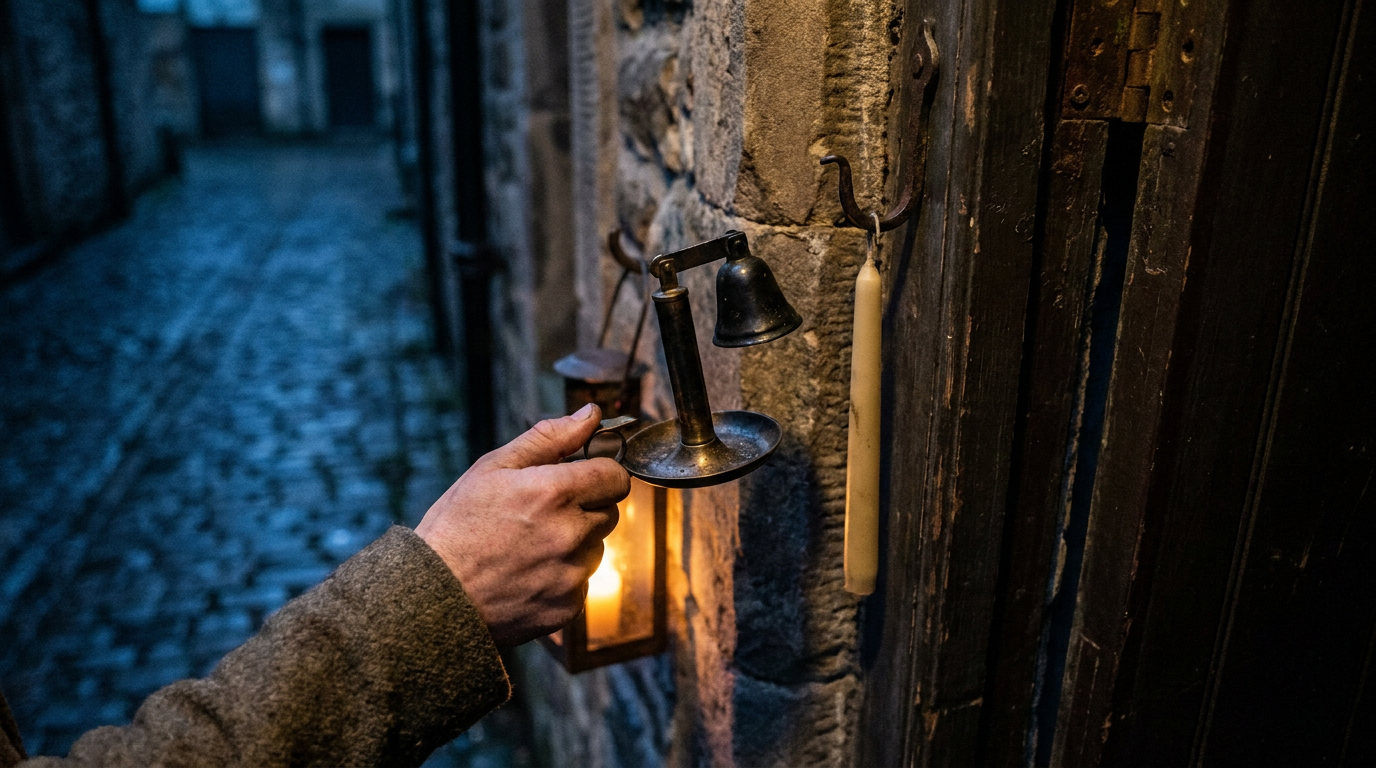
Collect the taper from the hook beside the watch-house door. Test the snuffer with your thumb. The hinge sticks in damp weather, and a lamp left smoking will sour the whole street with the smell of singed wool.
-
Begin at the cooper’s corner. Work uphill toward the square. Do not hurry, even if the dusk comes quickly. People judge the steadiness of a lamplighter as they judge bread, by what he does when watched.
-
At each house, the front door will be standing open. This is our custom. Someone inside will say, “Room for one more.”
Answer, “And light enough.”
No one remembers why. Old Sella Vane says it began during the fever summer. The parish book says otherwise. Do not ask again. You will only embarrass kind people.
-
The doors must remain open until the nearest street lamp catches. In rain, children wait beneath towels. In hard weather, families bring chairs into the passage and share broth while you work. Last Candlemas, Mrs. Foss gave me a cup with a piece of bay leaf floating in it. Take what is offered. This duty has its warmth.
-
There are lamps enough to bring you once around the town. Do not count them.
-
At the square, check the pressure dial inside the iron cabinet. The needle should rest against the painted line. If it lies below, tap the glass. If it lies above, close the cabinet without touching the valve.
If the needle is pointing down, kneel.
- Beneath the cabinet is a brass ring set flush with the paving stone. Pull it up. The stone is lighter than it looks.
You may have crossed the square every day of your life without noticing its seam. Most people have. Once the stone is lifted, they will remember errands elsewhere.
-
Take the taper with you. The ladder has close-set rungs and ends sooner than your feet expect. Do not look up after the stone settles overhead. There is no handle on the underside.
-
The service passage is narrow. Turn sideways where the brick sweats. You will hear the town through the pipes: kettles set down, chairs drawn back, a baby objecting to sleep. These sounds are ordinary.
The footsteps among them are not yours.
- At the passage end stands a lamp in a wall niche. Its glass is clean. Its reservoir is empty. Nevertheless, place your taper to the wick.
It will light.
- You have now noticed that the flame leans into the wall.
You have also noticed the little windows in the bricks.
Do not put your eye to them. I did, on my first evening. Through each one I saw a front passage above, every door standing open, every family waiting in the amber light. I saw them from the wrong side, as though I stood outside their houses in a country with no streets.
Then I found my own door.
My wife was holding it open. Behind her, at the table, I was eating soup.
- The lamp below is not connected to the gas main. The gas main is connected to it. You can feel this if you lay your hand against the pipe. It pulses slowly, carrying warmth upward.
This is why the doors are opened.
This is why no house here is ever quite empty.
- Your taper has gone out by now. Keep reading.
The passage behind you is shorter than it was. The bricks are warm against both shoulders. Someone is approaching from the square, though the ladder will admit only one person at a time.
When they call your name, answer with the customary words.
- The wall ahead will open like a door.
Beyond it, the town is waiting with all its lamps unlit. Somewhere very far above, someone has lifted a paving stone and is looking down.
Hold the lamp high for them.
“Room for one more.”