Six Days of Gas
by Z. Marlow
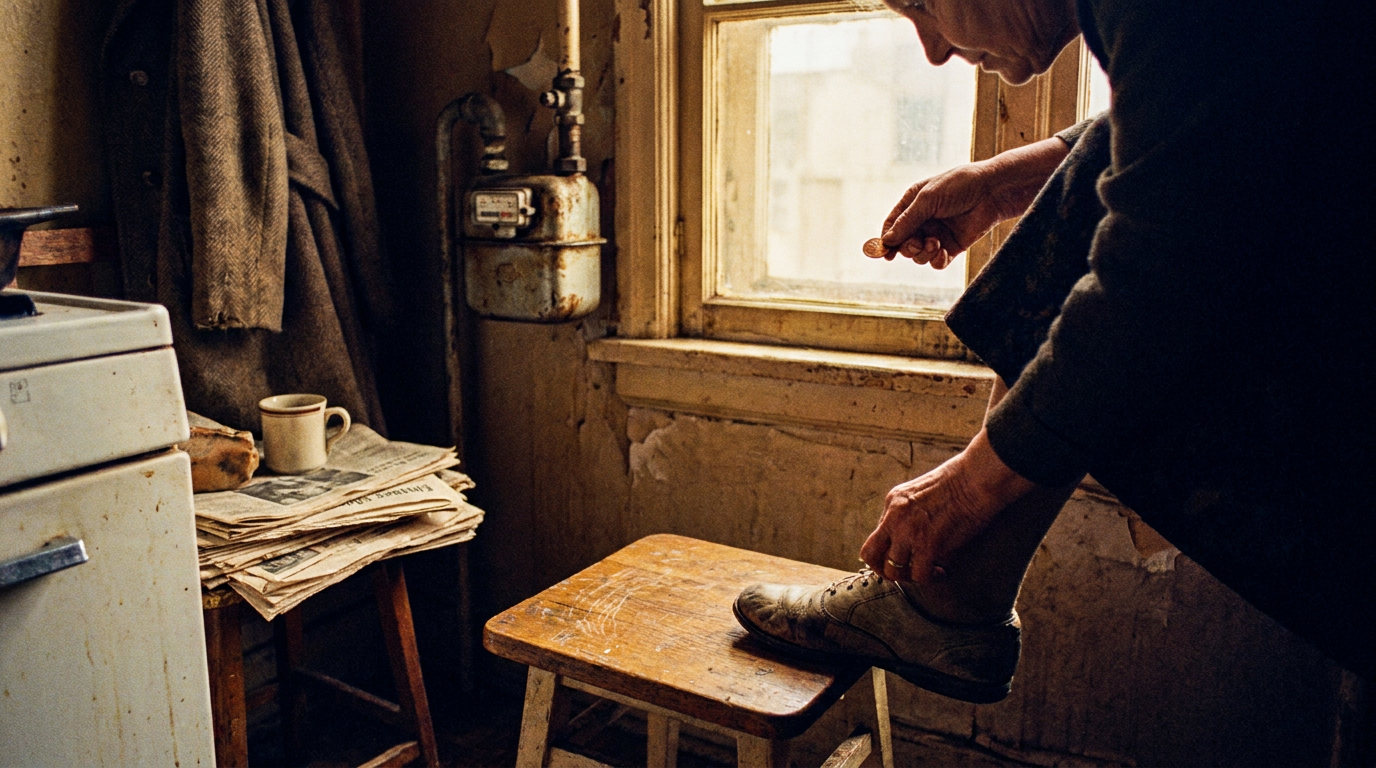
3 min readMother pushed the stool beneath the meter and climbed with a penny tucked into her palm.
The meter hung above the pantry door, a black iron box with a cloudy glass dial. On cold mornings it smelled faintly of soot and old coins. Mother fed it every Sunday after supper, then lit the copper beneath the wash tub. By bedtime the kitchen windows were blind with steam.
We kept the penny in a blue saucer.
It was easy to know from the others. Someone had cut a deep nick across the king’s ear, perhaps testing a knife. Every Monday morning it lay in the meter’s reject cup. Mother would take it down, rub it on her apron, and place it in the saucer until the following Sunday.
Then she put it into the meter.
By Monday it had returned to the week before.
Mother never spoke of this outside the kitchen. She disliked being thought fanciful, and besides, the penny bought only six days. It could not tell us the weather, or whether my brother would write from sea, or if the grocer might extend our account. It told us only that on Sunday evening a hand would lift it from the saucer and push it through the slot.
This seemed sufficient to her.
“Another week with hot water,” she would say.
When her cough worsened, I took over the washing. She sat beside the range beneath a brown shawl, sorting buttons into a tobacco tin. Pearl, horn, bone, black cloth. Her fingers had grown too thin for sewing, but she liked the sound they made.
On the last Monday, the penny struck the reject cup while we were eating porridge.
Mother looked up.
“There you are,” she said.
I fetched it for her. The copper was dull except where generations of thumbs had polished the king’s cheek. She pressed it into my hand, closing my fingers one by one.
I thought she meant that she would still be with us on Sunday. There was no reason to think otherwise. The penny had never failed.
She died on Saturday afternoon, while rain ticked against the scullery window. I was combing her hair. At the end she made a small sound of annoyance, as if a knot had caught in the teeth.
Aunt May came that evening and covered the mirrors. The undertaker came in the morning with mud on his cuffs. Through all of it, the blue saucer stood on the dresser.
At supper time on Sunday, I found myself alone in the kitchen. The range had gone cold. Mother’s cup was still on its hook, stained inside with the last half-inch of tea she had left.
The penny waited in the saucer.
Only then did I understand what it had promised.
Not that Mother would reach Sunday.
That I would.
Somewhere behind me, six days ago, the meter had already received the coin from my living hand.
I climbed onto the stool. The house was so quiet that I heard the penny turn once inside the iron box before it dropped beyond reach.
Gas whispered through the pipe. I lit the ring beneath the kettle and watched the blue flame settle into its patient circle.
On Monday morning, the reject cup held the penny again.
Aunt May was due at noon to help me close the house. My suitcase stood by the door, buckled and labelled. I had not told her whether I would go.
I took the penny down and set it in the blue saucer.
Outside, the ash cart moved slowly along the street. Inside, the kettle began to stir. I put one cup on the table, then, after a moment, reached for another.