The Blue Bowl
by Z. Marlow
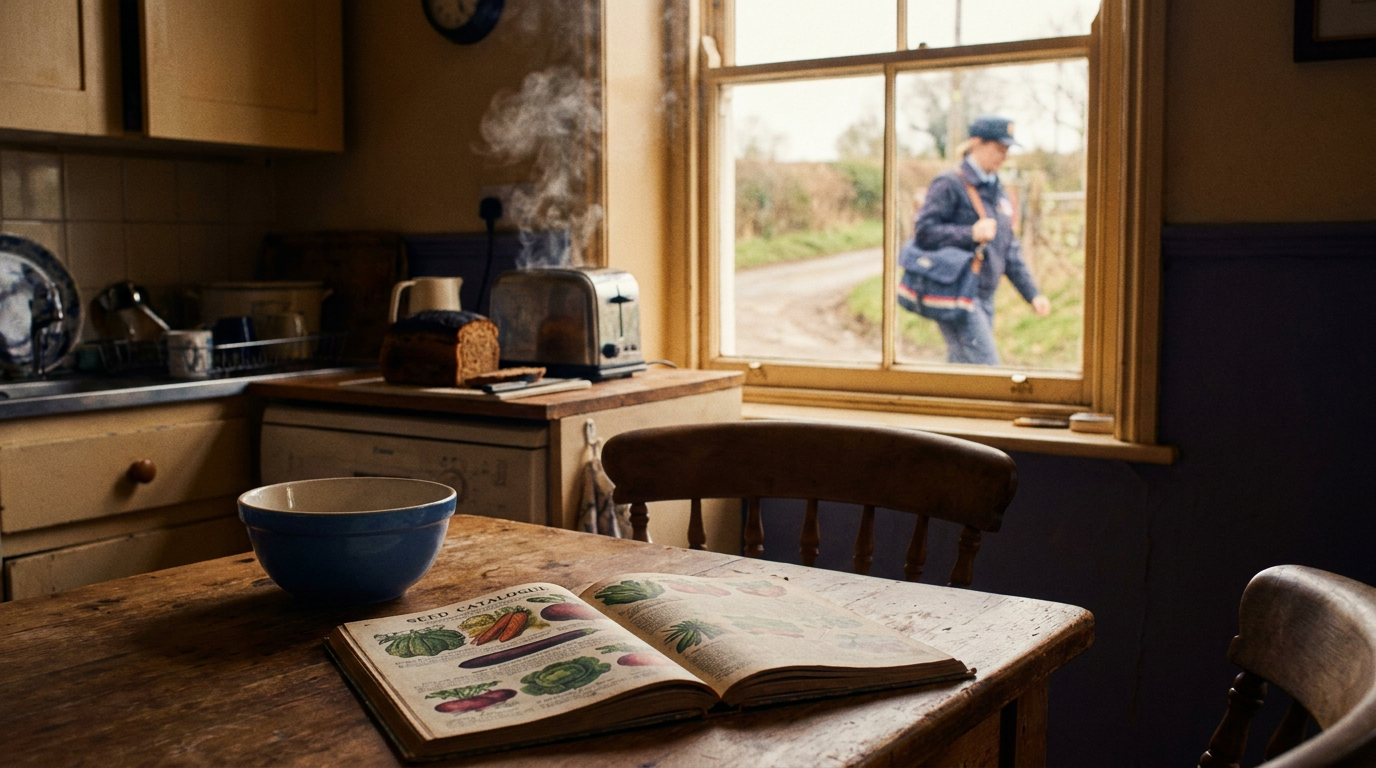
3 min readThe new postwoman brought our neighbor's seed catalogue while I was burning the toast.
She stood on the step in a yellow raincoat, holding the rest of the street under one arm. Water ran from her hood and gathered at the point of her chin.
“Mrs. Harrow?”
“Hallam.”
She checked the envelope.
“Near enough for begonias.”
Her name was Celia. She had taken over the route from Mr. Preece, who had known every dog by its bark and could push letters through a door without waking a baby. Celia was less precise, though cheerful about it. She gave us the dentist's reminder from number twelve, a postcard intended for Hollow Lane, and a council leaflet in Polish.
“We’re improving,” she said. “Yesterday I delivered a parcel to a shed.”
Paul liked her. He said anyone prepared to walk through February deserved forgiveness. He left a saucer over the butter dish whenever it rained, so Celia could shelter the letters while she wrestled with our stiff gate.
The mistakes were always nearly right. Mr. Hall instead of Hallam. Paul became Peter on a window-cleaner's invoice. A Christmas card arrived for “Mara and Nell,” at our address, in handwriting neither of us knew.
“We sound nicer,” Paul said.
“Mara probably folds fitted sheets.”
“Nell probably eats fruit before it goes soft.”
We put the card on the mantelpiece because the robin on it had a wool hat. In January I threw it away.
Celia continued to misdeliver small portions of other lives. A piano-tuner's bill. A gardening club newsletter. A letter confirming swimming lessons on Thursday evenings. We had no piano, no garden worth joining a club for, and no one who needed lessons.
That last envelope was addressed to Nell Hallam.
I gave it back the next morning.
“No Nell here,” I said.
Celia looked past me into the hall, as people do when trying to remember whether they have seen a coat on a peg.
“Of course,” she said. “Sorry.”
Her face had changed only slightly. It was the expression of someone who has reached for a stair in the dark and found it one inch lower than expected.
The birthday card came in April.
It was addressed to Nell Hallam, with our house number and the correct postcode. The stamp showed a bird standing among reeds. Celia had written not known? in pencil beside the name.
I meant to leave it unopened. By lunchtime I had carried it from the hall to the kitchen and back again several times. At last I slid a knife beneath the flap.
The card showed a blue bowl full of lemons.
Inside, my mother had written:
Eighteen already. Ask your mother why the bowl is cracked.
My mother had been dead for nine years.
The blue bowl stood on the dresser, where it had stood in every kitchen I could remember. A hairline fracture ran from the rim almost to the base. Paul believed it had always been there.
It had not.
I dropped the bowl on the morning I learned I was pregnant. It struck the tiles and split with a sound like a knuckle cracking. I sat on the floor holding both pieces and laughing until I cried. Later, my father repaired it with a line of glue so fine it looked like a pale thread trapped under the glaze.
The pregnancy lasted eleven weeks.
We had not told anyone. We had called her Nell only once, in bed, whispering toward the dark as if she were asleep in the next room.
Paul read the card twice. Then he washed the soot from the kettle and made tea. He set out the blue bowl between us, empty.
Celia came the following morning with the electricity bill.
“Anything for the post?” she asked.
I gave her an envelope. It had a stamp, but no street or town. On the front I had written only Nell Hallam.
Celia studied it, then looked at our house number.
“Almost,” she said, and slipped it into her bag.