The Blue Saucer
by Z. Marlow
3 min readI was wrapping the plates when my mother’s wedding ring went down the sink.
It struck the enamel once, a small bright sound, then slipped through the drain before I could close my hand. I stood with my fingers in the cold washing water, looking at the place where it had been.
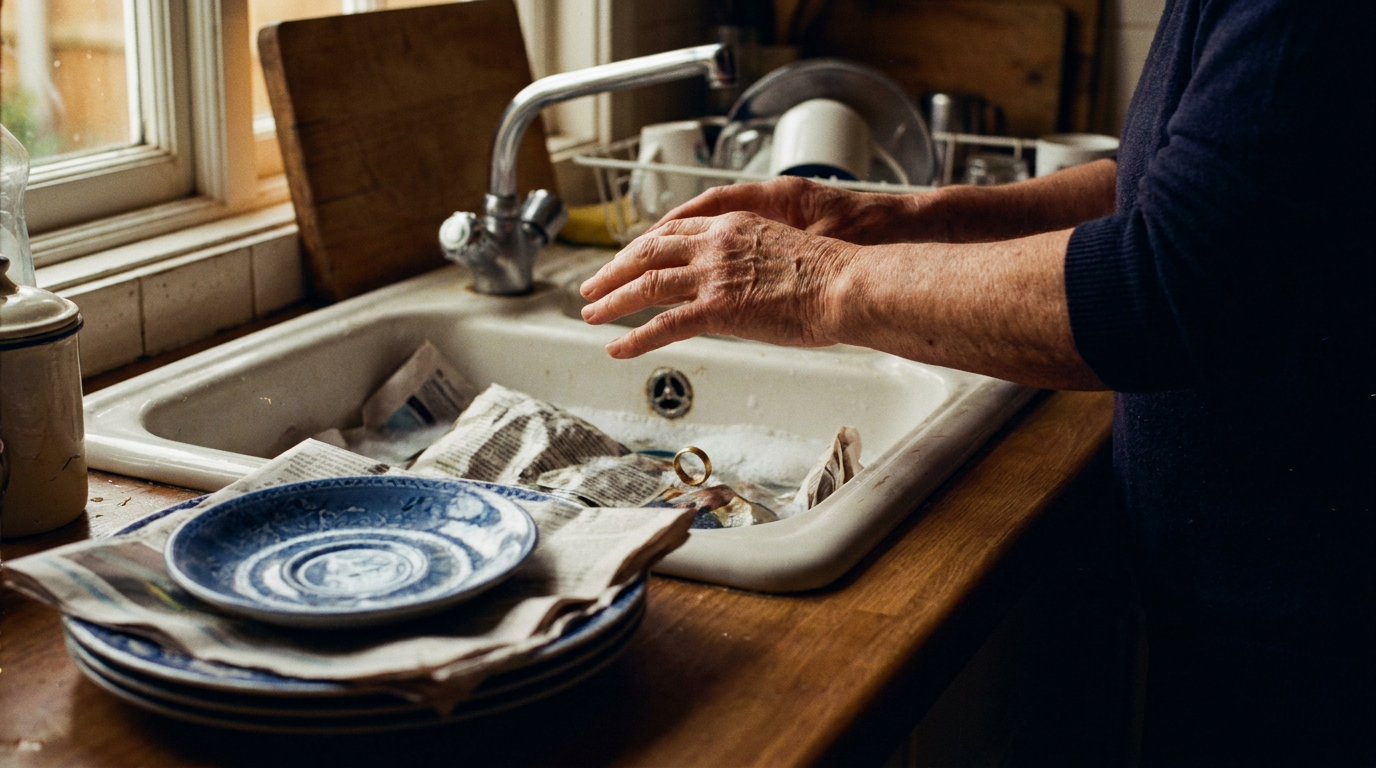
My mother had kept the ring on a blue saucer whenever she washed dishes. The saucer sat behind the taps for as long as I could remember, its glaze worn white at the center. She would lift the ring from her finger, place it there, and turn it once with her nail.
“Pipes are where a house keeps its mistakes,” she told me when I was small.
I thought she meant grease, teaspoons, the little bones from fish.
After the funeral, I wore the ring because there was no one else to wear it. My brother’s hands were wider than our father’s had been, and he said gold made him feel borrowed. On me it hung loose. I had meant to take it off before plunging my hands into the basin, but grief makes poor company for habit. It watches, but it does not remind.
The house was nearly empty. Sunlight lay in pale rectangles where the furniture had stood. In the sitting room, the clock ticked on the mantel though I had removed everything around it. Each room smelled faintly different: dust in the bedrooms, apples in the pantry, my mother’s lavender soap beside the bath.
I found my father’s wrench in the cupboard under the sink. Its red paint had worn away wherever his thumb had rested. He had shown me once how to open the trap, kneeling on the kitchen floor with a newspaper spread beneath his knees.
“Nothing truly vanishes,” he said. “It only becomes plumbing.”
The nut resisted, then gave with a soft crack. Black water spilled into the bowl I had placed below. It smelled of old cabbage and metal. I reached into the bend and felt something hard beneath the slime.
The first ring dropped onto the newspaper.
Then another.
Then five more.
They lay together in the weak afternoon light, seven plain gold bands, wet and dull. For a moment I thought my mother had bought copies. It was the sort of explanation the mind offers before it has looked closely.
Inside every ring were my parents’ initials and the date of their wedding. Each had the shallow nick made when my mother caught her hand on the iron gate at our first house. Each had the tiny pale crescent where, as a teething child, I had bitten down while she laughed and tried to free her finger from my mouth.
I sat on the kitchen floor until the pipes cooled beneath my shoulder.
My brother came before dark. He examined the rings without touching them. Then he went upstairs and brought down the blue saucer from the box where I had packed it.
“She was always careful,” he said.
We washed the rings in warm water and dried them with one of her linen cloths. There was no way to tell which had fallen that morning. There was no mark belonging to only one of them.
I kept the house.
One ring I wear. The others rest on the blue saucer behind the taps, where my mother kept hers. When I wash dishes, I remove mine and lay it among them. They make a soft, crowded sound against the china.
Since then, I have remembered other things she was careful about: counting the teaspoons before bed, shutting the wardrobe even in summer, never leaving a needle threaded overnight.
She gave no reason for any of them.