The Brass Errand
by Z. Marlow
3 min read-
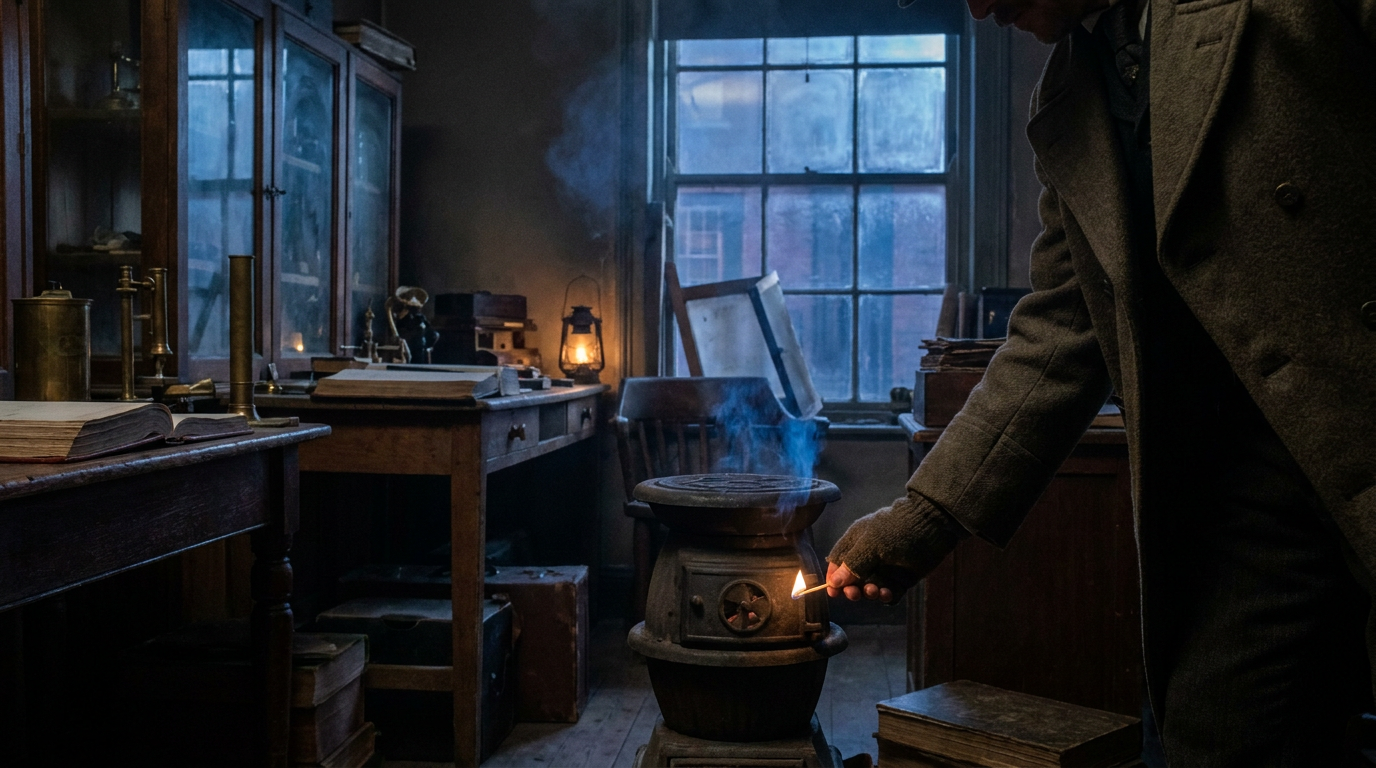
Carry the morning float downstairs before Mr. Pritch unlocks the street doors. The counting room will be cold. Light the small stove, but leave the upper window open until the blue smell of gas has gone.
-
Test each carrier with a penny and a blank sales slip. Six should return at once. The seventh may take longer. Do not strike the pipe. It dislikes being hurried.
-
The carriers are brass, lined with green felt. Keep the rims greased with tallow. If one returns warm, set it beside the stove until it cools. If it returns smelling of wet wool, open it at once, even if no bell has sounded.
-
Money goes in the left compartment, messages in the right. This is how the shop keeps its promises. A customer gives a coin at Haberdashery, the coin comes down to us, we send up the change, and somewhere above our ceiling a ribbon or a collar becomes theirs.
-
Tube Seven does not always keep the order of things. You may receive change before the coin, or a receipt for goods not yet chosen. Keep these beneath the ledger blotter. Most will find their proper hour by closing time.
-
On your first Tuesday, a carrier will arrive containing a pearl button, a tram ticket, and three crumbs of seed cake. Send back the button. Eat the cake. Put the ticket in your purse, although the route printed on it has not opened yet. You will need it when your sister is taken ill.
-
At half past three, write the following on a blue slip:
Edith, your mother is waiting beneath the glass clock. Do not follow the woman with the feathers.
Fold it twice and send it through Seven.
This is not a test of your handwriting. I received that message when I was a child, on the day I became lost in this building. The counting room was then a storeroom for carpets, and the carrier pipes were not installed until eleven years afterward.
I remember the capsule rolling from beneath a cabinet and touching my shoe. It was bright as a new sovereign. Because of the message, I found my mother. Because I found my mother, I eventually came to work here.
Please spell my name correctly. It frightened me enough as it was.
-
After sending the blue slip, you may hear a child crying in the pipe. There is no room inside for a child. Sit close and hum something simple. Mine liked “The Ash Grove,” but perhaps that is only because you choose it.
-
Near dusk, receipts sometimes arrive written in white pencil on black paper. Do not add them to the accounts. They concern purchases made after the counters have been removed and the building divided into rooms. Tea, soap, lamp oil, oranges in winter. The prices are peculiar, but the needs are not.
-
One of these receipts bears your signature. You have not yet learned to make the final stroke that way. You will.
-
Before leaving, count the carriers. There are seven unless it is snowing, when there may be eight. The extra one is dull tin, with no felt inside. It contains small domestic things: a latchkey, a thimble, a twist of hair, once the warm heel of a loaf.
Do not send these back. Place them in the lost-property drawer. Someone comes for each eventually.
- I have left my own key there.
It is tagged with tomorrow’s date, in your handwriting. I do not know what door it opens. This evening, when I finish these instructions, I shall lock the counting room as usual and take the stairs up through the darkened shop.
If the eighth carrier rings after I have gone, let it ring twice.
Then open the drawer and see whether the key is still warm.