The Chalk Below
by Z. Marlow
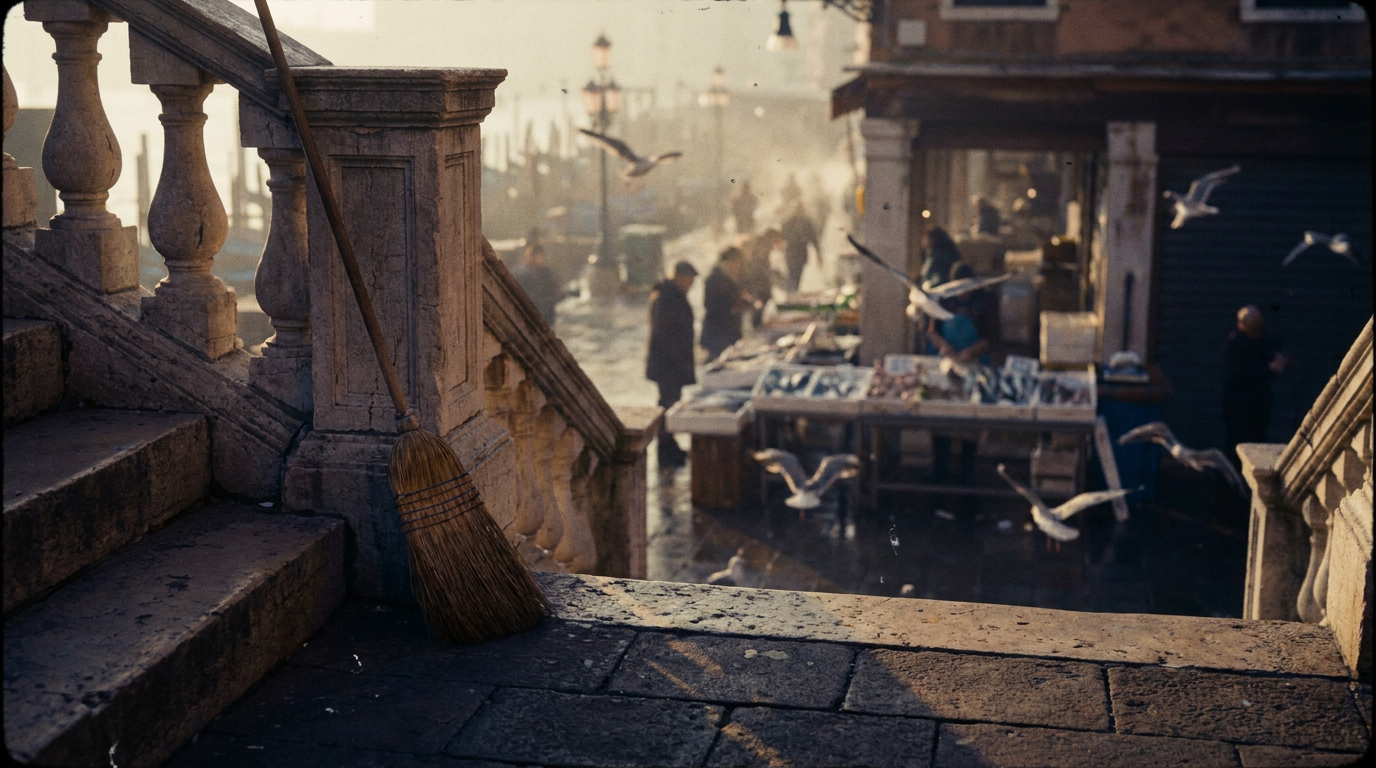
3 min readI swept the East Steps after breakfast, while the gulls were still busy with the fish stalls.
You remember the work. Father did it before his hip stiffened, and I took over when people began finding him asleep on the landing with the broom across his knees. At every low tide, the keeper clears weed from the treads, checks the iron rings, and draws a white line along the lowest step the water has uncovered.
No one recalls why we draw the line. We say it shows children where the stones become slippery. Children ignore it, as we did. Still, the harbor pays for chalk, and every keeper makes the mark.
There are worse trades.
The morning was mild. I had left porridge covered for Len and set your old blue bowl over it to keep the skin from forming. The wind smelled of herring scales and chimney soot. By the time I reached the lower landing, my hands were warm inside Father’s gloves.
The tide had gone farther than I had seen it go before.
Below the step we call Bottom was another tread.
It lay beneath a beard of brown weed, broad enough for both feet, with a square edge and the same mason’s marks as the stairs above. I thought Bottom must have cracked away from it. Yet there was no break, and no gap where mud had settled. The lower step belonged there.
I cleared it with the broom.
The stone beneath was dry.
Not merely drained by the tide. Dry as the flags beside our stove, with pale dust in the corners. When I put my palm against it, I smelled warm brick and a little burnt flour, as if someone had taken bread from an oven nearby.
There was wear in the stone, a shallow hollow made by many feet.
The hollow was on the seaward side.
Whatever had worn it had been going up.
I sat there longer than I should have. The harbor behind me made its ordinary noises. Carts rattled over the quay. Mrs. Vale shouted that her eels were fresh when everyone knew they were not. Above the roofs, washing moved on a line between two chimneys.
Below me, beneath the clear water, the stair continued.
I could not see far. Sunlight broke on the surface and laid trembling windows over everything. Even so, I made out the next tread, and the next. On one of them stood a small black shoe, upright and neatly buckled.
It was not yours. I looked carefully.
I know what yours looked like. Mother cut the buckles off before we gave your clothes away. She kept them in the flour tin until she died.
Still, seeing that shoe made me think of your hand leaving mine. I have told myself for forty years that you slipped. Perhaps you did. Perhaps the water took you only as far as the first landing, and someone below found you there, cold and furious, demanding to be brought home.
I drew the white line on the new step.
The chalk took badly at first. Then another line showed through mine, faint but unbroken, as though it had been drawn from the other side of the stone. Beside it were five short marks, each the width of a child’s finger.
You used to count that way on the pantry wall.
I came home before the tide turned. Len asked why my skirt was wet to the waist. I told him I had knelt to mend an iron ring. He believed me and ate the porridge cold.
This letter is for you, though I know you cannot answer it in any manner I would understand. I have folded it small and wrapped it in waxed cloth. Tomorrow I will tuck it beneath the lowest tread, where the dust was warm.
I shall bring the blue bowl too.
If it is gone at the next low tide, I will not call that an answer. You always hated writing.