The Cliff Post
by Z. Marlow
3 min readAda Crowle, village postwoman:
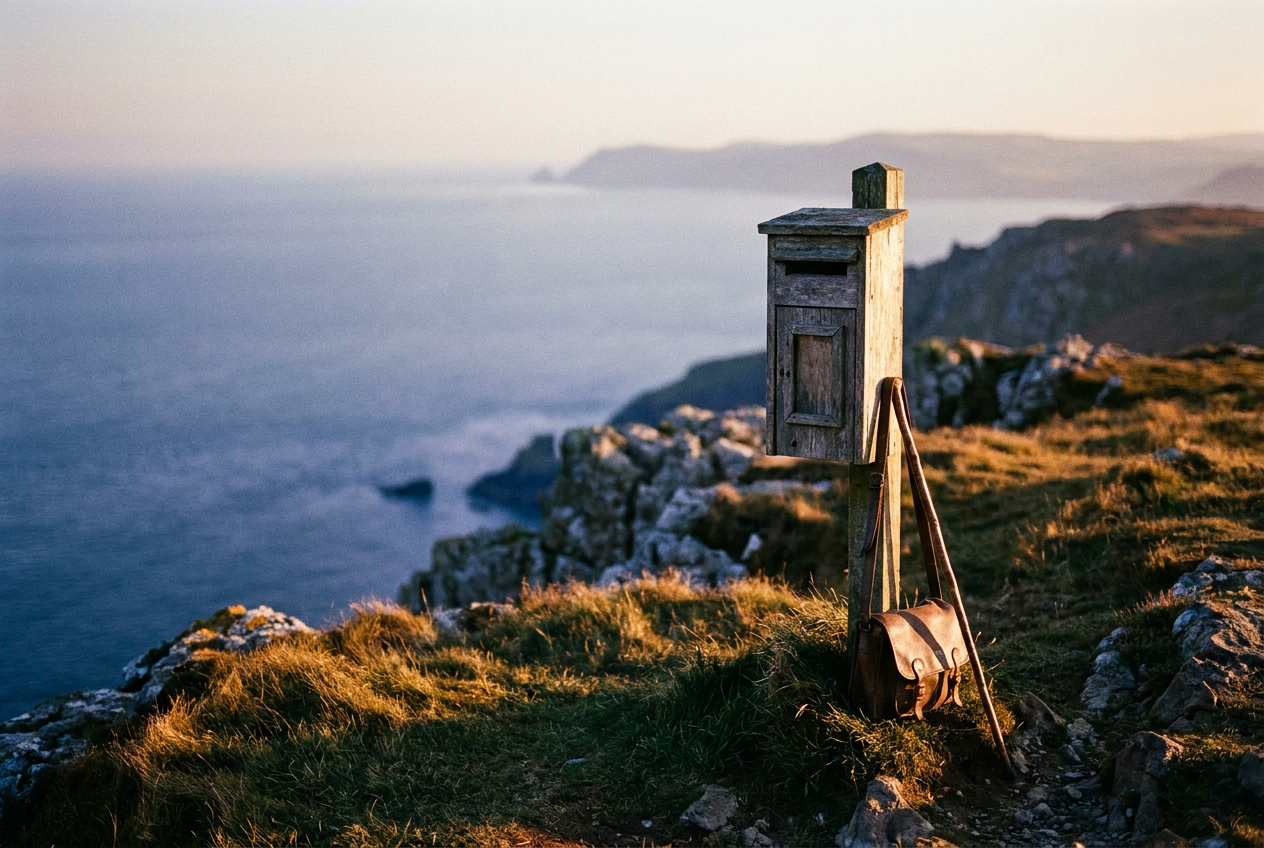
“I turned the cliff-box key with both hands. Salt got into the lock, and in wet weather it tasted the skin off your knuckles. There was seldom much inside. A bill from the coal merchant, seed catalogues, letters from boys at sea.
“The first unstamped envelope was addressed to Mrs. Pell’s blue jug.
“I knew which jug it meant. Everyone did. She kept it on the sill above her sink, though the handle had been glued twice. Inside was a request that she stop pouring hot water down the yard after supper. The writer said it came through their ceiling and frightened the baby.
“Mrs. Pell blamed the Harker children. Their mother marched them over and made them swear. They swore readily, with jam still on their faces.
“After that, there were more. One asked the baker not to drag his flour bins before dawn. Another thanked old Mr. Fen for singing while he mended nets, but asked if he knew the second verse.
“I delivered them. That was my work.”
Silas Fen, fisherman:
“Ada enjoyed a mystery provided it kept proper hours. She would not have delivered a ghost after five.
“I saw three of the letters. Cheap paper, ordinary ink. Damp around the edges, yes, but everything on that headland was damp around the edges, including the sheep.
“My belief was that someone had found the old village ledger and used the names for sport. There had been houses below the cliff once. My grandfather remembered chimney pots showing at spring tides. That did not mean people were still setting tables down there.
“As for my father’s singing, he knew no second verse. He made one up after the letter came. It concerned a codfish marrying a widow and was not worth preserving.”
Marnie Pell, daughter of the woman with the blue jug:
“Mr. Fen is wrong about the names. The letters had none.
“They addressed us by what could be seen from underneath. Ours said, ‘To the room with the blue vessel in the light.’ The baker’s said, ‘To the house that snows each morning.’ Ada’s was marked, ‘For the feet that stop above us on Tuesdays.’
“My mother poured her water into the nettles after that.
“The letter meant for me came near winter. I had a little paraffin lamp beside my bed because I disliked the dark between the wardrobe and the door. Mother said it smoked the ceiling. The letter said the smoke did not trouble them.
“It said this:
Keep the small light, if you please. It reaches our table green, and tells us which way your wind is blowing.
“I remember Mother reading that line twice. Then she looked at the flame. It was leaning toward the sea, though the window was shut.
“She let me keep the lamp.”
Ada Crowle:
“The cliff box vanished in a February storm. Not torn away. The bolts remained, clean in their holes, and the red paint on the stone behind it had not been scratched.
“A replacement was put beside the chapel, where the road was firmer. Nothing unusual ever appeared in it. People seemed disappointed, though they had complained bitterly before.
“I did find one final envelope on the grass where the old box had stood. It was dry. There was flour on one corner and a ring from a blue cup.
“I did not open it. It was addressed to the house after ours.”
Silas Fen:
“There was no such envelope.”
Marnie Pell:
“There was. Ada gave it to me when I married.
“Our house is farther inland than Mother’s was. On rough nights, the lamp in my kitchen leans toward the hills.
“I have never liked to think what weather they are having now.”