The Cold Hearth's Supper
by Z. Marlow
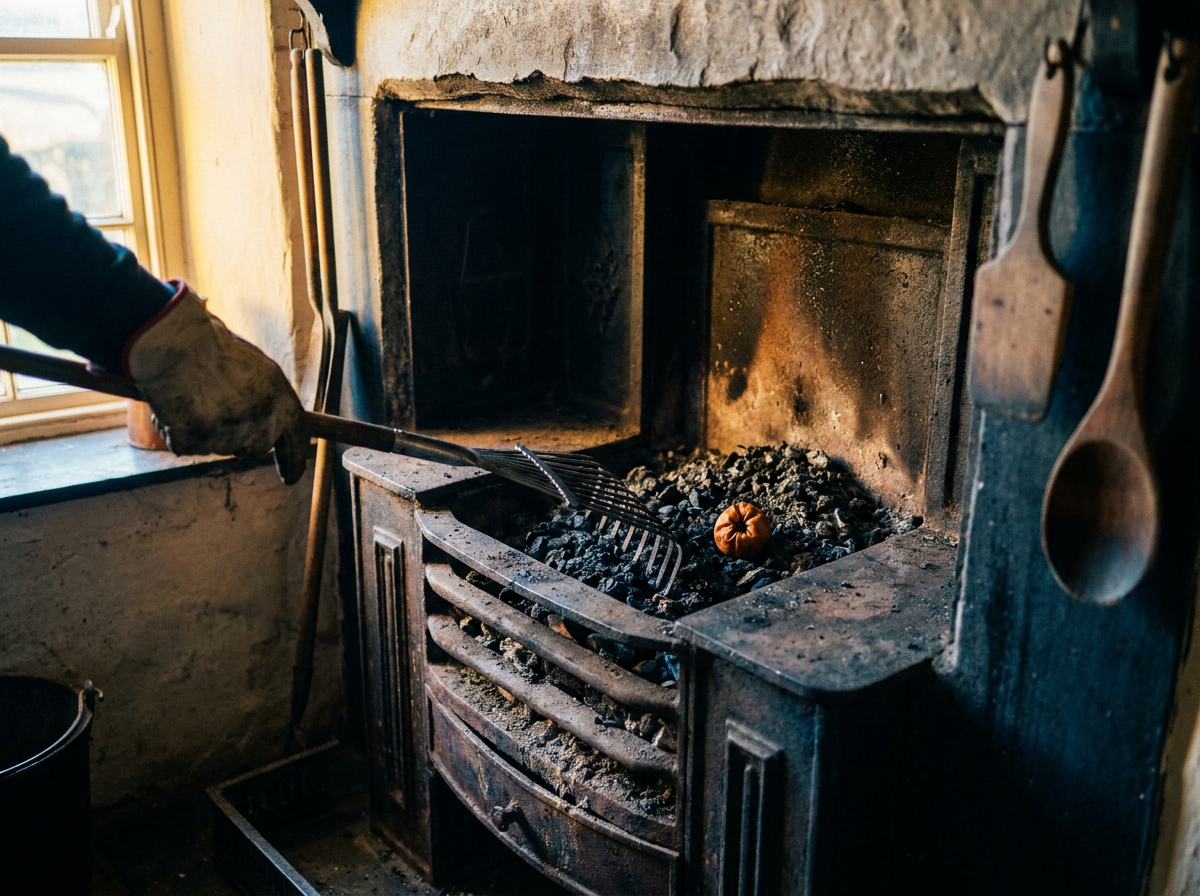
3 min readYou rake the cinders from the range before breakfast and find a quince pip among them.
It is clean and pale, with no scorch upon it. You set it on the saucer where you keep buttons that have lost their garments. Then you blacklead the grate, heat yesterday’s porridge, and wake Elsie for school.
The rooms are cheap because the back chimney has been bricked at both ends. Mr. Vennick, the landlord, says it smoked abominably and once dropped a live rook into the wash copper. You use the empty fireplace for boots. In wet weather, their soles leave little black crescents on the tiles.
Your husband dislikes the rooms. The ceilings slope, the pump in the yard brings up rust, and the woman below beats carpets whenever he comes home from night work. Still, there is sun on the kitchen table in the afternoon. Elsie can touch both walls of her bedroom if she stretches.
You have known worse homes.
The first smell comes while you are mending a cuff. It is stewed quince, sweet and grainy, with cloves. Your mother served it on Sundays in the blue bowl with the chipped rim.
You search the landing. Downstairs, Mrs. Clay is frying liver. Across the yard, washing hangs stiff in the November air. The smell is strongest beside the bricked fireplace, though the bricks are cold.
It fades before your husband returns.
After that, the chimney remembers often. Damp rush matting. Lamp oil. The pear soap used by your aunt in the cottage at Marrow Fen. Each smell belongs to a room you have not entered since childhood. They arrive separately and without pattern, as if someone beyond the bricks were opening small doors.
You say nothing. A home may have its private faults, like a person. It is unkind to make them public.
Then Elsie smells something.
She is doing sums at the table when she lifts her head. Her pencil remains touching the slate.
“Bread crust,” she says.
There is no bread in the oven.
She crosses to the fireplace and kneels among the boots. You expect her to name the bakery near school, or the kitchen downstairs. Instead she reaches into the cold grate and touches the bricks.
“It is our supper,” she says.
You smell it then: onion broth, singed rosemary, the heel of a loaf warming on the range. Beneath it lies beeswax, damp wool, and the faint medicinal sweetness of your husband’s chest cordial. It is the smell of this room on a winter evening.
Only emptier.
Elsie presses her ear to the brickwork.
“The house is remembering us from afterward.”
That spring, the landlord raises the rent. Your husband has found steadier work near the river, so you pack the crockery in straw and give Mrs. Clay the coal you cannot carry. On the last morning, you scrub the range, fold the rag rug, and remove the boots from the dead hearth.
Behind them lies a little mound of warm ash.
You do not show Elsie. You gather it in a handkerchief and take it with you.
The new rooms have higher ceilings and a view of barges moving through the rain. There is no bricked fireplace. The kitchen chimney draws so fiercely that the kettle flame bends toward it.
For several weeks, nothing unusual happens.
Then, one evening, you return from the market and find Elsie standing on a chair beside the mantel. She has opened the small iron door where the sweep pushes his brush.
A smell drifts from it, faint but unmistakable: fresh plaster, river fog, and quince simmering with cloves.
Elsie looks pleased.
You have never cooked quince in these rooms.
From somewhere high inside the chimney comes the careful sound of a spoon being laid beside a bowl.