The Far Side of Stone
by Z. Marlow
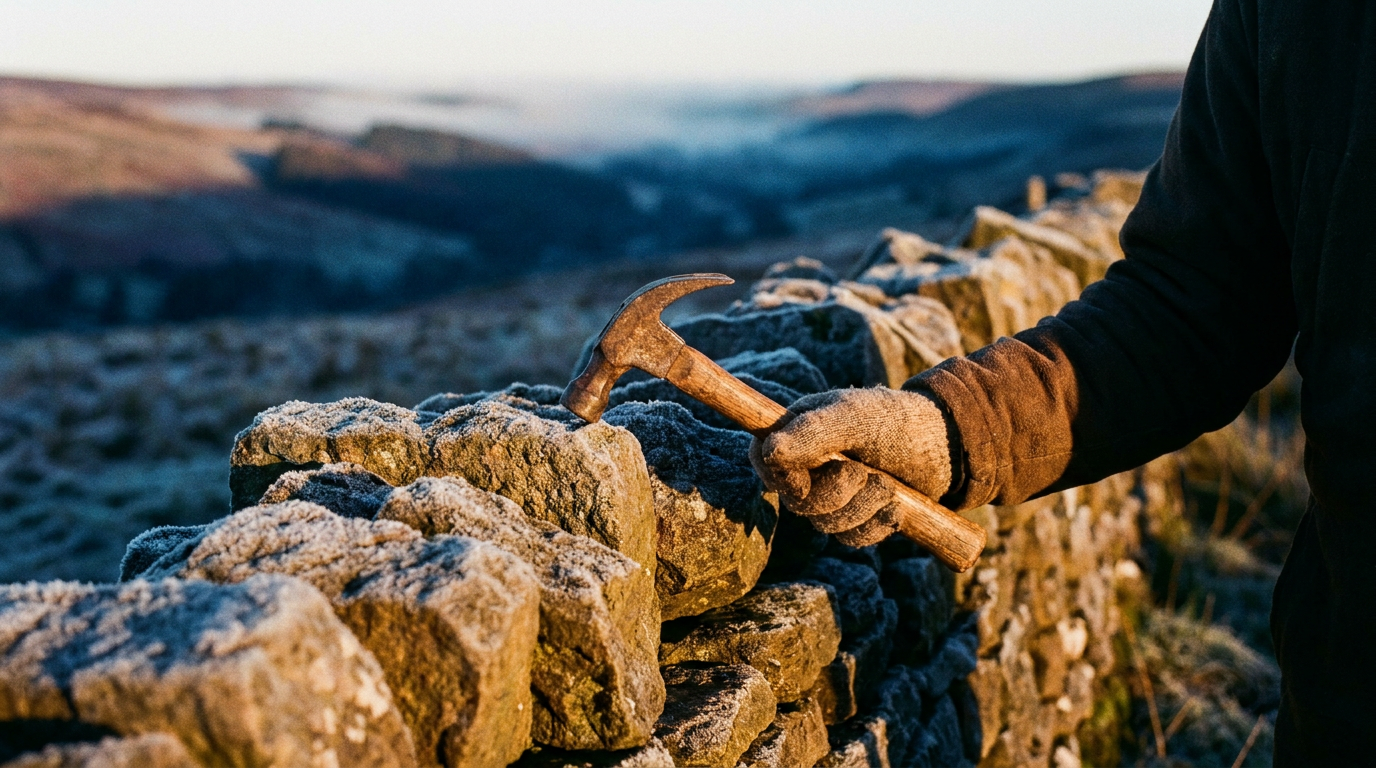
3 min readI carried Grandfather’s hammer up to the sheep wall before the frost had lifted.
The fallen place was near the rowan, where the ground sinks and the ewes always hurry past. Your grandmother said our family owed the wall a day’s work each spring, though she never told me what bargain had been made. She gave me the hammer when her hands grew stiff. Its ash handle is dark where four generations have held it.
I had meant to bring you there one day.
You would have liked the sound of the work. A good stone answers the hammer with a clear note, almost cheerful. A bad one gives a dull cough and breaks along some private fault. By noon I had pulled down the loose section and sorted the stones among the heather. Lichen, beetles, old nests. Once, a dry twist of lavender, still faintly sweet after being sealed in darkness longer than I have been alive.
I ate bread by the rowan. The valley below was full of woodsmoke, and the slate roofs shone like fish scales. From that height, every wall ran into another. Field joined field. Hill answered hill. There seemed no place in the whole country that had not been measured by stone.
When I began rebuilding, I noticed the hollows.
They were on the inward faces, where no weather could have reached them. One stone held the print of a broad palm. Another had four shallow grooves, as if someone had rested fingertips there while the rock was soft. The marks were smooth and pale. They did not resemble carving.
I thought of Grandfather’s hands. I remembered how he could lift a sleeping lamb without waking it.
The next hollow was narrow, with a crooked first finger. Your grandmother broke hers in the lambing shed when she was young. It never straightened. I set my own hand into the stone and felt the bend fit beneath my knuckle.
Little one, the stone was warm.
Not sun-warm. It had lain face down beneath the wall since winter. This was the warmth left in a chair after someone rises.
I should have gone home then. Instead I uncovered the foundation course, brushing away the black soil with my sleeve. There were more hollows below, some large, some small, all turned into the wall. A family of hands holding the fields apart.
Near the rowan root, I found yours.
It was not the hand I wrapped beneath your chin on that quiet morning. This hand was long enough to gather wool, to knead bread, to shade grown eyes from summer glare.
It had six fingers.
The smallest curved close beside the thumb, exactly as yours did. I remember that finger better than your face. Its nail was clear as a grain of salt.
I sat there until the shadow of the rowan crossed my boots.
You never touched the wall. You never saw frost whitening the sedge or heard sheep cropping grass in the dark. Yet some part of you reached the age I could not carry you to, and laid a hand against the far side of the stone.
I have rebuilt the wall, but I turned that stone outward. The hollow waits at shoulder height beside the path. A traveller might rest a hand there and think the mason fanciful.
This letter lies behind it, folded in your grandmother’s red thread.
Tonight, from the cottage window, I can see the rowan moving against the stars. There is no wind. Something pale rests upon the wall where your sixth finger would be, then lifts, then rests again.