The Hazel Pump
by Z. Marlow
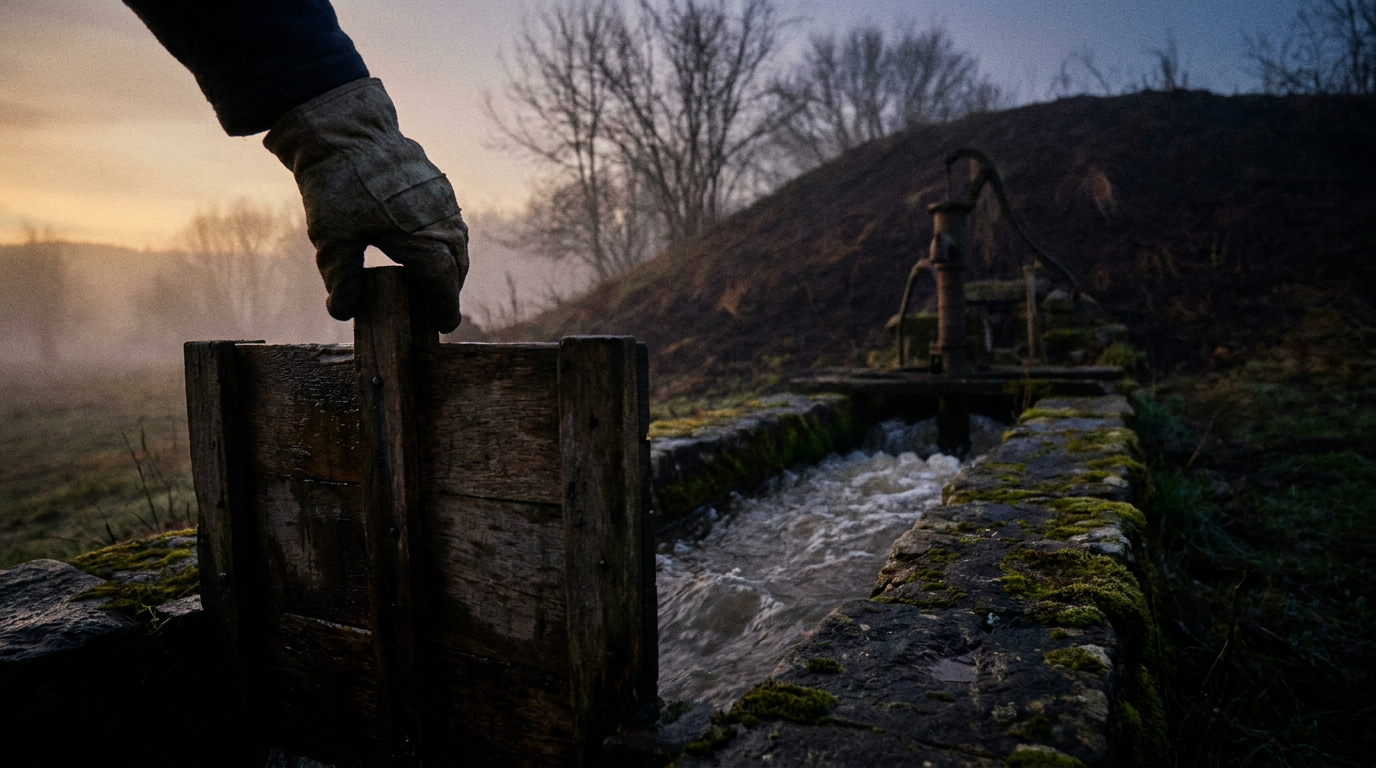
3 min readYou lift the sluice before sunrise, while mist still lies between the hazel trunks. Water shoulders into the stone channel and strikes the pump beneath the hill.
Clack. Hush. Clack.
The iron vessel shudders. A pipe no wider than your wrist carries water uphill to the village, where kettles wait on cold ranges and cattle nose their empty troughs.
Your aunt taught you to listen before she taught you to mend.
“A split washer chatters,” she said. “A blocked valve sulks. Air in the chamber sounds like somebody eating an apple in the next room.”
She called the pump Old Hazel, though its maker’s plate bore another name. That name had softened under moss and generations of thumbs. The village children believed a woman slept inside the iron bulb. They left her primroses in spring and warm milk when the channel froze.
Your aunt never discouraged them.
“Machinery likes manners,” she said.
For most of your life, Old Hazel has kept the same pace. It does not hurry when the laundry house opens its taps, nor slow when rain fills every barrel. Its beat enters the cottages through the pipes. Babies settle to it. Bakers knead to it. Even the dogs sleep with one ear arranged toward the floor.
On the last evening of your aunt’s life, she asks you to carry her downstairs.
She has become very light. You feel each button of her nightdress against your arm. You settle her beside the kitchen wall, where the supply pipe rises from the flags. Outside, rain combs the orchard.
She puts her palm to the pipe.
“Still going,” she says.
All night you sit beside her. The lamp chars its wick. Once, she wakes and asks whether the upper trough is full. Once, she asks if you remembered the milk.
Near morning, Old Hazel misses a stroke.
The silence is scarcely longer than a breath.
Your aunt opens her eyes.
From the sleeping village comes a small, soft disturbance: bedsprings answering, a cup trembling on a saucer, a horse striking its stall. In the cradle upstairs, your cousin’s baby gives one startled cry.
Your own heart waits.
Then the pump strikes again, and every living thing upon the hill seems to breathe out with it.
Your aunt smiles. Not because the machine has resumed. You understand that later.
She dies before daylight, with her hand resting on the pipe.
After the burial, you go down beneath the hazels and dismantle the pump.
You expect a fouled valve, perhaps a stone drawn through the intake. Instead, the workings are clean. The leather seal is sound. Nothing has slipped or cracked.
Still, something is wrong.
Old Hazel strikes too quickly.
You adjust the weight. You narrow the flow. You lay your ear against the cold iron and hear the water falling away beneath you. The beat slows while you listen, then quickens when you lift your head.
So you place your hand on the vessel, as your aunt placed hers upon the kitchen pipe.
The pump settles to your pulse.
That is when you remember her smile.
All those years, you had believed the village listened to Old Hazel. You had believed the children slept by it, the bakers worked by it, the old people measured their remaining evenings by its faithful clack.
You had it backward.
The pump had been listening to all of you.
It had gathered the village through the pipes: fevered hearts, courting hearts, hearts quiet with grief. From that multitude it had made a common rhythm and returned it through the walls.
When your aunt’s heart ceased, Old Hazel had stumbled over the absence.
You keep your palm against the iron until noon.
In autumn, your cousin brings the baby down to see the primroses. The child has begun to walk, badly but with determination. She pats the pump twice and laughs at the answering tremor.
That night, Old Hazel adds a new hesitation to its stroke, a tiny skipping beat no mechanic would permit.
By winter, the whole village has learned it.