The Home Line
by Z. Marlow
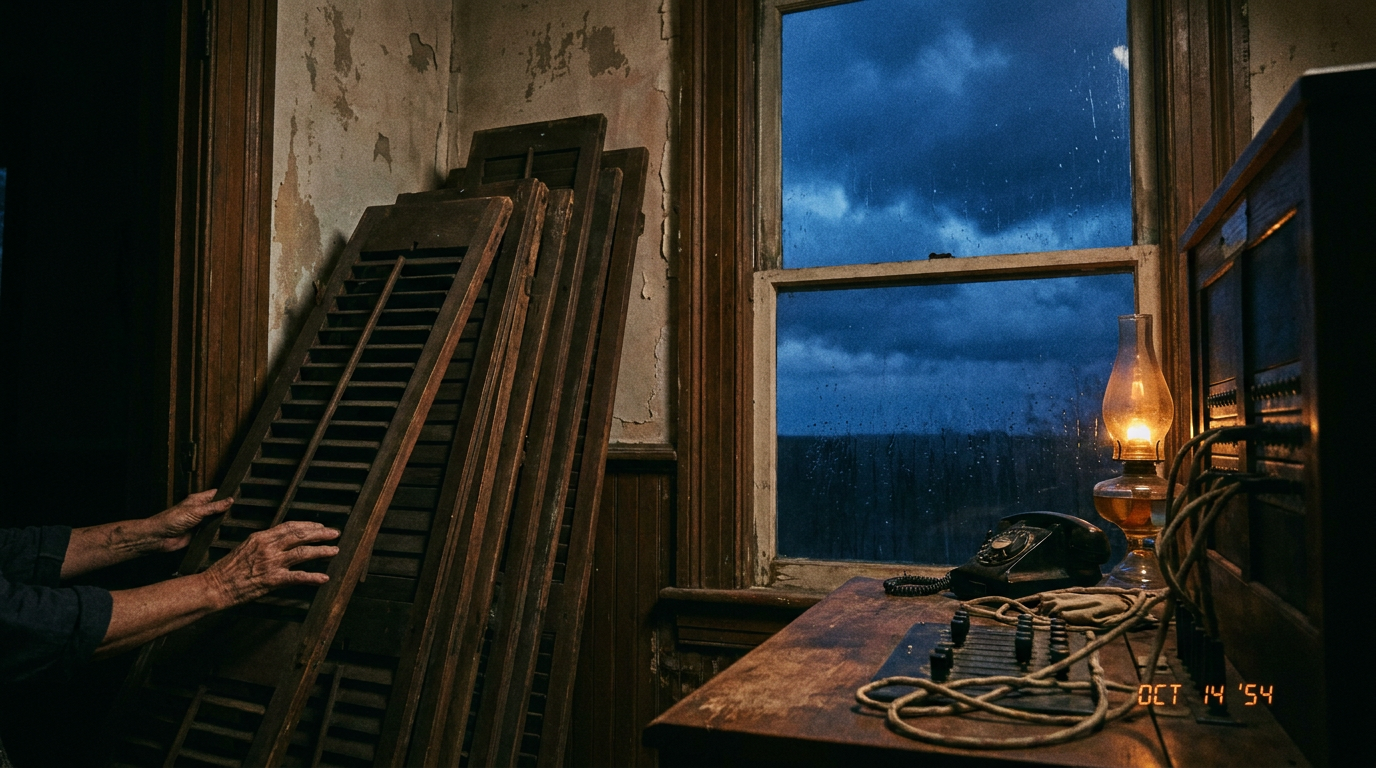
3 min readMy mother carried the storm shutters inside before the rain reached the exchange.
I remember following her between the switchboard and the windows, holding the screws in my cupped hands. I may remember this wrongly. The room has grown larger over the years, and the rain louder. What remains certain is the smell: wet wool, warm varnish, and the faint scorched sweetness of the cords.
The exchange was already old then. Calls arrived as small falling shutters, each marked with the number of a house or shop. My mother answered by fitting brass plugs into rows of dark holes. She did it gently, as though the board were asleep.
At the bottom was a jack with no number.
Its brass rim had been polished pale by use, though no subscriber belonged to it. The older operators called it the home line. They said it had been wired into the first exchange and left behind through every alteration, because nobody could discover where the cable ended.
“It rings when the weather gets into it,” my mother told me.
The older women said otherwise. According to them, the line went wherever the person answering meant by home. This was why one should never plug into it. A person might mean the house of childhood, or a room where someone still waited, or a place not built yet.
Just after dark, its shutter fell.
The sound was very slight. I heard it because all the others had stopped.
My mother stared at the blank square. Rain pressed silver beads through the window frame. Then she took a cord and pushed the plug home.
She listened.
Her face did not change, but her free hand found my shoulder.
I asked who it was. She lifted the second receiver to my ear.
At first I heard only a kitchen. A spoon touched china. A kettle clicked as it cooled. Somewhere close to the mouthpiece, a person breathed with the careful patience used beside the sick.
Then a voice said, “The blue one first, Mam. After that, we’ll sit by the window until the rain goes.”
It sounded old to me. Not elderly, just worn smooth, like a doorstep. I heard another voice answer, too faint to make out.
My mother pulled the cord.
We left by the quarry road, although it added an hour and the ditches were already spilling across the stones. In the morning, the lower bridge was gone. Brown water moved through the place where it had been, carrying fence posts and one white kitchen chair.
She never told me what she had heard.
Near the end of her life, my mother lived with me. She had grown small and light, but still folded every cloth before setting it down. On wet evenings she sometimes asked whether the exchange shutters were fastened.
One night, while rain tapped the pantry window, I brought her tablets in a blue saucer.
“The blue one first, Mam,” I said. “After that, we’ll sit by the window until the rain goes.”
The old telephone on the wall rang once.
It had not been connected for years. Its cord ended in a neat coil inside the plaster.
I lifted the receiver.
There was the warm hush of the exchange. A plug scraped against brass. Then my mother’s young voice said, very far away, “Central.”
Behind her, a child coughed twice.
I could not speak. Perhaps I did. This is the part I trust least.
My mother swallowed the blue tablet and looked toward the dark window.
“I wondered when you would get there,” she said.
She died in spring, with the windows open to the smell of turned earth.
The telephone remains on the pantry wall. On certain wet evenings its bell gives a soft movement, not quite a ring, as if a finger has tested it from the other side.
I do not answer now.
There are other houses I have called home.