The Homeward Blind
by Z. Marlow
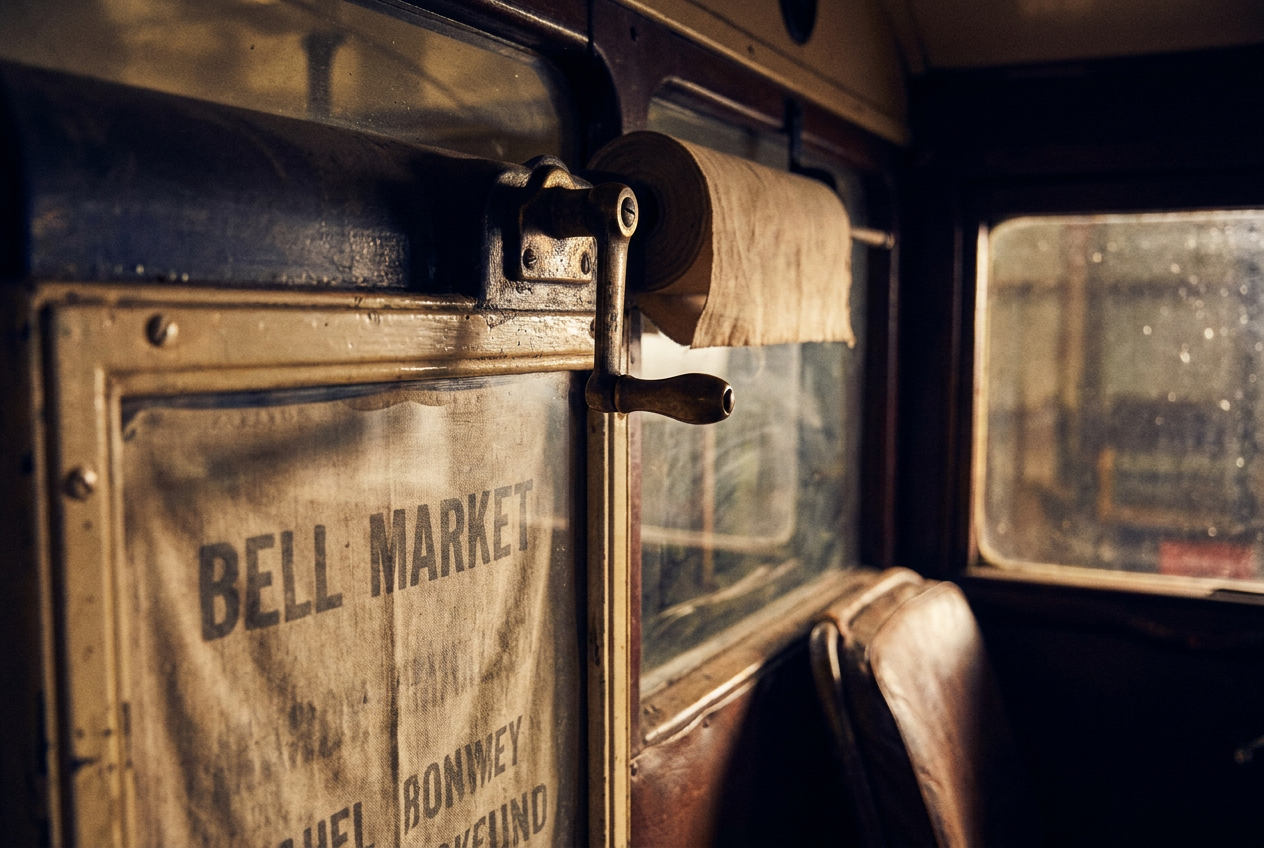
3 min readNell Arrow, driver: “I was winding the destination blind when the word came down. Those old blinds were linen, stiff with dust and tobacco. You turned a brass handle above the cab, and the places passed in their proper order: Bell Market, Ashcombe, Depot.
“After Depot came HOME.
“It was printed in the same white capitals. No patching, no fresh paint. I wound it back and found it again.
“The passengers were already aboard, so I left it showing. That was my mistake, if it was one. Nobody complained. People rarely look at the word above a bus once they are inside it.”
Tomas Wren, depot cleaner: “There was no HOME on that blind. I took it out myself the following morning. Nell remembers what suits her.
“She had been driving late, in sleet. The heater leaked a sweet metal smell. That can make your thoughts soft.
“I am not calling her a liar. A lie is made on purpose.”
Nell Arrow: “The first person to ring was a boy in a red school coat. He asked for Orchard End, though we had passed Orchard End before he boarded. I told him so. He said, very politely, ‘Not that one.’
“The bell sounded again beside a row of shuttered shops. I stopped.
“When the doors opened, warm air came in. It smelled of garden hose on hot paving. Beyond the step was a green gate with a bicycle lying against it. The boy ran through. There was sleet on my windscreen, but sunlight on the back of his coat.
“No one spoke. That is the part Tomas does not believe. He thinks people would have shouted.
“They did not. They began gathering their bags.”
“Each of them knew what the word meant, and none of them meant the same place.”
Tomas Wren: “The bus returned before dawn with mud on the floor and every seat warm. That is what happened. Nell was alone.
“There were no passengers stepping into summers or kitchens or houses pulled down before they were born. Warm seats are not proof of souls. Bus heaters run beneath them.”
Nell Arrow: “Mrs Pell stayed.
“She lived with her daughter above the locksmith’s. I knew that. Everybody knew Mrs Pell. She carried peppermints loose in her handbag, so everything she owned smelled faintly medicinal.
“At the old quarry road, the doors opened on a narrow hall. Brown wallpaper. A man’s coat hanging from a peg. We could hear someone in the kitchen whisking eggs with a fork.
“Mrs Pell stood up, then sat again.
“She said, ‘That was my husband’s coat.’
“I asked whether she wanted to get off.
“She held my sleeve until the doors closed. Her fingers were cold.
“‘He never came home from the water,’ she said. ‘So that cannot be home. Not for him.’
“I drove her to the locksmith’s. The proper road had returned by then.”
Lina Pell, daughter: “My mother did not come back on Nell’s bus. She let herself in while I was asleep, using the key she had lost that winter.
“She would not tell me where she found it.
“Nell brought the bus round after breakfast and asked if Mother was safe. They stood on the landing holding hands. Neither apologized. That is how I know something happened, though not what either of them said.
“Mother kept the red ticket in her purse until she died. There was no destination printed on it, only one word pressed so deeply into the paper you could feel it from the back.
“Sometimes now, late buses pass my window with HOME above the driver. I never board them.
“There are several places that word could mean, and only one of them still has my kettle in it.”