The Keeping Wire
by Z. Marlow
3 min readI was scraping ice from the token window when the machine took my daughter’s thread.
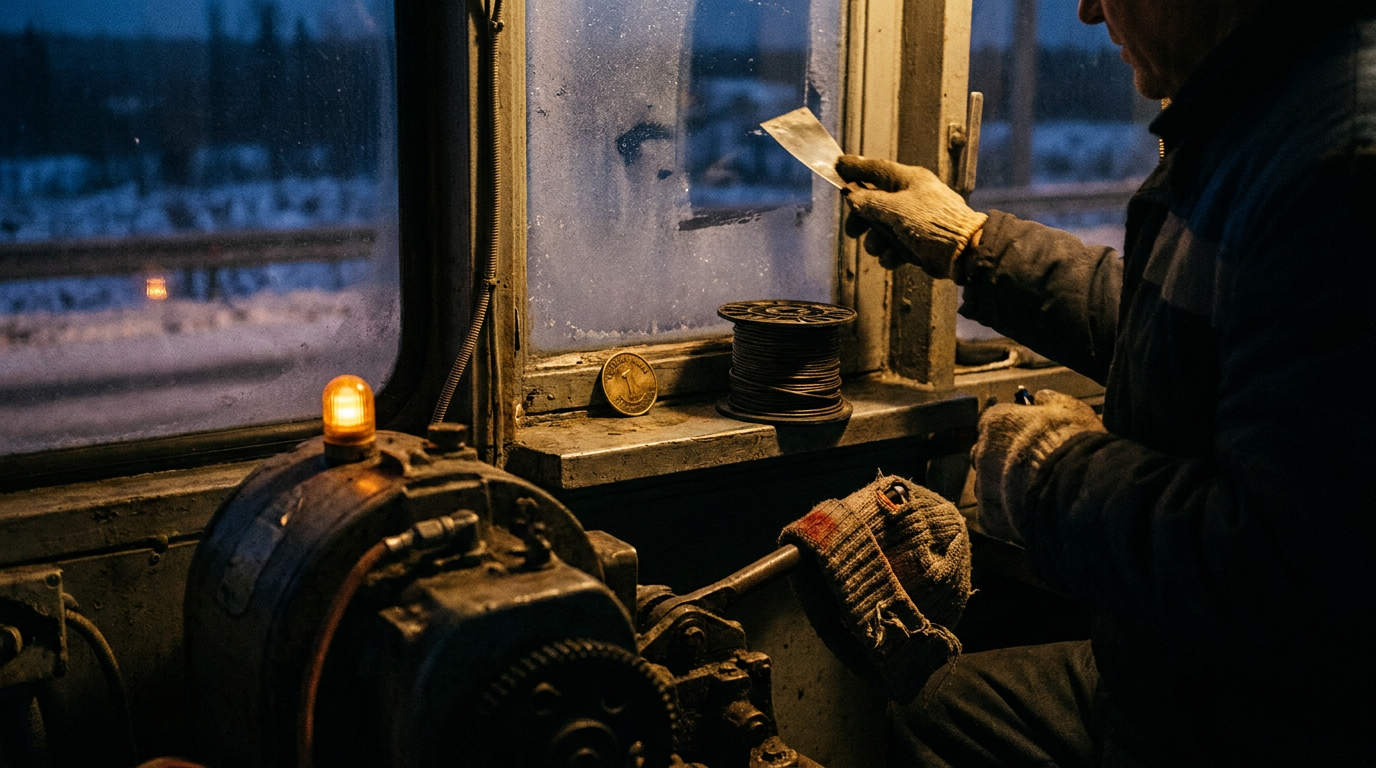
The railway through Calder Moss still used brass tokens then. A driver could not enter the single track without one, and the machine would not release it unless the line was clear. The arrangement was older than anyone working there. Its cabinet filled most of the signal hut, leaving a narrow passage between hot iron and cold glass.
People called it the keeping box.
That was not its railway name. According to local telling, the name came from women who sent children over the moss alone. Before the morning train, a mother would sew a colored thread beneath the child’s collar. She would keep the other half wound around her finger until the train returned.
“What does that do?” I asked my grandmother once.
“It gives the line something to hold.”
She said this without mystery, while turning my porridge skin-side down.
By the time I worked at Calder Moss, people tied no threads. Children had bright telephones in their pockets. The old story remained, but as a phrase used when a train was late. The box is keeping them. No one meant anything by it.
My daughter Fen was eleven when she first traveled alone. Her mother had gone inland to sit with a dying aunt, and Fen followed two days later with a paper bag of sandwiches and a blue cardigan buttoned wrongly at the throat.
I noticed the thread when I kissed her goodbye. A loose strand had caught on the top button.
“You will unravel by Lorn,” I told her.
She pulled it away and let the wind take it.
The train left before snow began. By dusk the rails were gone beneath white, and the telegraph wire made a low sound along the poles. I remained in the hut with a paraffin heater, a cup of tea that tasted of its tin lid, and Fen’s return time written on the blotter.
The train entered the far section after dark. I turned the handle to release its token.
The handle stopped halfway.
I tried again. Something inside the cabinet tightened with a small, fibrous creak.
The railway manual said to wait. Grandmother had said never force a keeping box, because it might be holding more than the line. I waited until the hut seemed scarcely larger than my coat. Snow pressed pale against every pane. The heater clicked and smelled of singed dust.
At last I removed the side panel.
The cabinet contained wheels, rods, copper contacts, and the stiff black cords that joined Calder Moss to Lorn. I knew each part.
Around them lay thread.
It was not tangled. Each strand entered through the wall beside the telegraph cable, looped once around the locking wheel, then vanished into the darkness below. Red wool, white cotton, green silk, coarse brown twine. Some had faded almost to ash.
One strand was blue.
I touched it. The locking wheel moved beneath my fingers, though the handle did not. Far away, beyond the snow and the black cuttings, I felt a answering pull.
Not from the train.
From her collar.
I understood then why mothers kept the other half wound around a finger. It was never a charm for the child. It was a way for the railway to know where home was.
I put the panel back. The handle completed its turn by itself, and the brass token slid into the tray, warm as bread.
Fen’s train arrived quietly. Snow covered the lamps and softened the engine to a breathing shape. She climbed down, sleepy and annoyed, with the blue cardigan still buttoned wrongly.
There was no loose thread at her throat.
The old machine was replaced last spring. The new cabinet has no wheels, only a green light and a sealed face.
Yet parents here still check their children’s collars before a journey across the moss. Often they find nothing.
Sometimes, when the train is late, they find a thread already drawn tight.