The Lamplight Return
by Z. Marlow
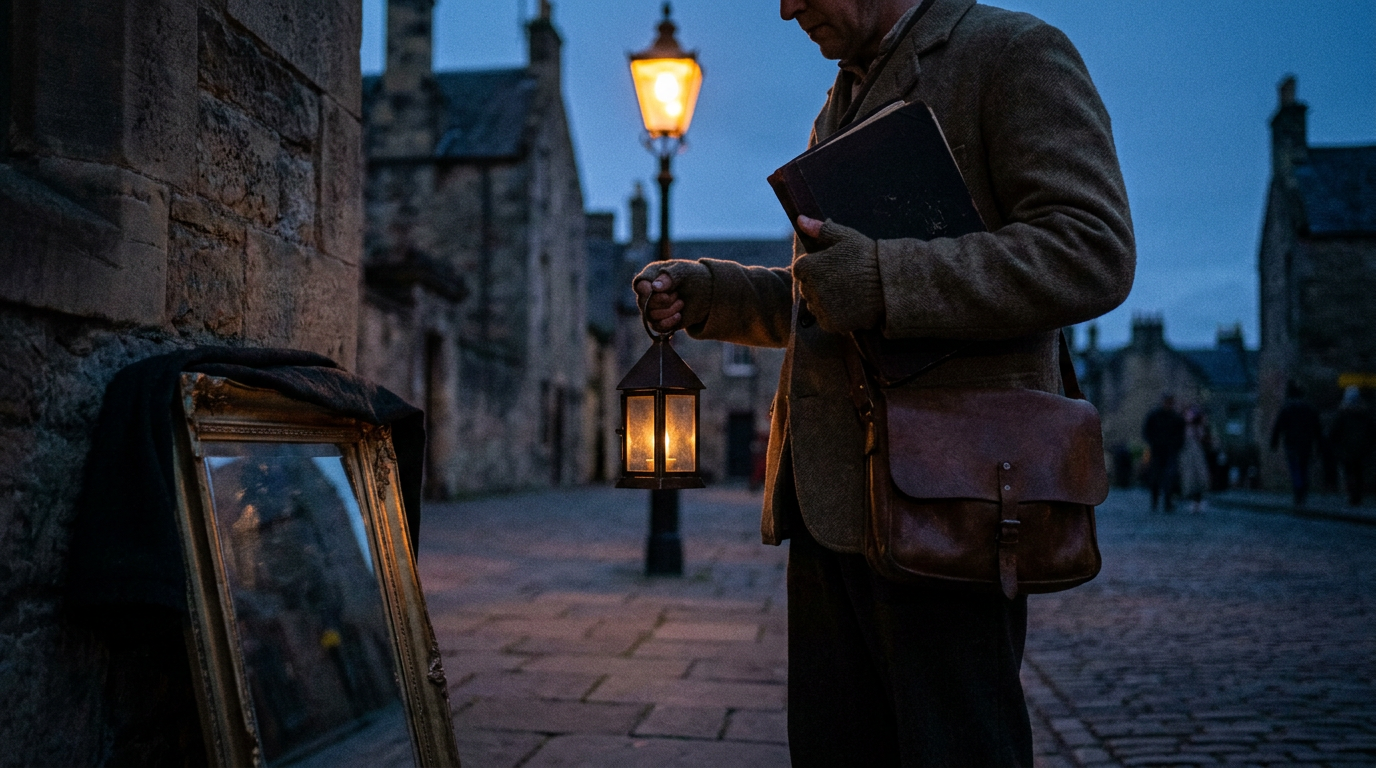
3 min readI took the western circuit after supper, carrying the black ledger and the hooded mirror. My duty is to clean the public lamps and enter whatever they illuminate that is not present by day. No one has ever asked why this is necessary.
The following is my return.
-
Flax Market, north corner: Glass clouded with cooking smoke. Brass collar sound. Beneath the lamp, the paving showed an old painted notice: FRESH EELS ON FRIDAYS. The fishmonger remembers no such notice, though she remembers the eels. They arrived alive in wicker hampers and sang when rain approached.
-
Outside the public baths: Ordinary light except upon the bench, which appeared newly varnished. A young man sat there in a green coat, wringing water from his sleeves. Mrs. Pell, who sells chestnuts opposite, said he had been waiting since before her marriage. She gave him a warm paper twist. He thanked her and was gone when she looked down for payment.
-
Juniper Square: Lamp required washing. Several pale handprints marked the inner surface of the globe. They were too small to belong to the maintenance crew. The baker’s youngest daughter watched me polish them away and asked whether the children inside would mind. Her father sent her home with two currant buns.
-
Mere Lane, beside the pump: Light fell farther than its casing permits. Within it, a woman crossed the street carrying a loaf against her hip. She crossed again, younger, with the same loaf held above her head against the rain. Then again as a little girl, following her mother. Then older than any woman in Mere Lane, scattering crumbs for birds that were not there.
All of them turned when I raised the hooded mirror.
They had the same face.
The present Mrs. Ansel came out in her slippers and stood beside me. She did not speak until the oldest one had passed. Then she said, very softly, “I wondered where those walks had gone.”
-
Tanners’ Row: No defect in lamp or mounting. The light smelled of wet wool and apples stored in straw. It revealed a narrow garden running between the houses, though there is only brick there by daylight. Several residents entered through their walls and walked among the cabbages. They returned before the lamp dimmed, bringing soil on their shoes.
-
West tram terminus: The lamp illuminated the rails continuing beyond the stopping block. A car stood some distance along them, bright and empty, its destination board left blank. Conductor Venn removed his cap. He said every driver sees that car eventually, but usually much later in service.
-
Unnamed passage behind the cooperage: This passage does not appear on my route card. It was lit from end to end by municipal lamps of an unfamiliar pattern. Each bore the town crest, except the river on the crest flowed upward.
People were coming along the passage in evening clothes, carrying covered dishes. Some I recognized. Some had not yet been born.
They greeted me by name.
- The house where my circuit ended: There is no lamp outside this house. There has never been one. Nevertheless, a clear circle of light lay across the doorstep, showing years of worn stone where the step is still sharp.
Inside that circle stood my own boots, empty and neatly paired.
Beyond them, in the dark street, the lamps of the western circuit were going out one by one. Not extinguished. Lifted, gently, as if another city above ours had begun to need them.