The Landward Face
by Z. Marlow
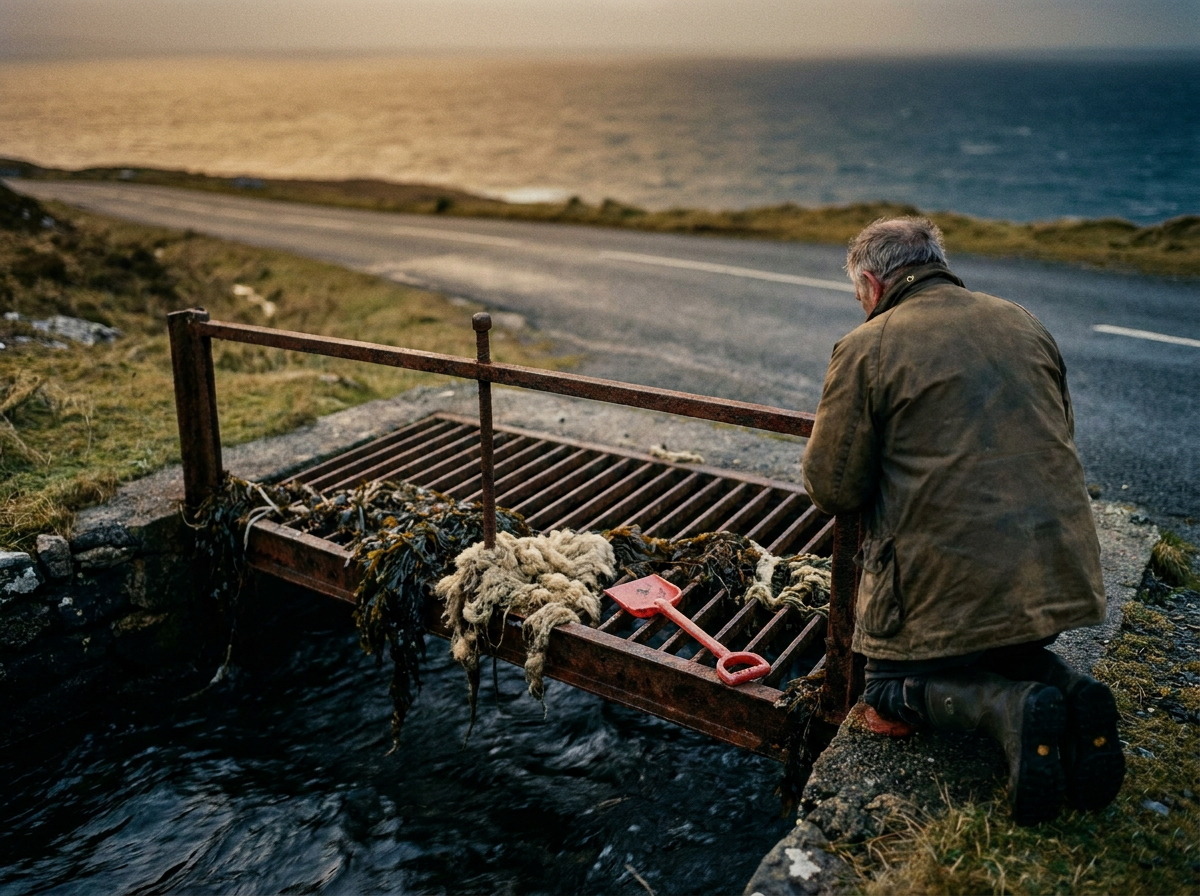
3 min readI cleared the eastern tide gate this morning, kneeling where the coast road passes over the black channel. The storm had packed the grate with bladderwrack, sheep's wool, and a child's red spade. Everything smelled of iron and opened mussels.
You taught me to pull the weed slowly. A sudden tug can bring the whole clot loose, and then the water takes it into the hinge. I still heard your voice saying this, though the wind was pushing hard enough to make the road signs hum.
The gate is much as you left it. Oak boards, tarred bolts, the iron flap that opens toward the shore and closes when the tide returns. Rainwater may leave the fields. The sea may not enter. Even a child can understand it, which is why you liked the work.
You used to say good machinery should have the manners of a well-kept door.
I have kept it for you since the January gale. There was never any question of finding another pair of hands. The men who came after the funeral did not know the channels. They called the western sluice a drain and asked why we could not fill it with stone.
I sent them away with the last of your tea in a flask.
The village still lies behind the wall, low and damp. On wet evenings, the chimneys seem to rise directly from the marsh. Mrs. Vale's geese sleep on the road because the tarmac keeps the day's warmth. Your apple tree has leaned farther east. It gave one small apple this year, hard as a knuckle, which I ate beneath it.
I found the mark when I opened the inspection hatch.
It was on the landward face of the flap, where no seawater should ever touch. At first I thought it was a salt bloom. White crystals had spread across the black iron in the shape of fern leaves.
Then the sun came through.
There was a palm in the salt. The heel, the deep middle crease, each finger laid flat. The smallest finger bent inward at the last joint, as yours did after the mussel knife slipped.
I wiped it away with my sleeve.
I am sorry for that.
There was no leak. The timber was sound, the hinge clean, the mud behind the gate sweet with rain and rotting grass. I sat in the channel until the tide rose and pressed the flap shut. Nothing passed it. Not a thread of water.
The print returned after the next shower.
That was when I understood why it had appeared on the inland side.
We built the wall to keep the sea out, and all the while it had only to become rain.
You would have known this. You always watched weather as if it were someone crossing a distant field. The sea lifts, travels unseen, and comes down on roofs, graves, sheep tracks, the bare boards of our yard. It gathers in ditches. It passes under the road. At last it reaches the gate from behind and lays its hand upon the iron.
Perhaps that is all the mark means.
Still, I put my palm over yours. The salt stung the split beside my thumb, and for a moment the metal was warm.
The tide had turned by then. Beyond the wall, the water drew away over the stones with the sound of sheets being folded in another room. I closed the hatch and carried the red spade home. It is by the stove now, washed clean.
I shall fold this letter and place it beneath the grate when the next rain begins. The channel will carry it down through the fields, under the geese, under the road, to the gate you once tended.
If it returns, I will know which face to look upon.