The Little Gate
by Z. Marlow
3 min readMy son was halfway around the substation before I understood what he was looking for.
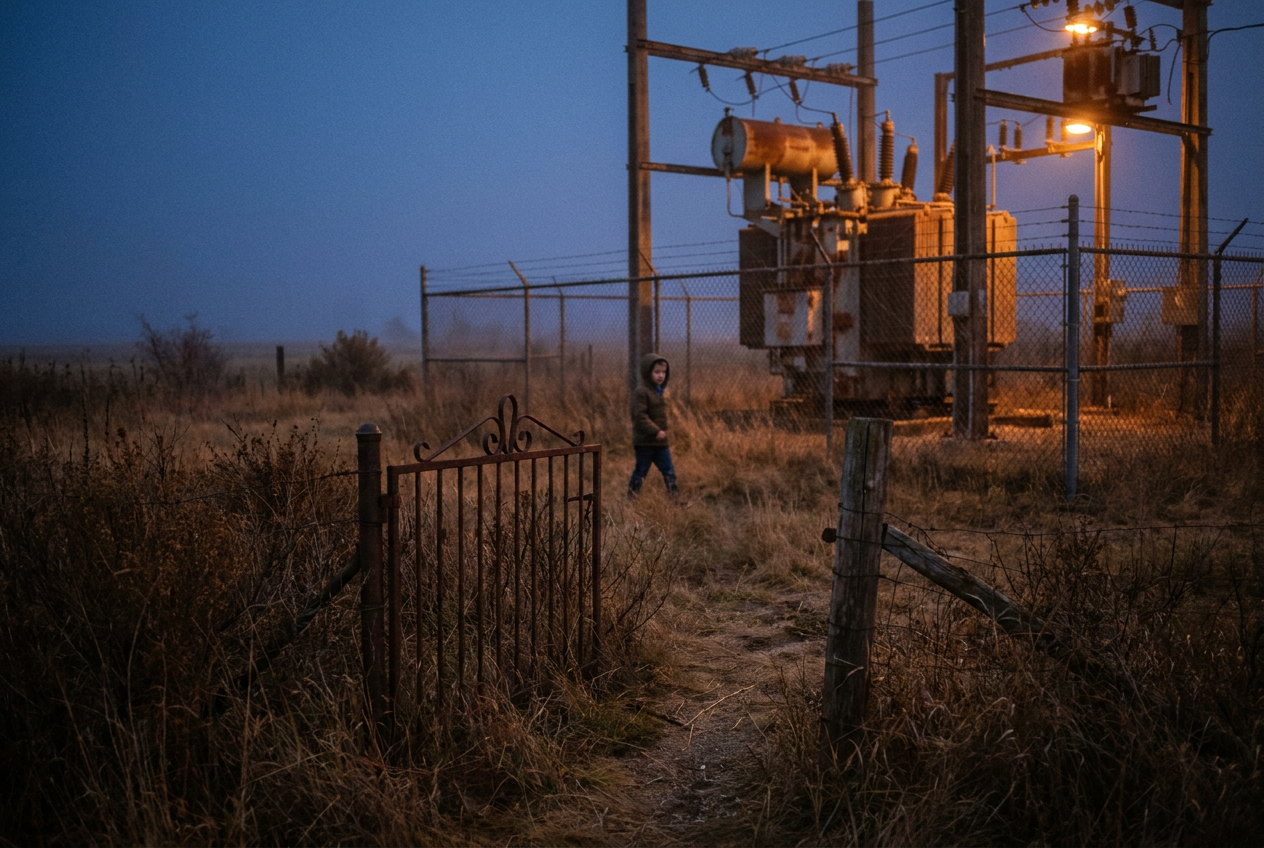
It stands behind the playing field, a square of gravel and humming cabinets enclosed by a high steel fence. There are nettles along one side and a row of footballs trapped inside, faded almost white. Every generation of children has contributed at least one ball and blamed the fence.
Theo walked slowly, parting the nettles with a stick.
“You won’t find it,” I said.
He looked back. “You did.”
That was how I learned the story was still being told.
When I was young, we called it the Little Gate. Adults insisted there was no gate, only the main entrance with its yellow warning sign. This was considered typical adult blindness. Adults also failed to see why six children could not share five biscuits without bloodshed.
The rule was simple. If you became lost, properly lost, you went to the substation and walked around the fence. On the third circuit, a small gate would appear. Someone from your own house would come through and lead you home.
Not necessarily someone you knew.
That last part changed according to the teller. Some children claimed the person might be a dead grandparent. Others preferred a future baby, which led to arguments about whether babies could give directions. My cousin Nella said it was usually a dog, because dogs were more reliable than families.
I saw the gate once.
It was after the summer fair. My mother had gone ahead with the cake tins, believing I was with Nella. Nella had gone home with her father, believing I was with my mother. This was the ordinary machinery by which children vanished before everyone carried a telephone.
By dusk, the playing field was empty except for paper cups rolling in the grass. I walked around the substation. I do not remember deciding to do it.
On my third circuit, the gate was there.
It came no higher than my chest. Beyond it stood a boy in a red knitted cap. He looked about my age and had a gap beside his front tooth. He seemed annoyed.
“You took ages,” he said.
I asked who he was.
“From your house.”
This satisfied me. Childhood accepts poor credentials when they are offered firmly.
He led me between the garages, across the bit of waste ground where the medical centre now stands, and into our back garden. My mother was at the kitchen door, white-faced and furious with relief. When I turned, the boy had gone.
For years I remembered his name as Teddy. That was what I told Theo when he first asked why I never liked summer fairs.
Theo stopped poking the nettles.
“Was he wearing this?”
He pulled his red cap from his pocket. One of his front teeth had fallen out that morning. The new gap made his tongue stray when he spoke.
The boy who found me had done that too.
We went home by the long way. Theo held my hand without being asked.
The following week, workmen replaced the substation fence. One of them found a narrow gate lying flat beneath the gravel, its hinges clean, its green paint unworn. He propped it against a cabinet while they finished the job.
It was much smaller than I remembered.
Theo says that is because I was small myself. He also says Teddy is not a name anyone has ever called him, though he admits I might have heard “Theo” wrongly.
The old gate now leans inside the new fence. You can see it through the steel mesh if the nettles have been cut back.
Sometimes there are children’s footprints in the gravel around it.
They always lead toward the gate.