The Lower Pasture
by Z. Marlow
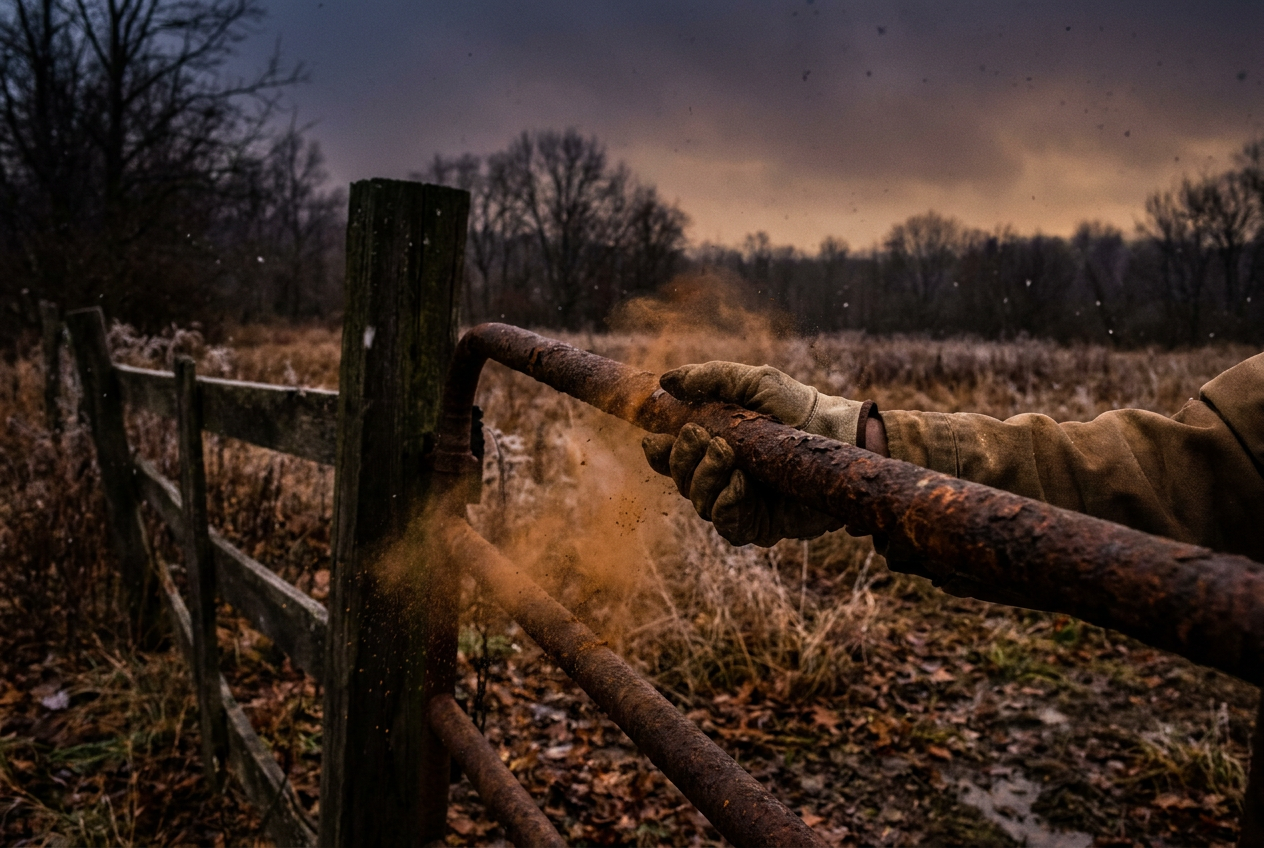
3 min readI lift the first bar before the snow reaches us. It comes free with a cough of rust, and the smell beneath is of wet brick, old leaves, and pennies held too long in the mouth.
The cattle grid lies at the top of our lane, where the pasture narrows between thorn hedges. My aunt had it put in when she could no longer manage gates from the tractor. Since the farm came to me, I have cleared it every winter. Water fills the brick pit, leaves clog the outlet, and frogs sleep in the corners with mud over their eyes.
That afternoon the outlet is blocked deeper than my arm can reach. The forecast says snow before dark. I fetch a torch and socket set, remove two more bars, and lower myself through.
There is just room to crouch. My shoulders touch brick whichever way I turn. Above me, the open strips of sky are already white.
My grandmother called the ground beneath the moor the Lower Pasture. She said cattle had grazed there before ours, pale beasts with no marks on their ears. In hard weather they walked beneath the fields looking for a way up. This was why old farms laid hazel ladders across their gateways, flat on the earth. Iron grids came later.
“Bars are bars,” she used to say. “It makes no difference which side the beast is on.”
We treated this as one of her winter sayings. She also left hay beside the grid on the longest night, tucked under sacking to keep off the frost. In the morning it was always gone. My father blamed deer.
I find the blockage at the far end of the pit, a mat of roots packed tight as felt. While I work it loose, one of the bars shifts above me. It drops sideways into its socket and closes the gap through which I entered.
I call my daughter. There is no answer, though I can hear the phone ringing on the road above.
Then my torch catches the metal overhead.
The upper surfaces of the bars are rough with rust and cattle muck. The undersides are polished smooth. Not evenly. Each bears a pair of shallow hollows, bright as worn spoons.
Something knocks beneath my left knee.
The brick floor does not move. Dust sifts from the mortar. Another knock answers from farther down the lane, then another, passing under the grid with the slow order of hooves entering a byre.
I cannot stand. I turn off the torch because the little circle of light has begun to feel smaller than darkness.
Breathing gathers around me.
It is warm, grassy breath. The pit is too narrow for anything but my own folded body, yet I hear hide brushing brick and the soft working of several mouths. A wet muzzle touches the back of my hand.
There is nowhere below my wrist for a head to be.
My daughter finds me near dusk. She does not try to lift the bar at first. She runs to the barn and returns with hay, just as my grandmother taught her when she was small.
She pushes it through the gaps by handfuls.
The darkness takes it gently.
After the chewing stops, the bar lifts without resistance.
We still clear the grid before every snow. We leave hay beneath the sacking, and by morning the frost around it is melted into the shape of many patient noses.
You may have seen cattle hesitate at a grid, though the gate beyond stands open. People say they fear the gaps.
Watch their ears. They are listening to what has stopped below.