The Marks in Pearwood
by Z. Marlow
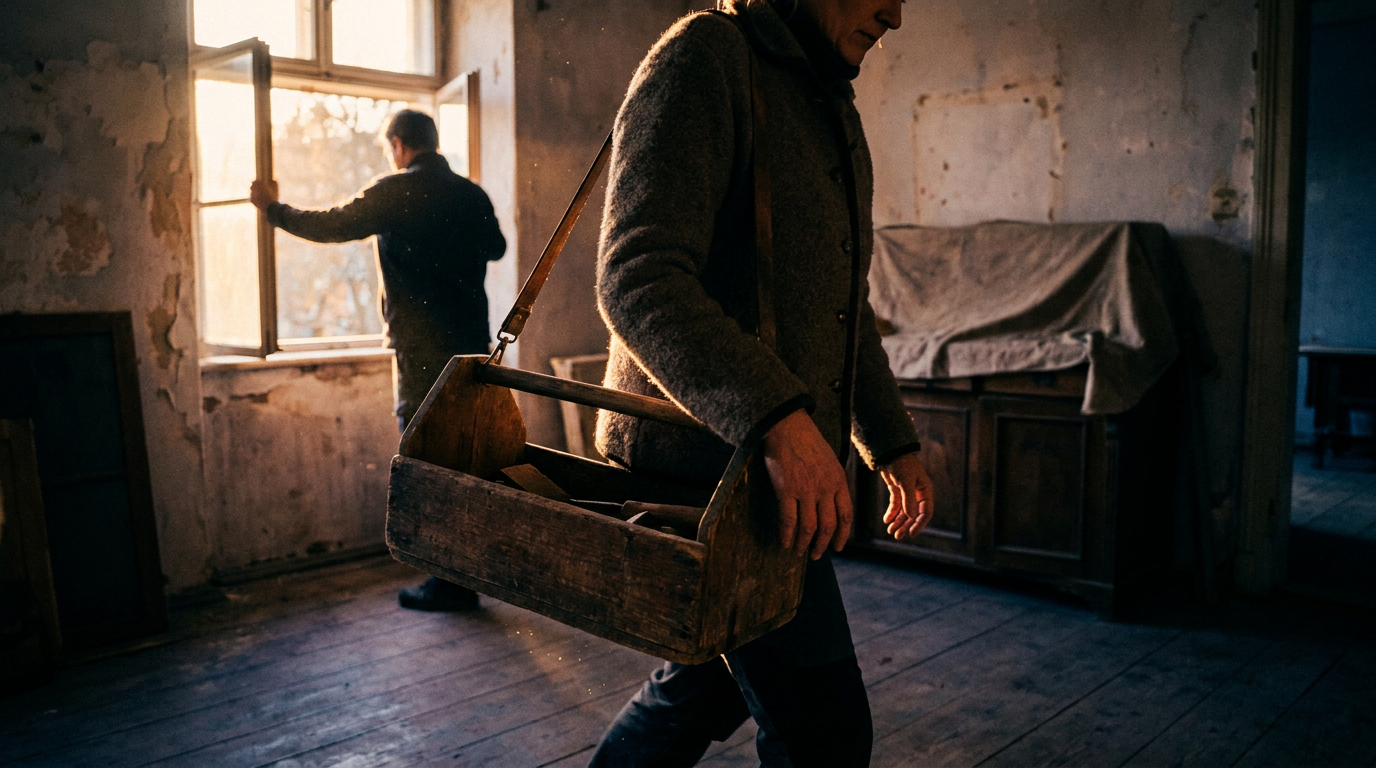
3 min readMara carried the carpenter’s basket through the empty rooms while Tomas opened the shutters behind her.
The house had been closed since Aunt Sella’s burial. Its air smelled of cold ashes, apples gone soft in a drawer, and the lavender water Sella used on her cuffs. Outside, carts passed along the lower road toward the winter market. Their iron rims made a patient grinding on the frozen mud.
Everything had been sold except the front doorcase.
Mara had asked Tomas to remove its inner post, a strip of pearwood marked with the heights of everyone raised in the house. Some names had been cut with a knife. Others were written in faded pencil, each line crossed by a date or a small remark.
Jorin, in boots.
Elsa, hair included.
Mara, standing straight for once.
She remembered Sella making that last mark. Mara had been sixteen and impatient to leave for the coast. She had accused her aunt of pressing the pencil too hard.
“You will be glad of the scar,” Sella had said.
Now the scar was all Mara wanted.
Tomas worked carefully. The post came free with a sigh of old plaster, exposing lath and a mouse nest lined with blue thread. He wrapped the pearwood in sacking, though Mara told him there was no need.
“It has stood here longer than we have,” he said. “We can give it a coat for the journey.”
He lifted it under one arm and started along the passage.
The front door was twelve paces from the stair.
Tomas walked twenty before he stopped.
The door remained ahead of him, no nearer than before. Its brass latch shone in the pale rectangle of morning. Mara could see the frost feathering the glass above it and the black crescent where Sella’s rings had worn the paint.
Tomas lowered the post.
At once the passage was its proper length.
Neither of them spoke. He set down the sacking, went to the door, opened it, and looked into the street. A woman was shaking crumbs from a cloth. A horse steamed beside the pump.
Tomas returned and lifted the pearwood again.
The passage lengthened quietly.
There was no wrenching of walls, no motion in the floorboards. Each step fell where it should. The runner remained beneath his boots, its pattern of red leaves repeating farther than the house could contain.
Mara watched until Tomas was small at the other end, carrying the record of her childhood toward a door he could not reach.
He had carried Sella’s coffin down that passage without difficulty.
“Bring it back,” Mara said.
Tomas turned. The return took only a few steps.
They unwrapped the post beside the stairs. In the better light, Mara saw marks she had forgotten. Her father at thirteen. Her mother before the fever year. Two infant lines without names. Then Sella’s own measurements, descending gradually through old age as her back bowed.
The final one had been made near the autumn equinox. Beside it, in Sella’s fine hand, were the words:
Still here.
Mara touched the shallow groove. She understood then that the house had not objected when its people were carried out. It did not keep bodies, chairs, wedding linen, or the warm impressions left in mattresses.
It kept the measure of them.
Tomas fitted the pearwood back into the wall. The old nail holes received their nails neatly. By noon, the doorcase looked as it had before, except for a narrow seam of fresh plaster.
The buyers arrived with their little boy asleep in the cart, his cheek resting on a sack of flour. Mara gave them the keys and mentioned the marks. She did not mention the passage.
Before leaving, she placed Sella’s pencil on the ledge above the door.
It was worn flat on one side, so it would not roll away.