The Rainways
by Z. Marlow
3 min read-
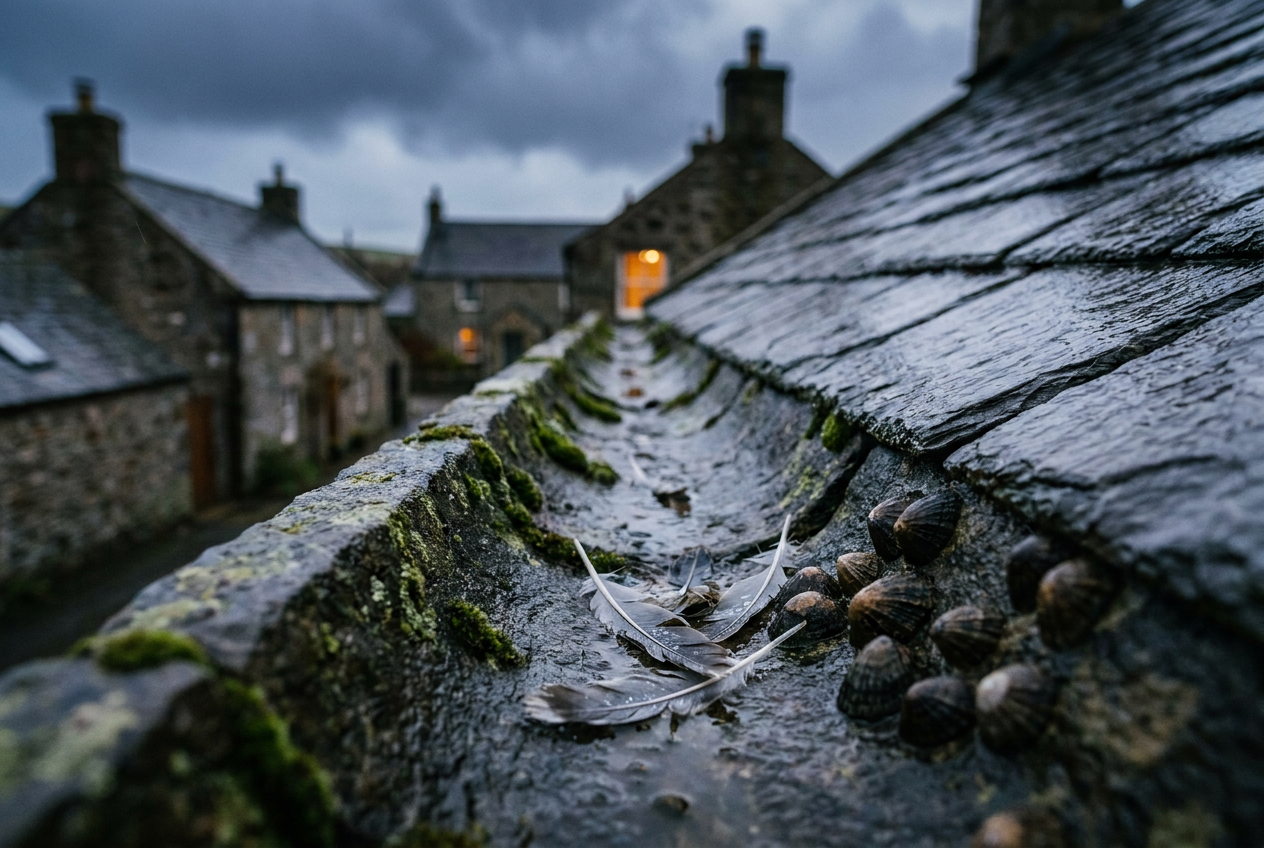
Begin at the upper cottages while the slates are still wet. Lift the gull feathers from the stone channels and leave the limpets. They do no harm, though no one remembers how they climbed so high.
-
Test each lead throat with a length of hazel. If the stick comes back smelling of peat, the pipe is clear. If it smells of salt, tie a strip of red wool around it and pass on. Do not probe deeper.
-
The rainways belong to every house, but the water belongs first to the cistern. This was agreed when the island still had trees. Remind the new families gently. They will have come from places where rain may be kept in barrels without consequence.
-
Clear the west grating after every gale. Kelp sometimes gathers there, green as bottle glass. Last winter a small red crab was found beneath the grate, alive and warm. Morven Pike carried it back to the shore in her apron. It reached the tideline before she did.
-
Oil the iron wheel at the cistern mouth. Turn it toward the chapel to fill the lower troughs. Turn it toward the sea only in drought, or when instructed below.
-
In still weather, kneel beside the overflow and listen. You should hear water falling through the rock. You may also hear harness bells, a woman shaking a rug, or children calling from the old school field. These are common obstructions. A bucket of fresh water poured down the throat will usually carry them away.
-
If you hear your own name, stand up.
-
There is a narrow pipe behind the cooper’s house which appears on no plan. I found it after Edrin died, when rain had not fallen for six weeks and the heather broke underfoot like burned paper. The pipe was cold. A drop stood at its rim, trembling against the sky.
I touched it with my tongue.
It tasted of the broth Edrin made on lambing nights, with thyme crushed between her palms. Beneath that was the bitter smoke of our first hearth, and beneath the smoke, the clean wool smell of her hair when we were young.
The drop rose from my finger and entered the cloudless air.
-
After this, you may notice that the rainways do not always carry water downward. Keep such observations to yourself. The islanders know more than they say. On certain evenings they leave their doors open, though the wind is cold, and sit without speaking until the gutters begin to murmur.
-
When the flow reverses, do not close the cistern. Open every household sluice. Unstop the chapel gargoyle. Remove the flat stone from the channel beside the burial ground, even if there has been no rain.
-
The sound will be slight at first. Damp ascending through lead. A thousand small breaths drawn at once.
-
Objects left beneath the pipes may lose something. A wool coat may lose the shape of its wearer. A fiddle may forget a tune. Letters can become blank without the ink fading. For this reason, the islanders bring out what they are willing to surrender: a child’s broken shoe, a sailor’s comb, the pillow from an empty side of the bed.
-
Do not bring a likeness of the dead. The water has no need of faces.
-
Turn the iron wheel toward the sea. It will resist you. Use both hands. As it opens, the cistern will give a sound like someone waking in another room.
-
By morning there will be cloud beyond the headland. Sometimes it resembles weather. Sometimes, in the low silver folds, you may see chimney smoke, a washing line, sheep moving uphill through rain.
-
Wait before you call it beautiful.
-
If the first drop that reaches you speaks in a voice you love, let it remain where it falls. The island has always depended upon this kindness.
-
If it speaks in your own voice, the rainways are ready for you.