The Road Underneath
by Z. Marlow
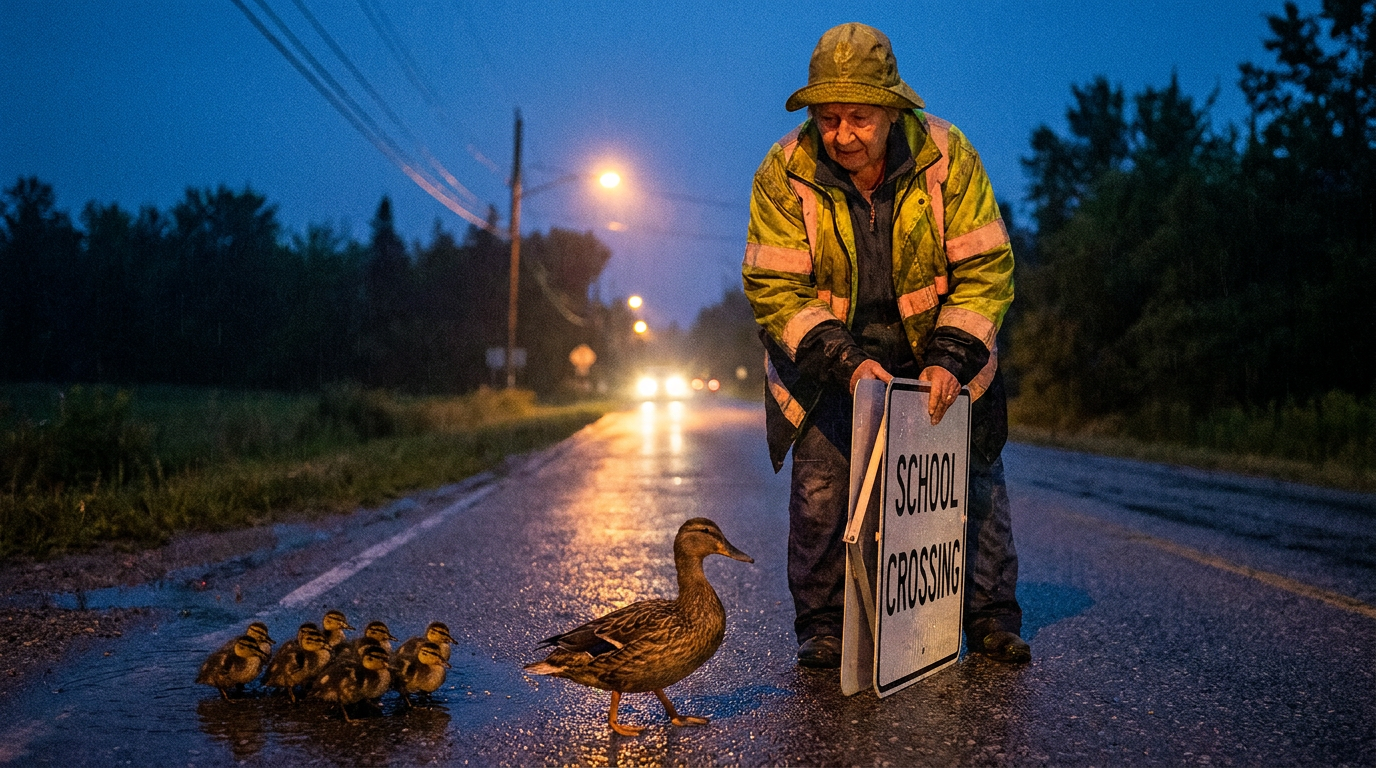
3 min readIrena Pell, school crossing keeper: “I was folding the warning sign when the mallard left her chicks and walked into the rain.
“She had nested beside the primary school for several seasons. The children called her Apron because of the white patch on her breast. She knew the bell times and crossed only when I raised my hand to the traffic. That afternoon, the rain came hard enough to flatten the chalk drawings on the pavement.
“Elsi Var had crouched by the curb to catch her paper boat. The water took the boat, then Elsi. There was an iron opening beneath the curb, wider in those days. I saw one red boot turn in the brown water, and then nothing.
“Apron looked into the opening. She did not fuss. She left her brood under the privet hedge and walked uphill, against the runoff.
“I followed because there was nothing else to follow.”
Galen Var, Elsi’s father: “That is not quite how it happened. Irena was shouting. Everyone was. The duck was halfway up Bell Street before we noticed her.
“The drains empty south toward the reed beds. I laid some of those channels myself, and I knew where the water would carry a child. We ran south first. Men were lifting grates with crowbars. My wife had her arms in an outlet up to the shoulder, feeling through leaves and bottles.
“Then Irena came calling from uphill.
“Apron stopped at each iron cover. She put her head sideways, with one eye toward the metal, and waited. At the third cover she moved on quickly. At the fourth she tapped twice with her bill.
“There should have been no water beneath that cover. It belonged to an abandoned overflow, a blind brick chamber left from the old fountain. When we lifted it, the air smelled of wet pennies and lavender soap.
“We heard Elsi coughing.
“The chamber was empty.”
Elsi Var: “My father means he could not see me. I could see the round patch of daylight where they had lifted the cover, but it was above and behind a wall.
“I remember the water being warm. I remember losing one boot. Mostly I remember the voices. Every grate carried my mother’s voice, so she seemed to be calling from all along the street. I tried to follow her, but each time I moved, she came from somewhere else.
“Then I heard Apron’s feet. They made small slaps on stone, steady and unhurried. I called her name. She answered once.
“The duck was not above me. I heard the rain above her.”
“She was ahead, where the passage bent. I could just make out her white breast. Her chicks were behind her in a close little row, though I knew they had been left by the school.
“When I cried, she waited. When I stopped, she tapped the bricks.
“I followed her uphill until I reached a place where the dark became shallow. My father broke through the wall there with a paving hammer. He says I was wedged inside a pipe no wider than his wrist. I remember standing up to take his hand.
“Apron was already outside. Irena insists she never went underground at all.
“Afterward, the street men filled the curb opening and painted a small white duck beside it. The paint wears away, but someone always puts it back.
“I take my daughter past there sometimes. Last autumn she knelt beside the mark and pressed her ear to the pavement. It had not rained for weeks.
“She said she could hear webbed feet below us, walking carefully uphill.”