The Room in the Turn
by Z. Marlow
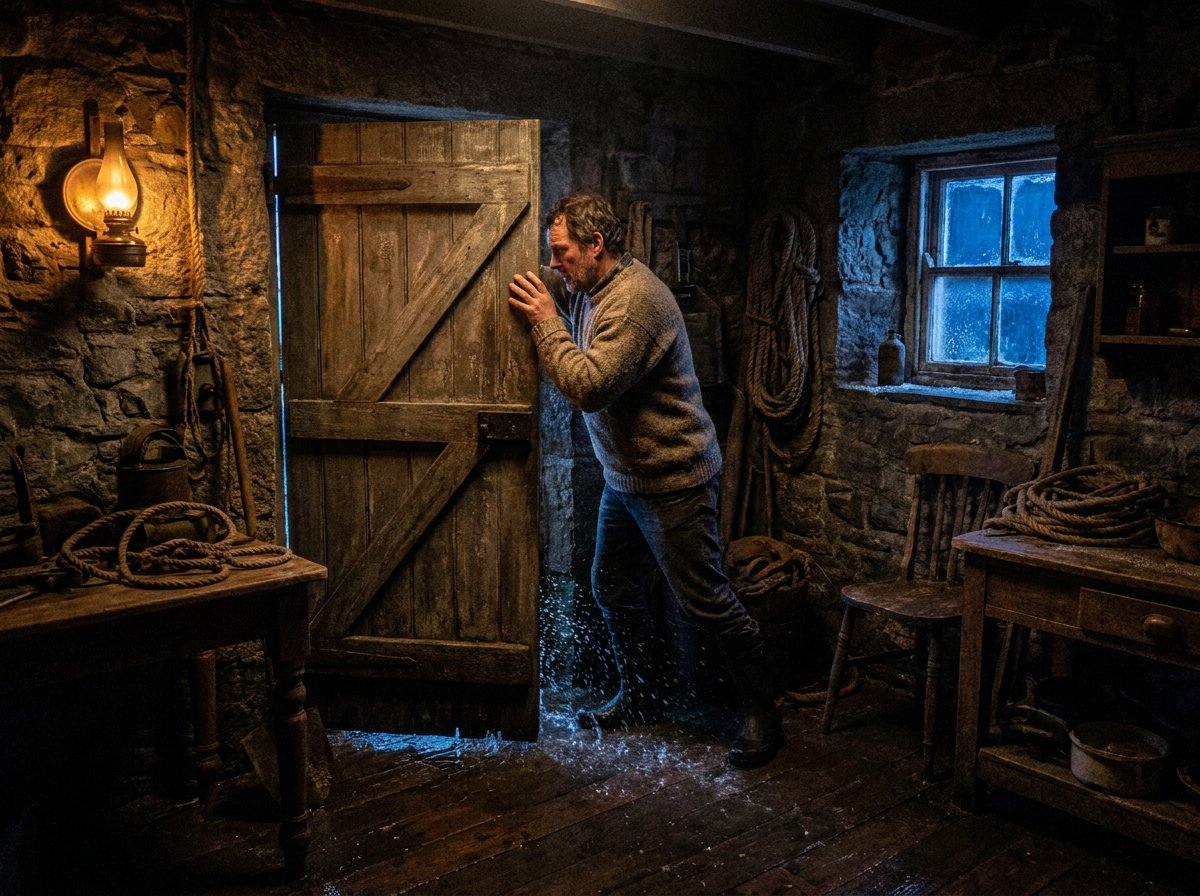
3 min readYou put your shoulder to the inner door because the sea has decided to check in.
It has been blowing since luncheon, flinging salt against the glass and worrying the hotel awning like a dog with a dead gull. Guests arrive backward, clutching hats and expressions. You revolve them into the lobby one by one.
Most dislike the new doors. They miss the old arrangement, when a boy held a plain oak slab and accepted pennies for not crushing fingers. The manager says revolving doors keep out the weather. This is true in the same sense that a sieve keeps out soup.
There are two of them, outer and inner, with a tiled vestibule between. The outer turns clockwise. The inner turns contrary. On calm days they behave as doors should, dividing outside from inside with polished brass and small inconveniences.
In a gale, they begin to turn by themselves.
You have learned to let them. Trying to stop one earns a bruised hip. Trying to stop both sends your cap into the potted palm.
Near midnight the guests have gone up. The porter sleeps behind his newspaper. You stand between the doors, smelling wet wool, furniture polish, and the faint medicinal breath of the sea.
The wind strengthens.
Both doors turn.
Their glass wings pass, overlap, and for one instant make a clear passage where no passage ought to be. Beyond it lies another lobby.
You notice first that its carpet is dry.
Then the chairs, green velvet, though the hotel has never owned green chairs. A coal fire moves behind a brass guard. On a side table waits a blue teapot with steam lifting from its spout.
The doors turn again. The room disappears.
You wake the porter. He inspects the vestibule, the hinges, and your breath. He recommends coffee. This is rich advice from a man who has slept through two burglaries and a bishop.
The next alignment lasts longer.
You step through.
The air is warm and smells of toast burned at the edges. Behind you, the revolving doors continue their stately turning, but they now seem very far away.
A woman sits beside the fire, mending a glove.
You know her hands before her face. The left thumb bends outward where a jar fell on it in the pantry. Her wedding ring is thin from years of flour and soap.
She looks up.
“You took your time,” your mother says.
She has been dead since you were small enough to hide beneath the hotel’s luggage trolley.
You do not ask the questions you have carried for thirty years. Instead you sit, because she has poured tea, and because there are habits stronger than death. The cup has a chip shaped like a white bird. It is the cup from your childhood kitchen.
Around you, the room extends farther than the hotel permits. There are doors along its walls, hundreds of them, each different. Painted doors, stable doors, nursery doors with grubby finger marks low on the panels. Some stand open upon darkness. Others tremble softly in their frames.
“Is this where people go?” you ask.
Mother bites the thread.
“No, love. This is where they nearly come back.”
A bell rings somewhere beyond the walls.
One of the doors opens a finger’s width. Cold air enters, carrying the smell of snow and an infant’s cry. Your mother turns toward it with such tenderness that you understand she is not waiting here for you.
The revolving glass begins to align behind your chair.
She presses the mended glove into your hand. It is yours, the right one, lost that afternoon in weather too mild for gloves.
“Go on,” she says. “You are expected.”
You step into the hotel as the doors divide the worlds again. The porter is still asleep. The fire in the ordinary lobby has fallen low.
At home before dawn, you hang the glove beside its fellow and climb quietly upstairs.
Your bedroom door is closed.
As you reach for the handle, it turns gently beneath your palm, moved from the other side.