The Soft Places
by Z. Marlow
3 min read-
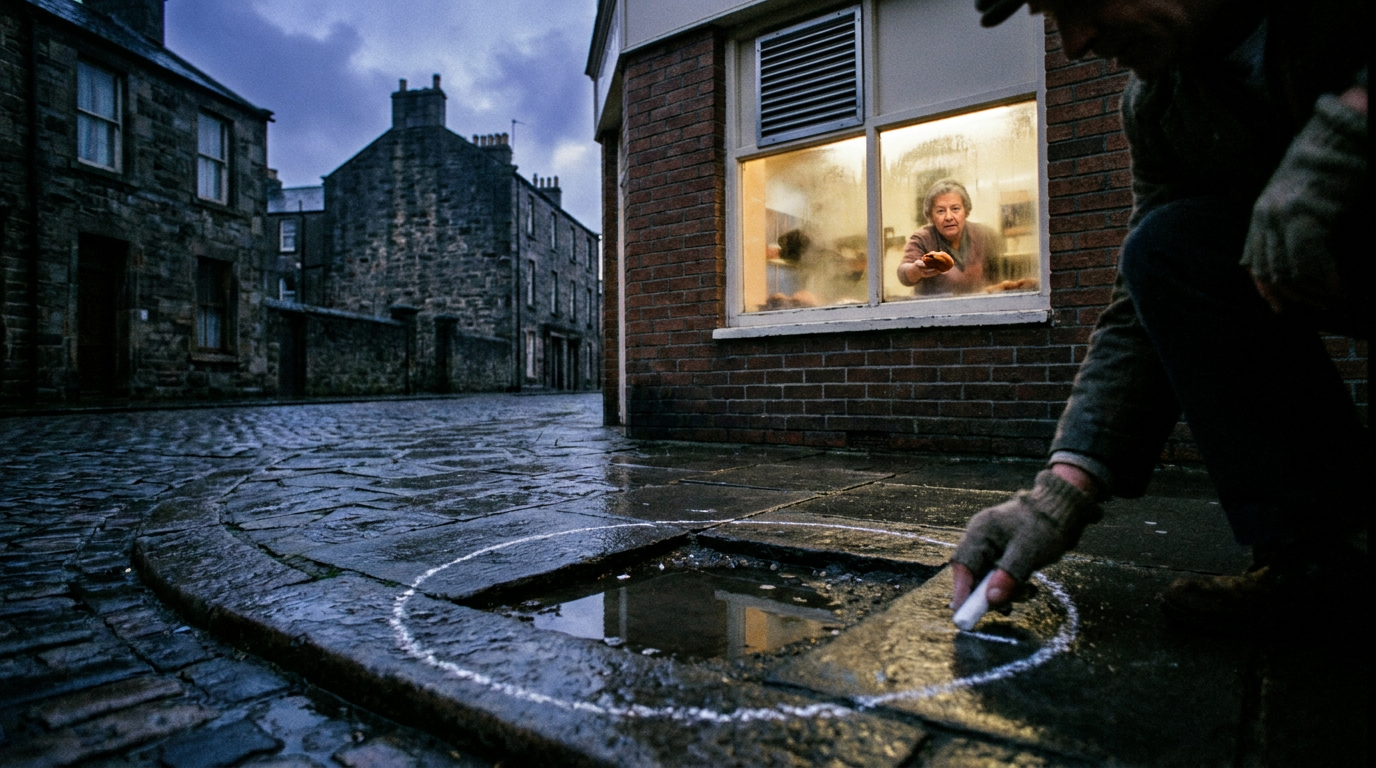
Begin at the south end of Bell Street, where the bakery vents warm yeast across the pavement. Mark every sunken slab with white chalk. A dip shallow enough to hold rain still counts. Mrs. Fenn will offer you a currant bun through the side window. Take it. She worries when the street men refuse food.
-
Test each hollow with the handle of your mallet. Sound concrete gives a clean knock. Frost damage answers dully, like a cupboard door in another room. Note loose curbs, exposed roots, and any place where water has gone the color of tea.
Do not kneel in the water. Your trousers will smell of iron all day.
- Outside number twelve, you will find a long depression beside the garden wall. It is not on last spring's plan, although the paving there is older than either of us. Measure it anyway.
You may think it resembles a man lying on his side with one hand beneath his cheek. Mrs. Fenn's husband used to sleep like that. She told me so after we filled the hollow the first time.
Do not mention the resemblance to her.
- Lift the slab and inspect the bedding sand. You will find no washout, no broken drain, no root. Replace the slab with fresh mortar and smooth it level. By the following morning, the hollow will have returned.
This is not poor workmanship.
- Continue north. The soft places are easiest to see after rain.
There is a small one at the corner shop, upright against the brickwork. Mr. Rusk stood there every evening for forty years, waiting for his sister to finish the accounts. She died in the upstairs room with the green curtains. Since then, he closes alone.
The hollow is not her shape.
It is his.
- At the bus shelter, ignore the broad depression beneath the bench. It belongs to everyone who has watched the last bus arrive without the person they expected. We tried filling it during the resurfacing. The new asphalt sagged before it cooled.
If you put your palm against it, you may feel a faint warmth. Keep your glove on. Some tendernesses are not improved by touch.
- The hollow beside the school wall is mine.
You will know it by the square impression at the left elbow, where my jacket had been patched with darker cloth. I sat there after they telephoned about Anna. There was nowhere private nearby, so I lowered myself against the wall and remained until the children came out carrying paper lanterns.
The paving stones were laid two years later.
The ground does not remember where we stood. It remembers where we could not go on.
- Do not chalk my hollow. The rain outlines it well enough.
You may sit there if the route has tired you. In April, small white flowers grow from the joint near the head. I do not know their name. Anna would have known. She kept seed packets in the kitchen drawer with the string and spare candles, and could coax green shoots from soil that looked like brick dust.
- When you reach the north end, count your chalk marks, then forget the number. Send the usual order for sand, slabs, and mortar. We must continue repairing what can be repaired.
There is one final matter.
This morning I found a new soft place outside my house, just beyond the gate. It lies beside my own shadow when the porch lamp is lit. The shape is narrow, almost grown, with one arm extended toward the hollow at the school wall.
I have not marked it.
If it is still there when you make your round, bring no tools. Bring the currant bun from Mrs. Fenn, and wait with me until the streetlights come on.