The Spare Fingerpost
by Z. Marlow
3 min read-
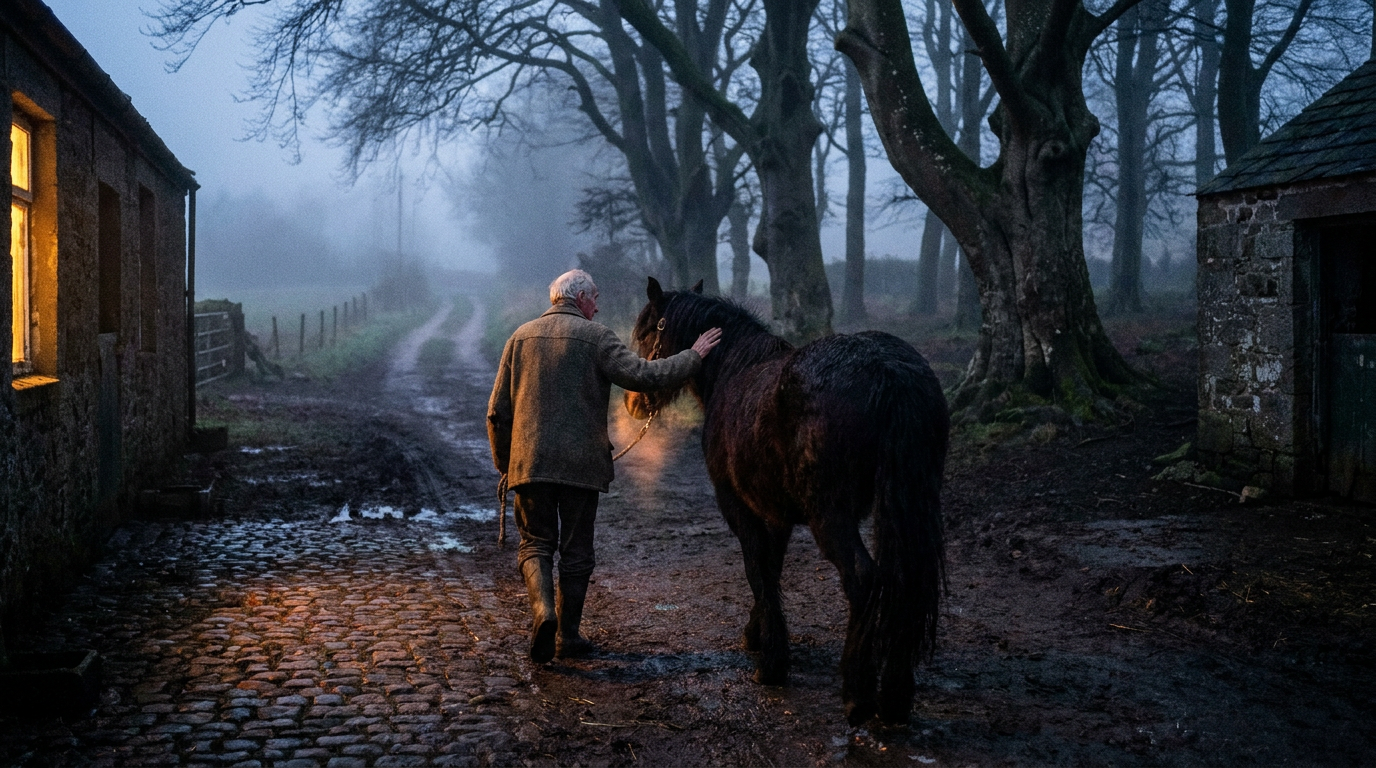
Lead Moss from the yard before the mist settles among the beeches. She dislikes a road she cannot smell, but she will go if you keep one hand on her neck. Her coat is warmest below the mane.
-
In the handcart place the mallet, the iron spoon, the jar of pitch, and the four painted arms:
- WHITCOMBE
- STAGG’S FORD
- LITTLE HARROW
- WESTERLY MARKET
Read them aloud before leaving. Moss will turn an ear at each true name.
-
At the first crossroads, remove the rotted arm for Whitcombe. Dig out the old pitch with the spoon. Do not put your fingers into the socket. Last autumn I found a milk tooth inside, though no child had been with me.
-
Fit the new arm with the letters facing the road. Moss may try to stand between you and the post. Push her aside gently. She has carried bread, lamp oil, and newborn twins through worse weather than this.
-
At Stagg’s Ford, check the cart again.
There should still be three arms.
-
If there are four, do not read the lowest one.
-
This instruction was written before I understood that Moss could read.
-
She does not know letters as we do. She knows where they lead. When I held up STAGG’S FORD, she looked toward the river. When I showed her LITTLE HARROW, she stamped toward the north lane, where the chimneys sit low behind the alder trees.
When I showed her the spare arm, she backed into the ditch and would not rise until I covered the word with my coat.
-
The spare arm is narrower than the others. Its paint will be dry, even in rain. Keep it wrapped.
-
Do not wonder how it entered the cart. Wondering makes the lane close in. The hedges already grow near enough there to brush both shoulders at once, and the roots show white in the banks like knuckles.
-
At Little Harrow, Moss will stop beside the abandoned lime kiln. Let her.
Listen for harness bells ahead.
There are no other wagons on this road.
- If the bells stop when yours stop, take the spare arm from beneath the coat. By then the word may have changed. Mine first said BELL’S ORCHARD, which was pulled down before my grandfather’s birth. Later it said THE BLUE ROOM.
I slept in a blue room as a boy.
-
Do not fit it to the empty socket beside the kiln.
-
I fitted it.
-
The arm pointed into the bank. Moss made a sound I had heard only once, when her first foal failed to stand. Then the soil beneath the painted hand gave a small sigh. Warm air came through the roots.
It smelled of beeswax, boiled apples, and my mother’s hair after rain.
- I put my eye to the socket.
The blue room was there.
Not buried. Not ruined. Afternoon lay across the rug. My wooden soldiers stood beneath the window. At the desk, a child bent over a sheet of instructions, forming each letter slowly.
Moss laid her ear against the painted word and gave the soft greeting she uses at our own stable door.
The signs do not tell the roads where to go. They tell them where to stop.
-
Pull the arm free before the child looks up.
-
If you are reading this, I did not pull quickly enough.
-
Moss will bring you home. Loosen the traces and let her choose every turning. Do not call to me if you hear me walking behind the cart. I may sound cold. I may use your name.
-
At the yard, count the arms before you unharness her.
-
There should be four.
-
There are five now.
-
Moss is standing very still beneath your window, and the newest one is pointing up.