The Stile at Bracken Edge
by Z. Marlow
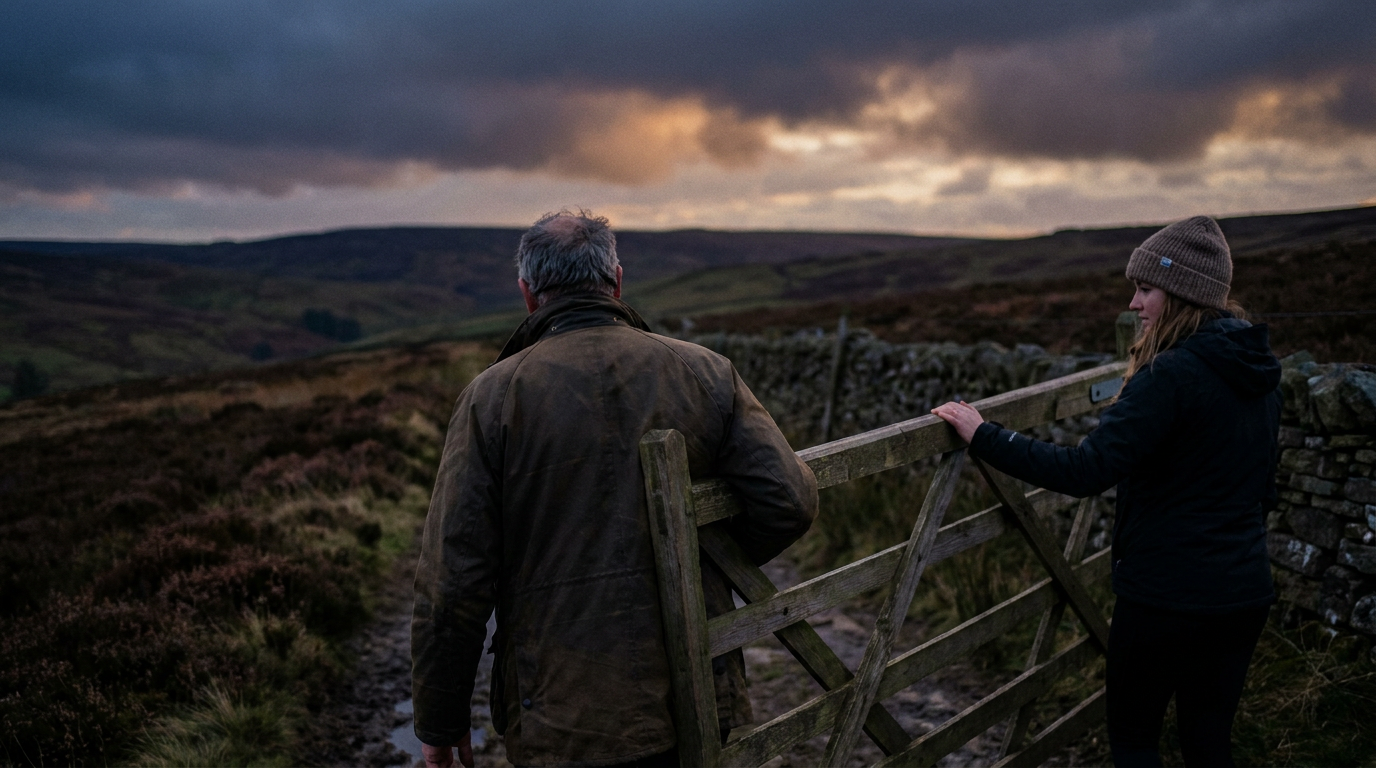
3 min readI carried the new gate up Bracken Edge with my daughter walking behind, one hand on the lower end to stop it swinging into the wall.
The old stile had stood there longer than anyone could say. Its uprights were black at the base, and the middle step had been worn smooth as soap. Pennywort grew in the cracks. On wet mornings, sheep left curls of wool on its nails.
Mara was sorry to see it go. She was ten then, and believed old wood should be allowed to finish whatever it had begun.
My grandmother called it Mercy’s Stile. Her version of the story concerned a woman named Mercy Rusk, who lived under the ridge when the fields were still divided by thorn hedges.
One summer, no rain crossed Bracken Edge. Clouds came in from the western hills, dark-bellied and full, but always turned north above the boundary wall. The oat heads whitened. Frogs vanished from the ditches. Mercy climbed the ridge each evening and watched rain falling beyond the stones, close enough for her to smell it.
At last she took a hammer and broke a gap in the wall.
Rain crossed that night.
The landowner had the gap repaired, so Mercy built a stile over it. When asked why weather should need steps, she said boundaries were a human habit, and the sky was sometimes too courteous.
That was the whole tale. My grandmother told it without mystery, usually while shelling peas.
The stile had become unsafe. One upright moved when pressed, and the bottom step gave beneath a boot. I had promised to replace it before lambing. The new gate was galvanized steel, light enough for a child to open, with a spring that shut it neatly.
We laid the old stile beside the wall. Its damp wood smelled of mushrooms and cold ashes.
Mara touched the worn middle step.
“The feet went the wrong way,” she said.
I looked. The hollow in the wood was deepest along the outer edge, where a person climbing would have lifted a foot, not set it down. The upper step was worn on its far side. I told her years of boots made strange patterns.
We fitted the gate and went home.
After that, the rain divided at Bracken Edge.
It was not dramatic. Showers darkened the hills to either side, while our fields remained the color of old straw. Water stood in the neighboring lanes. Our troughs grew green at the bottom. When wind shook the ash trees, their leaves made a dry, papery sound.
Three weeks later, Mara and I carried the stile back up.
A shower was approaching from the west. The air had the metallic taste that comes before rain. We set the uprights into their old holes and packed the soil around them with stones. The new gate remained beside it. There was room for both.
The first drop did not fall from above.
It appeared on the lowest step, round and bright in the dry wood. Then another dark mark formed on the middle step. Then one on the top.
On the far side, the grass bent beneath a weight we could not see.
Something with no feet climbed carefully over.
Rain struck the field all at once. Mara laughed and held out her hands. I stood beneath it, cold water running inside my collar, and understood why the worn places faced the wrong way.
We keep the stile sound now. Every spring we drive the nails deeper and rub linseed oil into the steps. Walkers use the metal gate.
Last winter, after a night of clear frost, I found the stile wet from bottom to top. Beyond it, a narrow trail of thawed grass crossed the white field and continued uphill, toward a sky without a cloud in it.