The Waiting Wire
by Z. Marlow
3 min readI was coiling the extension lead when the fuse box laughed.
It was a small sound, no louder than a spoon touching china. I stopped, listened, and heard only rain fingering the conservatory roof.
My aunt’s bungalow had been empty since March. I had come to clear it before the sale, beginning with the practical things: defrosting the freezer, bagging the curtains, unplugging the television she had watched from an armchair polished smooth at the elbows. By evening the rooms smelled of cardboard and cold carpet.
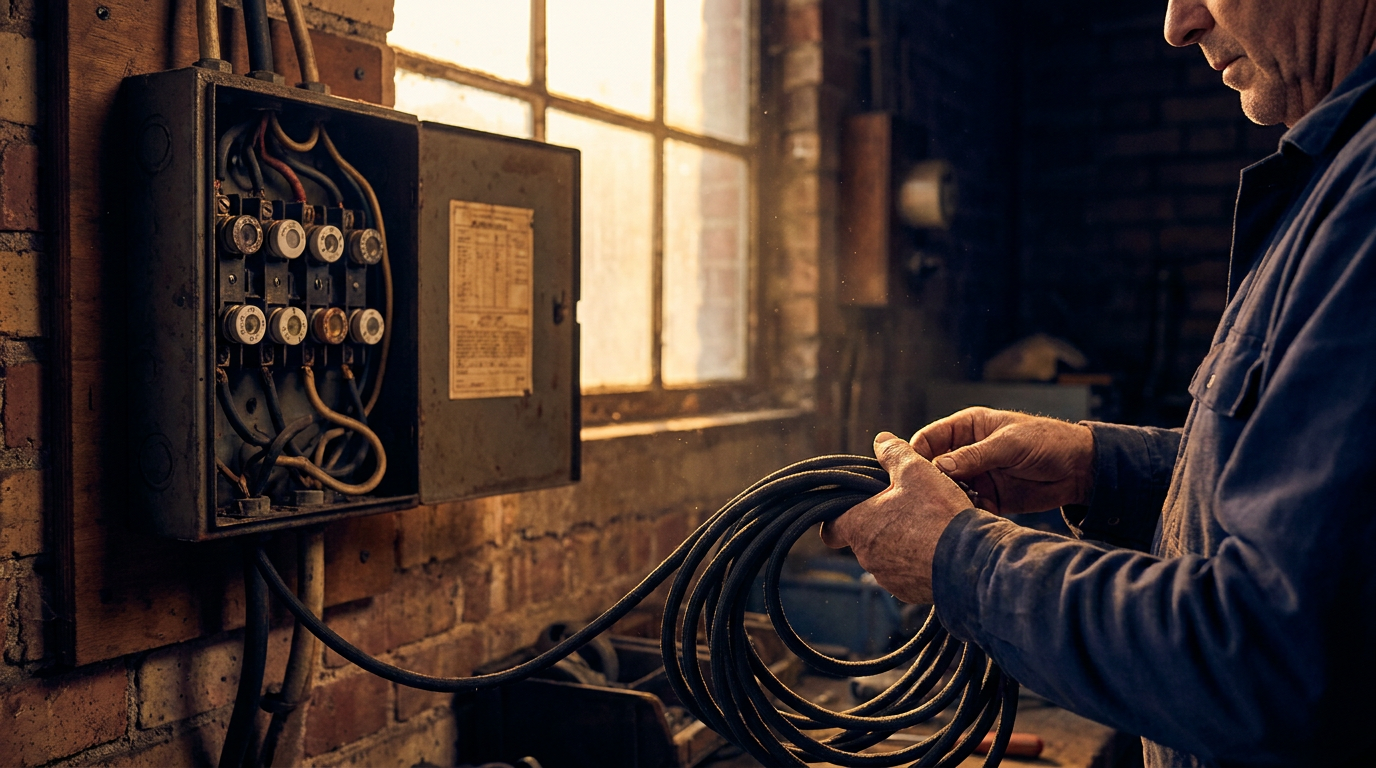
The fuse box stood in the hall cupboard behind her coats. When I opened it, a loose grey wire hung beneath the breakers. Its end had been neatly capped with red wax.
I called Fen Rusk, who had done electrical work in the village longer than anyone could remember. He arrived after supper with mud on his knees and looked at the wire without touching it.
“Waiting wire,” he said.
I assumed this was trade language. Fen shook his head.
The story here is that certain houses begin preparing for their occupants before those occupants exist. Nobody agrees on why. Some say a building feels the shape of every life that will pass through it, just as a tree holds branches inside the seed. Others say houses are slower than people and cannot tell yesterday from tomorrow.
A waiting wire is supposed to be left alone. It carries no current. It joins no circuit. It should not hum, warm, spark, or do any of the ordinary things by which a wire announces its purpose.
“It listens,” Fen said.
He replaced the wax cap, which had cracked when I opened the cupboard. Then he asked whether my aunt had ever mentioned hearing children in the hall.
She had. During her last winter, she often complained that neighborhood children were playing indoors. This had worried us because there were no young families nearby. Once, on the telephone, she paused and told me a little girl had just run past carrying a green towel.
Fen nodded as though I had confirmed the weather.
That night I slept in my aunt’s room, under a quilt that smelled faintly of lavender bags. Rain filled the gutters. The refrigerator clicked in the kitchen, forgetting that I had unplugged it.
Near midnight, I heard voices in the hall cupboard.
They were not ghostly voices. That would have been easier. They had the soft disorder of a household continuing elsewhere: a cupboard shutting, bare feet on vinyl, someone asking where the scissors had gone.
Then a child spoke very close to the other side of the bedroom door.
“Grandad, are you awake?”
An old man answered.
“I’m here, little bird.”
It was my voice.
I lay still until morning.
Before leaving, I put my ear to the fuse box. The wire was cool. From deep inside the plaster came the sound of a bath draining, then singing, tuneless and contented. I could not make out the song.
The bungalow did not sell. My wife and I moved in the following autumn, after discovering that a baby was on the way. Our daughter is six now. Her favorite towel is green, and she calls every small bird a little bird, as if the name belonged to her before language did.
Last Thursday she woke from a bad dream and found me reading in the kitchen.
“Grandad, are you awake?” she asked.
She laughed when I stared at her. She said she had meant Dad.
I answered as the wire had taught me.
After she returned to bed, the fuse box gave its quiet china laugh. I opened the cupboard.
The waiting wire was warm. Beyond it, someone I have never met was moving through our house, closing each door with great care.