The Walk Back
by Z. Marlow
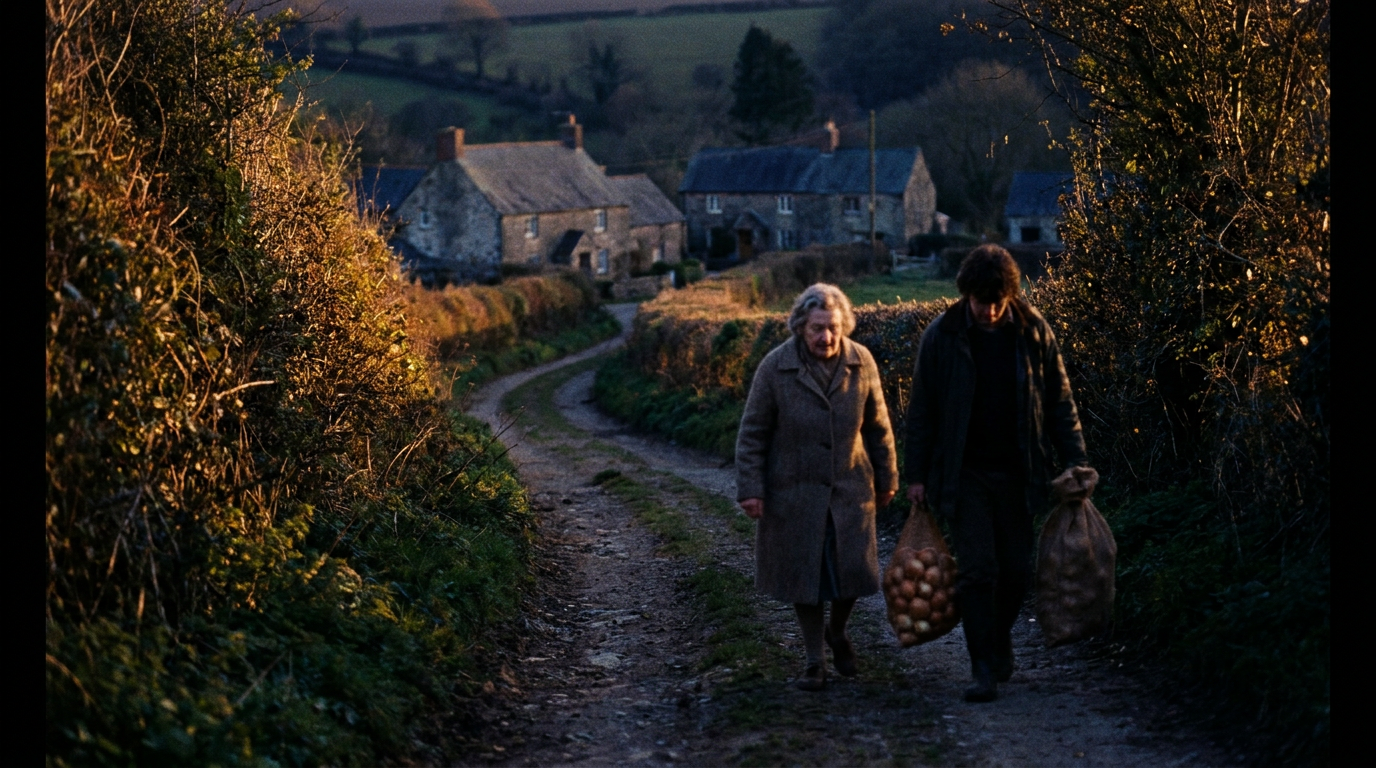
3 min readYou carry Mistress Vale’s onions home because nobody in Absal lets a neighbor return alone.
Her cottage stands beside the butcher’s, a journey shorter than the butcher’s opinion of his own sausages. Even so, she waits outside the market until you offer your arm. She smells of lavender and poultry.
At her gate she thanks you, then insists on accompanying you back.
This is where the custom becomes troublesome. If you accept, you must escort her home again. If you refuse, she looks injured. The people of Absal have perfected this difficulty over generations, and solve it by walking in groups until someone’s doorway happens to contain them all.
You are the town’s new pavior, so they forgive your impatience. They forgive most things in newcomers, except solitary homecomings.
“Just politeness,” says the baker.
“Old nonsense,” says the cooper, while waiting half an hour for his apprentice to finish sweeping so they may leave together.
No one can tell you how it began. The rector suggests wolves, though no wolf has troubled the valley within anyone’s grandmother’s memory. Mistress Vale blames the old turnpike. The butcher says it keeps wives from catching husbands at leisure, then glances toward his own doorway and lowers his voice.
You submit for a month. Then the paving in Tallow Row begins to lift.
The houses there lean companionably toward one another. Their front paths are laid in pale limestone, soft enough to preserve the history of boots. As you prise up the cracked slabs, you notice that every heel mark points toward the street.
You examine the next path.
The same.
At the cooper’s house, where five children and three apprentices have come and gone for years, the stone is furred with outward scuffs. Not one mark returns toward the door.
You mention this at supper. Conversation continues, but more carefully. Spoons find bowls. The baker’s wife asks whether you would like more beans.
“Stone wears oddly,” says the baker.
That evening, when the tavern empties, you decline company.
There is some laughter at first. The cooper raises his cup and calls you a bold explorer. Mistress Vale does not laugh. She reaches for her shawl, but you are already outside.
Absal is small after dark. The shuttered shops pass quickly. Your lodging lies above the baker’s ovens, and usually you can smell tomorrow’s bread before you reach the square. Tonight there is only cold ash and the sourness of cabbage stalks in the gutter.
You cross Tallow Row.
Your repaired stones show every nick made by the mason’s tools. Under the moon, the paths resemble pale tongues laid out from the houses.
At the bakery, you lift the latch.
It does not yield.
You knock. After a while, the baker opens the upper window. He is holding a candle and wearing the nightcap his children embroidered with vulgar little turnips.
“Yes?” he calls.
You tell him it is you.
He asks who that is.
Then you understand the paving.
The marks do not point outward because people leave their houses more heavily than they return. They point outward because no one returns alone. A homecoming is not made by feet.
It is made by being accompanied in another person’s mind.
Mistress Vale finds you beside the bakery. She has come without her shawl, her grey braid loose over one shoulder. For one terrible moment she studies your face with the courteous concern reserved for strangers.
Then she takes your arm.
“Come along,” she says, using your name.
The latch lifts beneath your hand.
After that, you become Absal’s most diligent escort. You walk children across yards, drunkards around corners, widows from one side of a lane to the other. People tease you, kindly. The town has room for one more fool.
Sometimes, at dusk, you see figures waiting beyond the last milestone. They stand with travel dust on their coats and watch the chimneys as if expecting to recognize one.
You always go out to meet them.
Most cannot remember which house was theirs.