The Warm Side
by Craig Lomax
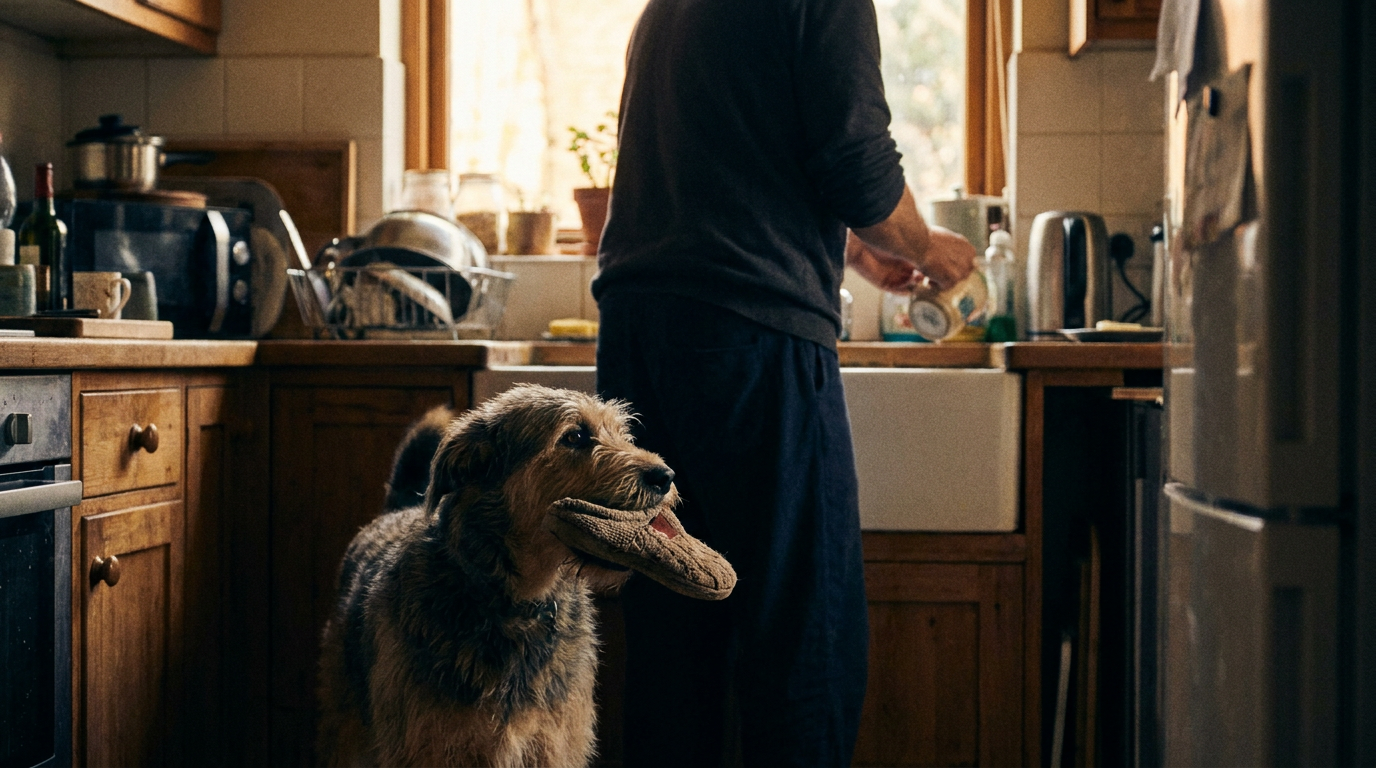
3 min readMoss carried my mother’s slipper into the kitchen while I was washing the cups.
He placed it beside my father’s chair and looked up at him. Rain ticked against the window. The slipper was blue felt, worn pale at the heel, with three of Moss’s hairs caught in the stitching.
“Not tonight,” my father said.
Moss picked it up again and took it to the sitting room.
My mother had been dead since February. It was October now, and my father had begun forgetting small things, though never anything about her. He forgot whether he had fed the dog, where the clean sheets were kept, and why he had opened a drawer. He remembered the yellow dress she wore on their first holiday. He remembered that she disliked pears but liked pear soap.
I had come to stay because he left a pan burning on the stove. He called it a misunderstanding between himself and the potatoes.
Moss was an old brown spaniel with cloudy eyes and feet that smelled of wet biscuits. Every evening, after his supper, he brought my mother’s slipper from beneath the hall table and laid it beside the sofa. Then he waited.
My father did not encourage him. Nor did he put the slipper away.
“He’ll tire of it,” I said.
“He knows his own mind.”
On the fourth evening, we sat watching a gardening programme with the sound low. My father peeled an apple in one long strip. Moss slept between us, his nose twitching against the cushion.
At half past eight, he woke.
He climbed down, fetched the slipper, and returned with the solemn care of someone carrying a bowl filled to the brim. He set it on the rug. Then he jumped back onto the sofa beside my father.
“Here she is,” my father said.
I looked at him.
He was watching the television. On the screen, a woman in green gloves was tying up roses.
Moss stood and turned in a tight circle. He did not lie down in his usual place. Instead, he moved closer to my father, pressing himself against the old man’s thigh.
The empty cushion beside him sank.
It lowered slowly, as if taking the weight of someone sitting with care. Moss sighed and rested his head in the hollow.
My father reached across the space. His hand stopped above the cushion, not touching it.
“There you are,” he said.
The apple peel slipped from his lap.
Nothing else happened. Rain moved softly through the gutter. The woman on television demonstrated how to protect roots from frost. In the kitchen, the refrigerator clicked off, and the whole house seemed to listen.
I picked up the peel and carried it to the bin.
When I returned, the cushion was level again. Moss remained with his head on it, asleep. My father covered him with the corner of the blanket.
Neither of us mentioned what I had seen.
In the morning, my father made tea before I woke. He used the good pot, the white one with the cracked lid. On the tray were two cups, and beside them a shallow saucer of water for Moss.
“I thought there should be three,” I said.
My father glanced at the tray.
“No,” he said gently. “Your mother never took tea in bed.”
Moss followed us into the bedroom. He waited until my father had settled, then lay across the doorway with his chin on his paws.
I stayed through the winter.
Each evening, Moss brought the slipper. Sometimes he placed it by the sofa. Sometimes beside my father’s chair. Once, when my father had fallen asleep before supper, Moss carried it upstairs and left it on the landing.
The cushions never moved again.
Still, I began to understand why my father kept the hallway lamp burning, and why Moss, who had always slept on the warm side of the hearth, now preferred the colder half of every room.
He was leaving space.
By spring, he had begun leaving some for me.