The Water Underneath
by Z. Marlow
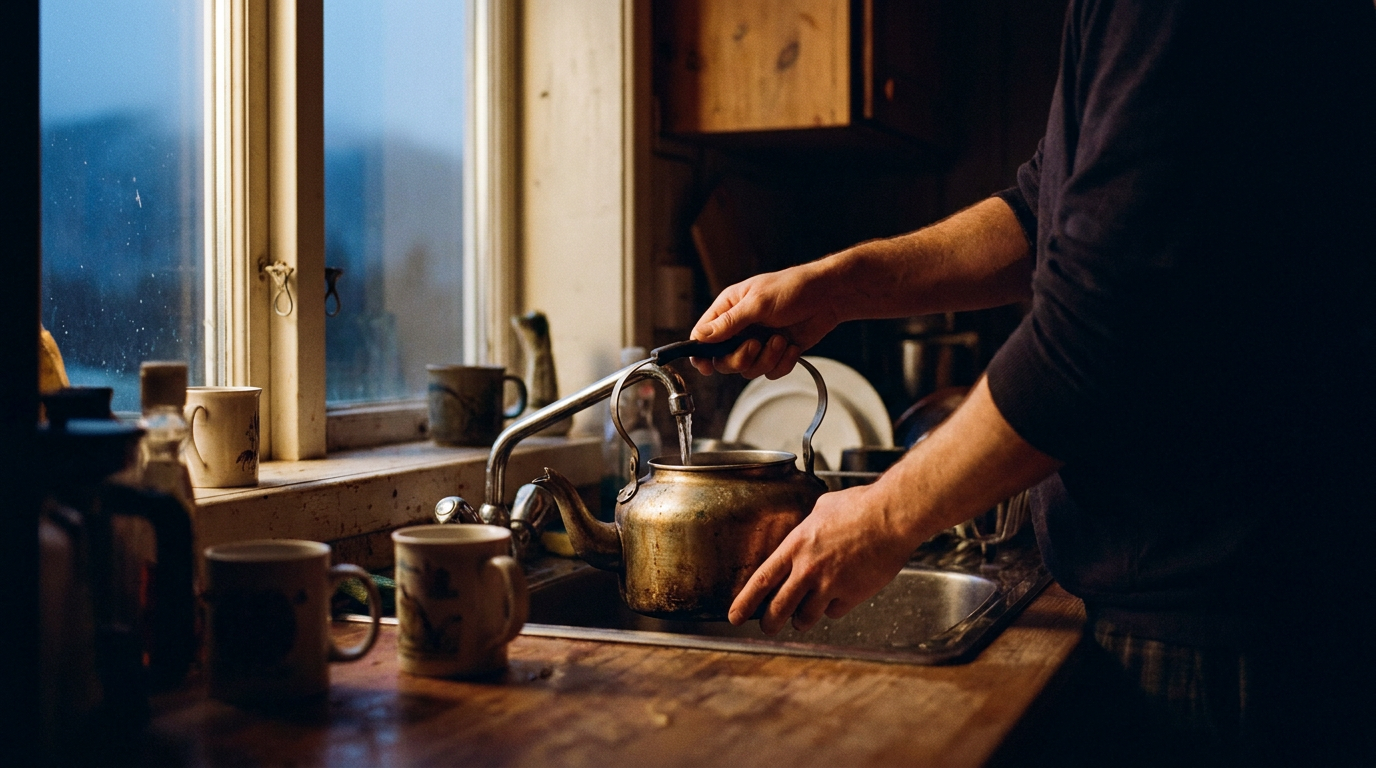
3 min readMiren filled the kettle before waking her father.
The new pipe had been brought along the coast road that autumn, buried in a trench of yellow clay. Until then she had carried water from the well below Saint Orra’s field, two pails at a time, with a folded cloth beneath the handles. She did not miss the walk. Winter rain made the path slick, and the well rope left a smell of iron on her palms.
Her father objected to the tap.
“Water should make some effort to reach a house,” he said.
Still, he drank his tea.
His room looked east across the roofs to the sea. Once he had known every shoal from Hallow Point to the far islands, but his sight had thinned to brightness and shadow. Miren kept the curtains open for him. She described the weather each morning while she buttoned his collar.
On the first clear day after Christmas, she set a white basin beneath the kitchen tap and turned the handle.
The basin filled with stars.
They lay sharp in the water, though sunlight stood across the table and the ceiling above was newly limewashed. Miren passed her hand over the basin. Her hand cast no reflection. There were only the stars, trembling slightly as the water settled.
She carried the basin upstairs.
Her father bent close until his breath troubled the surface.
“Not ours,” he said.
She thought he meant they were reflections from some other room. Then he asked her to describe the brightest ones, their color and distance from one another. He listened with his eyes shut.
“The southern sky,” he said. “Beyond Cape Mercy.”
He had sailed there as a young man, before marriage made the nearer waters sufficient. He told her where to look for a crooked line of pale stars called the Needle, and she found it near the rim.
For the rest of winter they kept a bowl of tap water beside his bed.
The stars changed with the hours. In daylight they were faint but visible. At night they burned so clearly that Miren sometimes covered the bowl, afraid their small cold shining would keep him awake.
Her father asked for the old globe from the cupboard. Its seas had faded to the color of skimmed milk. Together they worked out what lay on the other side of the earth, directly below the house.
It was open water, far south of any coast he had visited.
He rested both hands on the globe.
“So that is not above us,” he said.
Miren looked into the bowl.
“No.”
“It is under us.”
The fire settled in the grate. Outside, rain moved softly over the roof and went on toward the harbor.
Her father smiled.
“Then no one is buried looking into darkness.”
He died in March, during a week of mild weather. Miren washed him with water from the tap, but she did not look into the basin. She had the sense that doing so would be an intrusion, though she could not have said upon whom.
After the funeral, the house became quieter than she had expected. She returned his borrowed books. She gave his coats to the boatman with four sons. The globe remained on the kitchen dresser, turned so the empty southern sea faced outward.
Years passed. The pipe froze once and had to be dug up near Saint Orra’s wall. New houses appeared along the coast road. Children who had never drawn water from a well complained that the tap ran slowly.
Miren grew old in the same rooms.
Each evening she filled a shallow bowl and placed it on the table. She learned the southern stars as well as her father had known the local shoals. On cloudy nights they remained clear. During storms they shook in the water, not from wind, but from the slight unsteadiness of her hands.
When she could no longer climb the hill to the churchyard, she began pouring the bowl onto the garden instead.
The water sank among the roots of the rosemary. For a few moments, small hollows in the soil held pieces of that other sky.
Then the earth took them in.