The Wind Below
by Z. Marlow
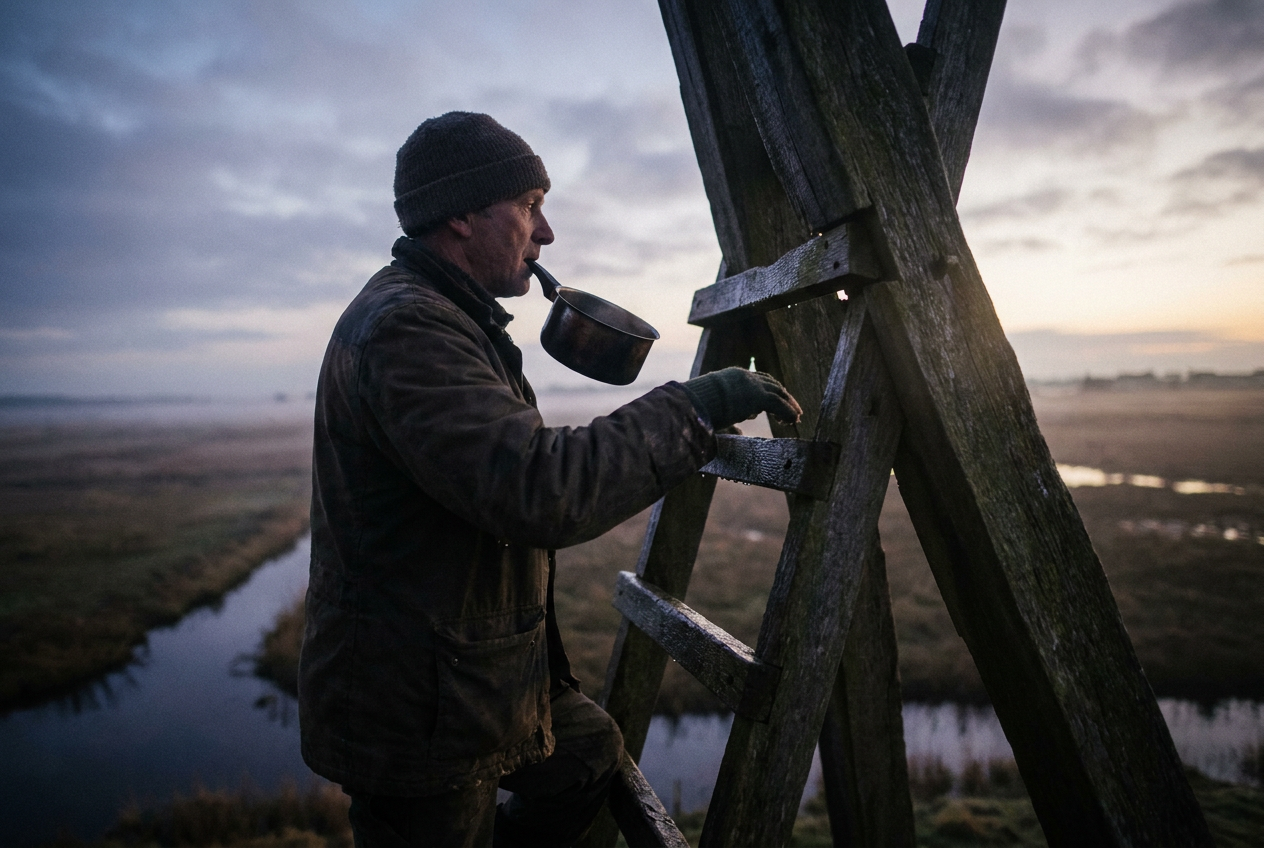
3 min readYou climb the drainage mill before sunrise, carrying the grease pot between your teeth. The ladder is wet with mist. Below you, the marsh lies flat and pewter-colored, divided by ditches narrow as knife cuts.
Old Penn taught you to climb without looking down. He had one stiff hand and a way of listening to the weather through his open mouth. When the mill groaned at night, he would leave his supper untouched and walk out among the reeds.
“Never brake her in a calm,” he told you.
You thought this was one of his private cautions, like never sharpening a scythe near milk, or keeping a copper coin under the meal bin. He died in the lambing month, before you could ask. His coat still hangs from a nail inside the mill, white salt dried around the cuffs.
The machinery is simple enough. Wind turns the four cloth sails. The sails turn the oak shaft. The shaft drives the scoop wheel, which lifts black water from the low ditches into the high channel that carries it toward the estuary.
Without the mill, the marsh would soften. Rushes would return first, then pools, then open water. The farmers say this as though listing stages of an illness.
You grease the bearing and come down. By then the mist has thinned. Cattle stand beneath the willows, chewing with their eyes closed. Beyond them, on the raised track, Penn’s widow walks toward market with eggs under a folded cloth.
She raises one hand to you.
It is a warm morning. By noon, the air has become perfectly still.
The reeds do not stir. Midges hang above the ditches in dark columns. Even the mill’s loose shutter, which complains at the smallest breeze, is silent.
You remember Penn’s warning because the sails begin to move.
At first they turn so slowly that you suppose their weight is carrying them. One descends, linen hanging slack from its frame. Another rises. The great shaft gives a dry knock inside the mill.
Then the wheel gathers speed.
You stand in the grass and feel no wind against your face. The sails pass above you, faster now, their cloth still loose. Water clatters from the scoop boards into the high channel.
Only it is falling the wrong way.
You kneel at the bank. The channel water creeps inland, against its accustomed slope. It is clear beneath the scum, greenish and cold. A smell of bladderwrack rises from it.
Something pale turns in the current.
You reach down and catch a sprig of sea lavender, freshly broken, its small purple flowers unwilted. The nearest salt marsh is half a day’s walk away.
Above you, the sails quicken.
Then the air moves.
It comes down from the mill in a cool breath, smelling of wet rope, fish scales, and rain beyond the horizon. It presses your shirt against your back. Across the fields, the willows lift their silver leaves.
You look up and understand what Penn had heard through his open mouth.
The sails are not turning because of the wind.
They are making it.
For a little while you cannot move. Beneath the mill, the scoop wheel raises water that has no business under these fields. In the ditches, freshwater weeds bend before a tide no chart records. You think of all the spades that cut this country dry, all the fathers who handed down black acres to their sons, calling the earth won.
The marsh was never conquered. It was taught to breathe elsewhere.
You leave the brake rope hanging.
Toward evening, Penn’s widow returns along the raised track. The strange wind catches her skirt. She stops beside the mill and closes her eyes, not surprised, while the sea lavender trembles in your hand.
Far across the level country, one mill after another begins to turn.
Beyond them, where wheat covers the oldest reclaimed ground, the whole field bows seaward before the wind reaches it.