The Words Behind
by Z. Marlow
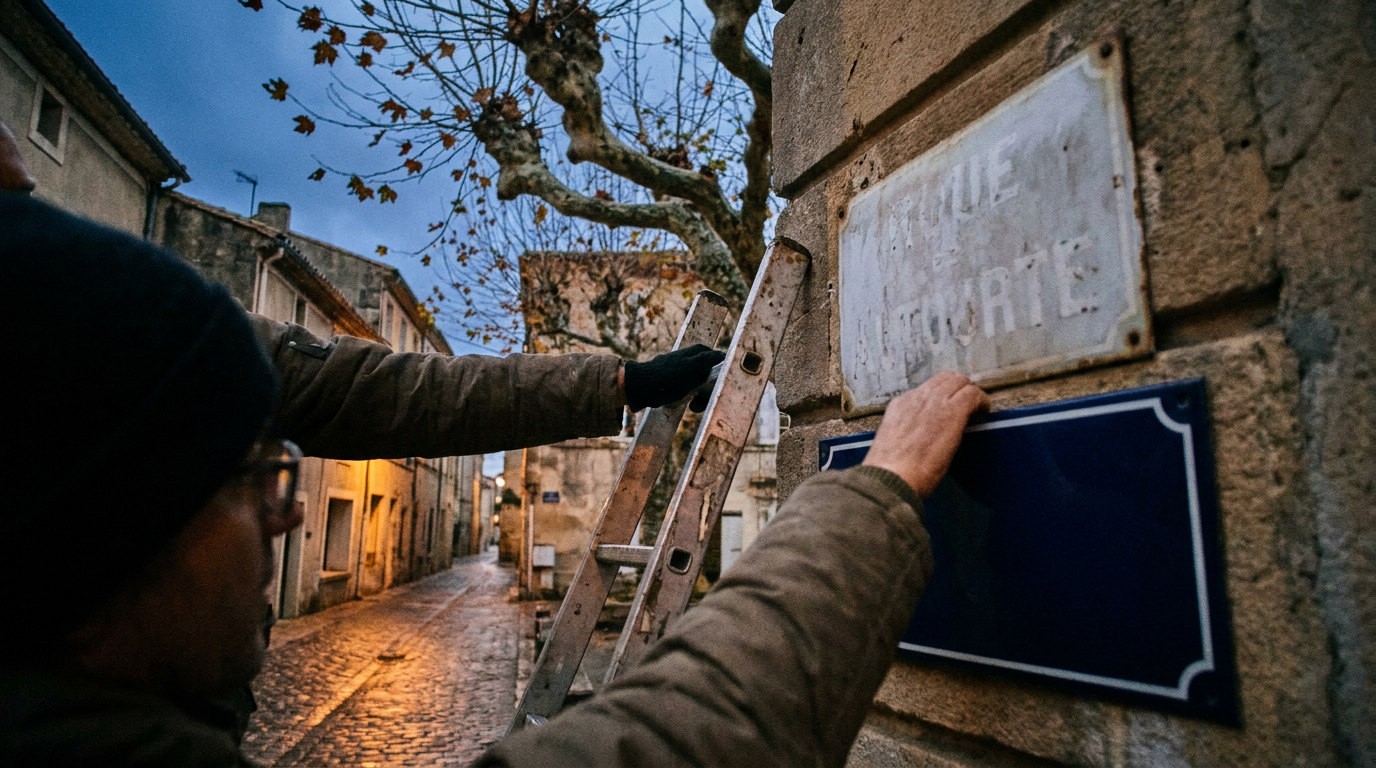
3 min readYou brace the ladder while the wind worries the plane trees. The street plate above you has faded from blue to the color of skimmed milk, and the council has sent you to replace it.
The bolts come loose with their usual rusty complaint. Behind the plate, sheltered from thirty winters, someone has written apricot in pencil.
You rub it with your thumb. The word is faint but careful, the letters rounded as a child’s.
There is no apricot tree on Bellweather Street. There is a laurel hedge, three dustbins with split lids, and a bakery that smells of hot sugar before dawn.
You fit the new plate and think no more about it until Thursday, when the back of a sign on Chapel Rise says thimble.
After that, you begin to look.
Some plates are blank. Others carry a single word: mackerel, Sunday, velvet. The writing varies. Ink, chalk, carpenter’s pencil. Once, on a narrow lane behind the washhouse, the word forgive has been scratched into the enamel deeply enough to bare the metal.
Your foreman says boys do it.
Boys would draw other things.
At home, your father sits by the radiator with a blanket across his knees. He has begun losing words. They go quietly, without taking leave. First came the names of birds. Then cutlery. Yesterday he held up his cup and called it a little well.
You supply the missing words when he lets you. He dislikes being hurried.
“Tea,” you say.
“Yes,” he says. “That warm brown weather.”
You write this in the notebook beside his chair. There are many such phrases now. Shoes are foot houses. The moon is the lamp nobody tends. Your own name remains, though he uses it less often.
In February, a delivery van clips the sign at the end of your father’s road. The plate hangs by one bolt, tapping the post whenever the wind turns east.
You are not assigned the repair. You go after work.
Behind the bent plate is apricot.
The same rounded hand. The same faint pencil.
Your father made apricot jam when you were small. He skimmed the foam with a wooden spoon and let you eat it from a saucer. Last summer, you brought him a jar from the market. He studied the label for a long time.
“Sun eggs,” he said at last.
You stand in the cold with the plate against your chest. Across the road, his curtains glow amber. A bus passes, blowing grit against your boots.
Beneath apricot another word has been added.
It is your name.
For a while you hear only the tapping of the loose bolt.
You take out your pencil and copy the name into your notebook, although there is no need. Then you rub the plate with your sleeve. The graphite smears, but the letters do not vanish. They have sunk into the white enamel like bruises beneath skin.
That evening your father looks up when you enter. His face is kind and empty.
“You came,” he says.
You sit beside him. The room smells of dust warmed on the radiator. On the sill, a dead fly lies with its legs folded.
He touches your sleeve.
“I know what you are,” he says gently. “I have only misplaced what to call you.”
You do not correct him. Instead you tell him about the words behind the street plates. You tell him about velvet and thimble, about the scratched forgiveness behind the washhouse. His hand tightens around yours.
“Of course,” he says.
It is the clearest he has spoken in weeks.
“A word must be somewhere.”
In the morning, you return with a screwdriver.
You remove the plate and carry it home under your coat. Your father is asleep, his mouth slightly open. You set the sign beneath his chair, the hidden words facing upward, and wait.
Near noon he wakes. He says your name once, perfectly.
Outside, someone stops beneath the empty post and asks a passerby what this road is called.
The passerby looks toward your father’s house.
Then she gives them your name.