What Houses Give Back
by Z. Marlow
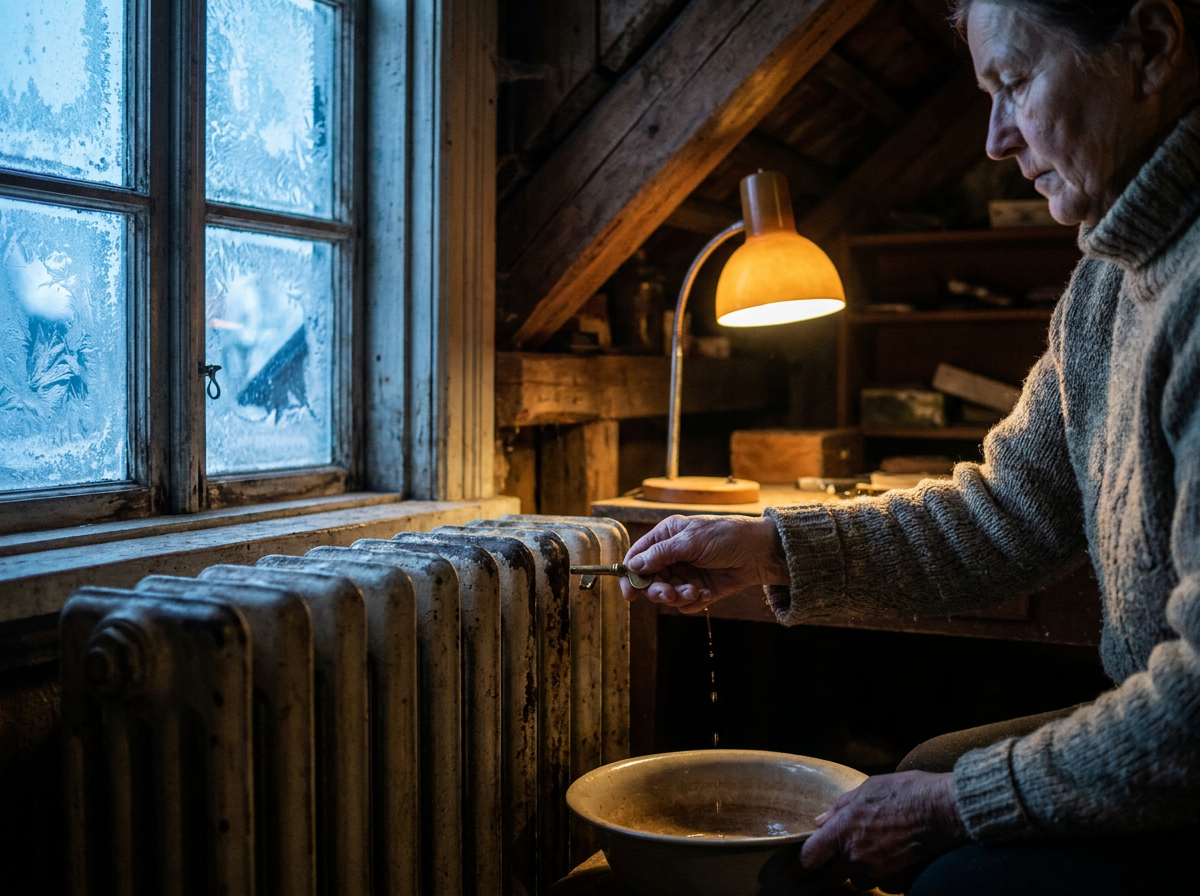
3 min readMara Kest, caretaker: “I was bleeding the upper-floor radiators when the pressure dropped. It was the coldest week anyone remembers. Frost stood on the inside of the stairwell windows, and the pipes had begun making that small iron sound, like spoons touching in a drawer.
“I went down to the furnace room. The supply gauge was steady, but the return pipe had gone cold. That should not happen. Heat leaves by one pipe and comes back diminished by the other. Even a child understands the arrangement.
“I followed the return into the service passage. There was a man standing beside it.
“He wore a brown coat. I am certain of the color. His hair was wet, though the passage was dry, and he held both hands under his arms. He said, ‘I have come to see the people who live along me.’
“Not ‘above me.’ Along me.
“I thought he was drunk.”
Ivo Pell, then a child in the building: “The coat was green. Dark green, like cabbage leaves after frost.
“He knocked on every door, very softly. My mother let him in because she believed he had come about the heat. He looked around our kitchen and said there should be another person under the table.
“That was almost right. Our old dog slept there, but she had died before winter. The man crouched and held his palm over the bare boards. Then he asked why we had made her so thin.
“My mother told him to leave.
“He apologized to the empty place beneath the table first.”
Mara Kest: “He did not visit every flat. That is something Ivo added afterward. He passed some doors without looking at them. At others he smiled, as though hearing voices through the wood.
“He knew where people slept. He knew which rooms were kept shut, who bathed before dawn, who warmed socks on the radiator. He called the infant upstairs ‘the little furnace carried at chest height.’ Crude, perhaps, but not unkind.
“Then he went to Mrs. Soven’s rooms.”
Letha Soven, widow: “His coat was black. I remember because snow had begun falling from its hem, and the flakes showed clearly against the cloth.
“He called me Arno.
“That was my husband’s name. Arno had been dead since the thaw. He used to sit beside the dining-room radiator with one hand resting on the ribs. Afterward, I took his chair. There was nowhere else in the room that did not feel abandoned.
“I told the stranger, ‘Arno is dead.’
“He put his hand where Arno’s had rested. The metal was scarcely warm.
“‘No,’ he said. ‘The cold one died. You kept his place warm.’
“That was when I understood he had not mistaken my face.”
Ivo Pell: “Mrs. Soven cried. Mara says she did not, but I saw it. The man wiped her cheek with one finger, then tasted the water. Not in a vulgar way. More like someone testing rain.
“He told her the building knew them by what they left in the pipes. He said all winter we sent pieces of ourselves downward, bathwater warmth, sleeping warmth, fever warmth, the warmth of hands held too long beneath a tap. He had followed it back.”
Mara Kest: “He said nothing of the kind. Children improve what frightens them.
“He only asked to be shown the way out.
“I took him to the courtyard. Letha insists he returned to the service passage. We searched both. There were wet footprints in neither place.
“The return pipe warmed at once.”
Letha Soven: “After that winter, I stopped sitting in Arno’s chair. It remained warm anyway.
“Not always. Only toward evening, when he would have come home.”
Ivo Pell: “The building was pulled down long ago, but part of the heating main still runs beneath the new houses. My kitchen wall crosses it.
“Sometimes, before the heat is switched on, the plaster grows warm at shoulder height.
“Not my shoulder height.
“Nearly.”