Where Here Is Kept
by Z. Marlow
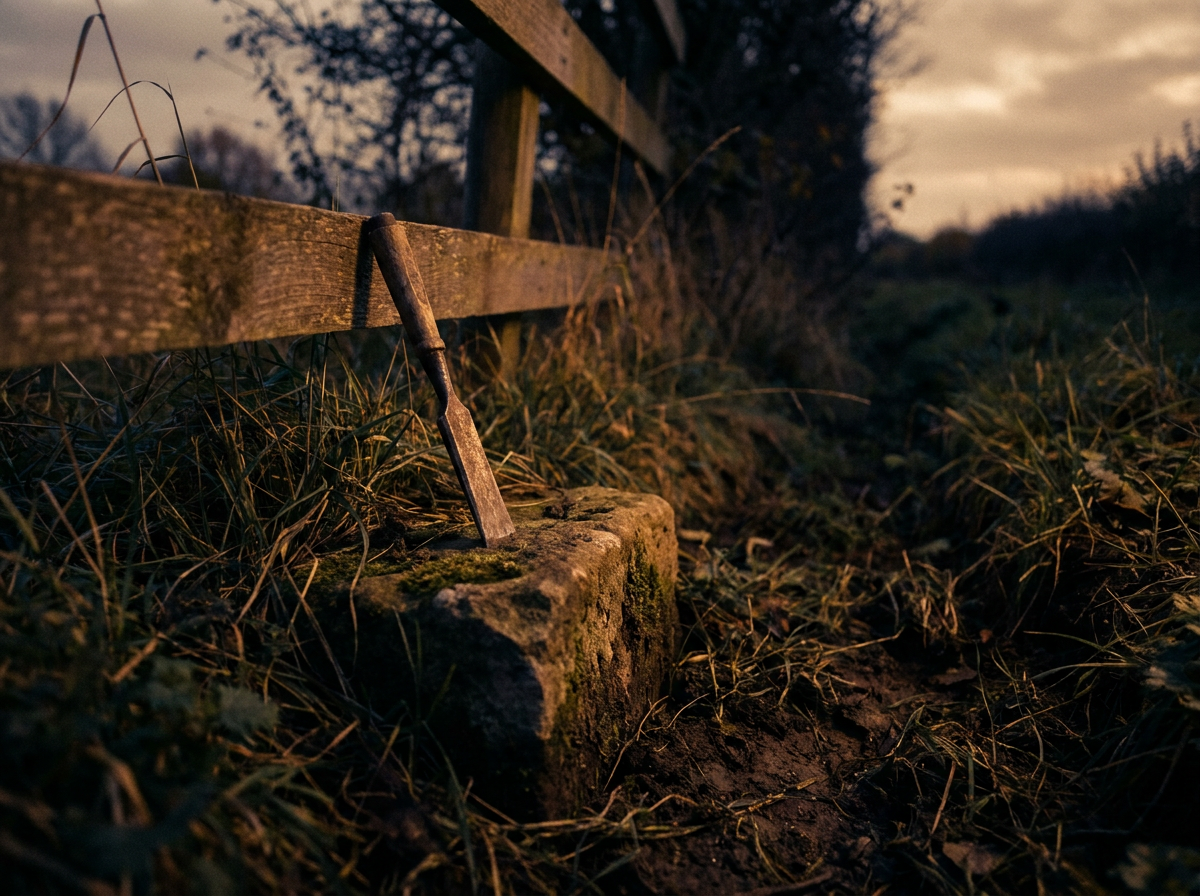
3 min readYou pry the borough stone from the ditch with a fence rail and your apprentice’s least favorite chisel.
It went missing after the brewer’s cart overturned. The brewer blamed rain, the carter blamed the brewer, and everyone blamed the geese, which had eaten nothing but stood nearby looking qualified.
The stone is a squat block of limestone, green at the shoulders. GREYGLASS is cut across one face. By custom, the name faces inward, toward the town.
“Useful,” says Pella, wiping mud from her nose. “Visitors can read it once they have arrived.”
You tell her customs need not be useful. This is one of the few advantages they possess.
Together you roll the stone onto the handcart. Something has been carved underneath. You crouch, scrape away clay, and find four small letters, sharp as if cut that morning.
HERE.
Pella reads it aloud.
The mare turns her head.
Nothing else happens, so you set off along West Lane.
At the baker’s yard, a flour boy is unloading sacks. His master shouts from the doorway, “Not there, you turnip. Here.”
The boy lifts his sack, walks past the bakery, and drops it onto your cart.
Pella laughs so hard she has to sit on the shaft. The baker does not laugh. He retrieves his flour and cuffs the boy gently, more in ceremony than anger.
Farther on, Mistress Vale stands at her gate with her youngest child. The child is making soup in a puddle.
“Stay here,” Mistress Vale says, while she goes inside for a shawl.
The child rises and begins following your cart.
You stop. Pella takes the little girl back. Mistress Vale thanks her, though she seems uncertain why thanks are required.
After that, you cover the carved word with your coat.
At the western boundary, the old socket waits beside the hedge. Rain has softened its edges. There are hawthorn petals in the bottom and one blue button.
You and Pella rig the lifting ropes. The work is slow. Limestone is patient and does not assist.
As the stone rises, your coat slips away.
Pella is standing knee-deep in the socket, clearing loose earth. She looks up at you.
“Lower it here.”
Your hands release the rope.
Not by choice. Not by accident. For one clean instant, here is not where Pella stands. It is the pale word on the hanging stone, and everything else, Pella, hedge, road, your own body, is somewhere beyond it.
The rope scorches your palms. The stone drops a finger’s width and stops against the brace.
Pella climbs out without speaking.
You turn the inscription downward and lower the block into its bed. GREYGLASS faces the roofs, chimneys, wash lines, and weathercock. The buried word meets the earth.
At once, a rook lands here, meaning the hedge. Pella stands here, meaning beside you. The town resumes its proper abundance of places.
You pack the soil hard around the base.
“Why put that word underneath?” Pella asks.
You look back along West Lane. Every house has a threshold. Every field has a gate. Every room, however mean, possesses a place from which someone may say, Come here.
“I suppose,” you say, “so it cannot wander.”
This answer satisfies neither of you.
That winter, your hearthstone cracks. When you lift it, warm dust breathes from beneath, smelling of soot and rosemary.
The same four letters are cut into its underside.
Your wife is kneeling across the room with a bowl of mortar. She pats the floor beside her.
“Put it here,” she says.
You keep hold of the stone and wait to discover which place she means.