Where the Rain Returns
by Z. Marlow
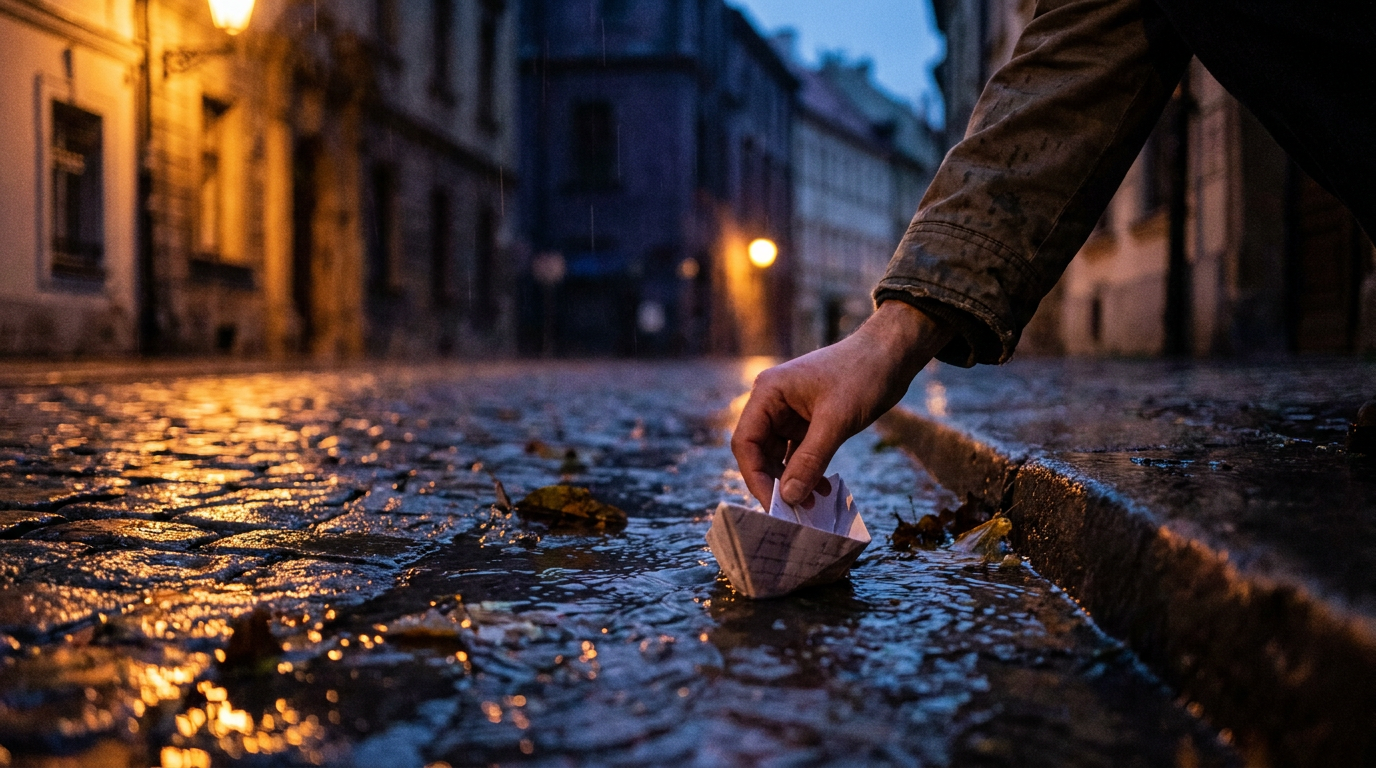
3 min readI release the folded boat into the gutter and watch it turn against the water.
Rain runs east down Bellweather Hill. The boat goes west, nosing past grit and hawthorn petals until the current draws it beneath the iron lip of the drain. For a moment its white stern remains visible. Then the darkness takes it.
There is writing inside, though I have not opened the fold since making it.
I no longer need to.
Yesterday, the men replacing the curb uncovered the old channel.
They expected brick. What lay beneath was a narrow trough of green stone, smooth as the inside of a shell. It passed under the road without mortar or joins. One of the men poured tea into it to test the fall. The tea climbed toward the hill, carrying a skin of milk.
They called me because I had drawn the drainage plans for this district before most of them were born.
I knelt beside the opening. Cold air came from it, smelling of wet wool, pencil shavings, and the bitter oranges sold outside our school gates. The smell was so exactly placed in my childhood that, for a while, I could not stand.
The channel does not appear on any plan. Nor does it lead toward the river. It bends beneath the butcher’s yard, passes under the houses on Nettle Row, and ends at a grating that was sealed when the hill was paved.
I knew that grating.
All my life, I had remembered it on the opposite side of the road.
The week before, my brother Hal died at eighty-one, peacefully and annoyed about it.
His daughter found a wooden box among his fishing things. Inside were six paper boats, flattened and browned. Each bore a message in the same hand.
WAIT FOR HAL.
NOT THIS ONE.
WHEN THE RED CART COMES.
TAKE HIS LEFT HAND.
The last boat was blank.
I had seen them before, although I had persuaded myself otherwise. Children are allowed impossible memories. Adults store such things under dreams, fevers, games invented in solitude.
At Hal’s funeral, I remembered the red cart.
I remembered its load of white quarry stone, the horse’s lathered flank, and Hal stepping from the curb because someone across the road had called his name.
I remembered catching his left hand.
What I did not remember was learning that I must.
Earlier still, when Hal and I were old enough to wander but too young to be trusted, we played beside the gutters after rain.
I folded boats from arithmetic sheets. Hal ran downhill to catch them at the next grating. Most vanished. Some returned.
That is how I thought of it then: returned.
They came from drains above us, moving contrary to the brown rainwater. Usually they were mine, softened and speckled with earth. Sometimes the folds were sharper, the paper unfamiliar. Those carried messages in a sloping script.
Hal said an underground schoolgirl wrote them. I said she lived beneath the hill and had no weather except ours.
We never told anyone. It seemed impolite.
The morning of the red cart, a clean boat emerged from the grating and touched my shoe. Inside were the four instructions Hal kept all his life. Below them, faintly, was another line that rain had almost lifted from the paper.
I can read it now.
When you are old, send this first.
At eight, I could not make out the words. I only noticed the small brown mark beside them, where the writer’s hand had rested.
I have the same mark on mine.